
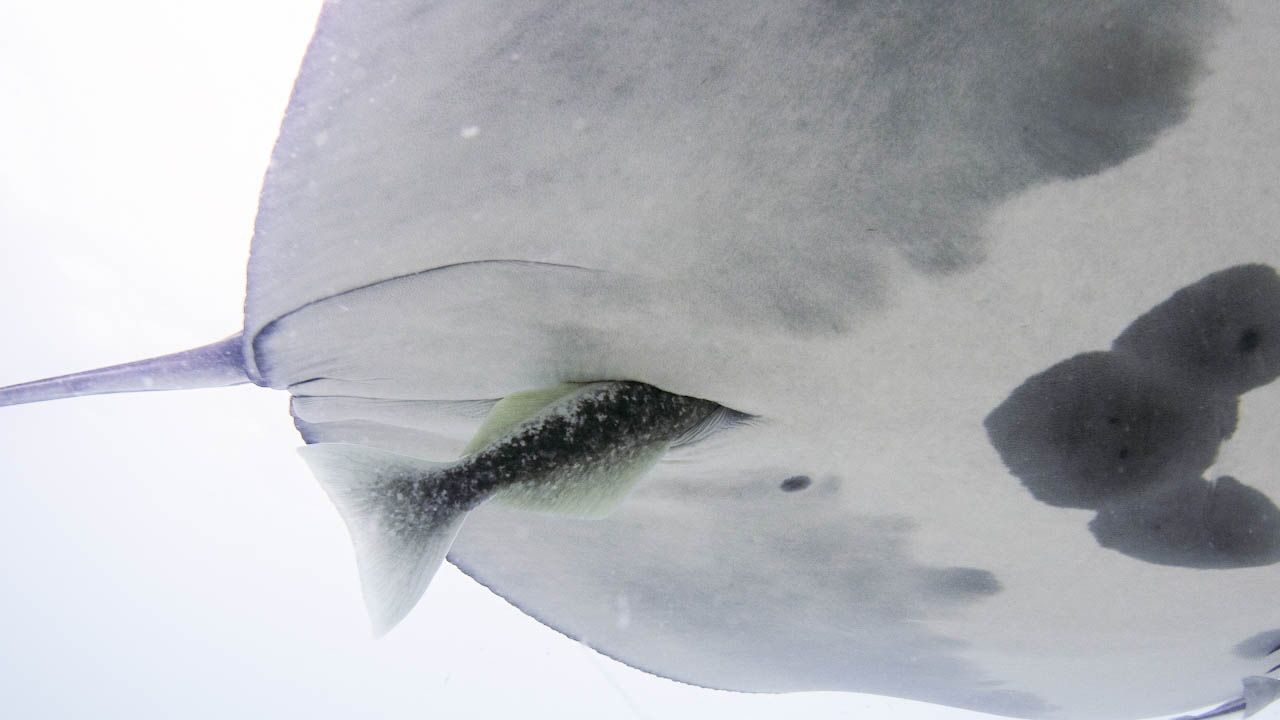
When a free diver approached an adult Atlantic manta ray off the coast of Florida, something strange happened. A fish lurking near the ray’s pelvic fins — spooked by the diver’s presence — didn’t swim away. Instead, it quickly inserted itself directly into the manta ray’s cloacal opening. In other words, it hid inside the ray’s rear end.
That single observation, captured and later documented by researchers, helped spark a new scientific study revealing a behavior that has left marine biologists equal parts fascinated and unsettled. Remora fish — the hitchhikers of the ocean — aren’t just riding on the outside of manta rays. Some of them are hiding inside them.
The finding has prompted researchers to rethink what was once considered a straightforward, mutually beneficial relationship between remoras and the large marine animals they travel with.
What Remoras Actually Are — and Why This Discovery Changes Things
Remoras belong to the family Echeneidae, a group of fish instantly recognizable by the suction disc on top of their heads — a modified dorsal fin that works like a biological suction cup. They use it to latch onto sharks, whales, sea turtles, and manta rays, hitching free rides across the ocean while expending almost no energy of their own.
The traditional understanding of this relationship has been largely positive — at least for the manta ray. Remoras were thought to act as a kind of cleaning crew, picking parasites off the skin of their hosts. A classic example of marine mutualism: the remora gets transportation and food scraps, the host gets a parasite removal service. Everyone wins.
But this new study complicates that picture significantly. The behavior described — a remora actively inserting itself into a manta ray’s cloaca — suggests the relationship isn’t always beneficial to the host. Researchers now believe remoras may, at least in some instances, be acting in ways that are harmful or at minimum intrusive to the rays they attach to.
Emily Yeager, a doctoral candidate in the Department of Marine Biology and Ecology at the University of Miami and the study’s first author, described the suckerfish’s behavior as “pretty weird.” That may be something of an understatement.
The Observation That Started It All
The July 2021 incident off Florida involved a juvenile male Atlantic manta ray — scientifically known as Mobula yarae — and a common remora (Remora remora). The image, captured by Bryant Turffs of the Marine Megafauna Foundation, showed the remora protruding from the ray’s cloacal opening.
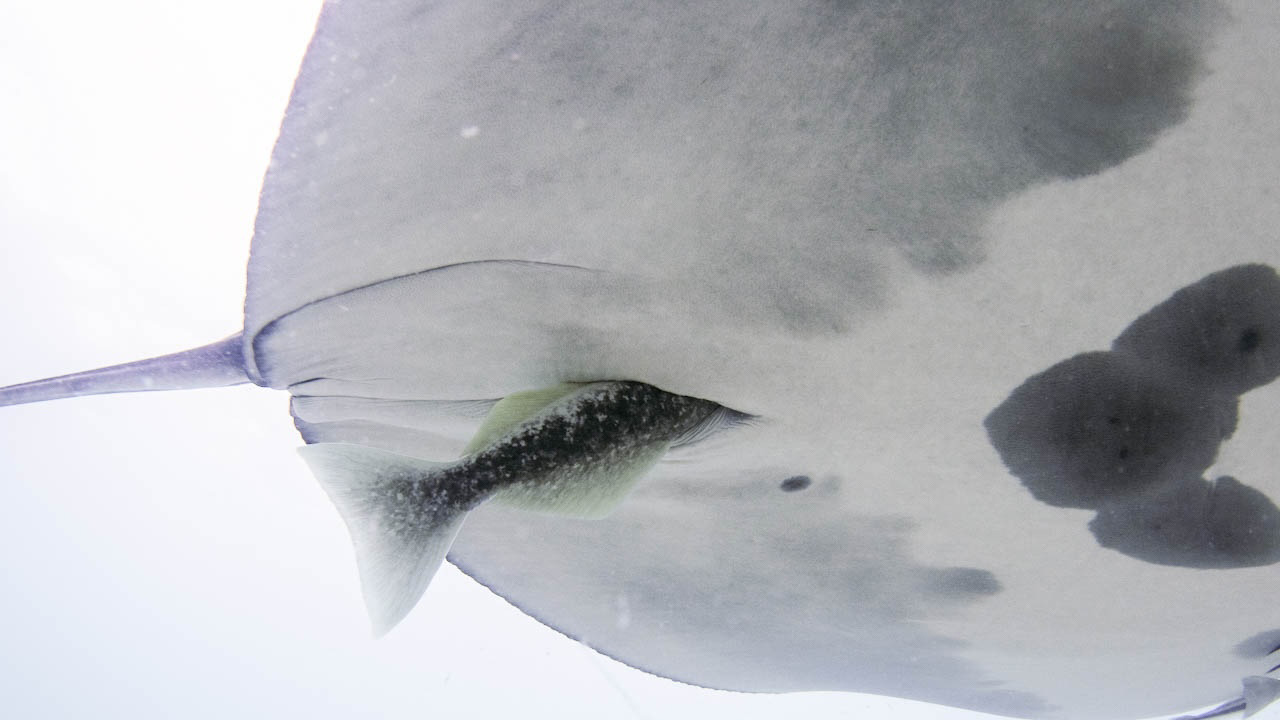
The cloaca, for context, is a multipurpose opening found in many animals — including rays — used for reproduction, waste elimination, and other biological functions. It is not, by any reasonable measure, a place a fish should be voluntarily entering.
What makes the observation particularly striking is the apparent trigger: the free diver’s presence startled the remora, which then retreated into the ray’s body cavity as a hiding response. This suggests the behavior may not be entirely rare — it could be something remoras do when they feel threatened, using the ray’s own body as a refuge.
Key Facts From the Study at a Glance
| Detail | Information |
|---|---|
| Remora species involved | Remora remora (common remora) |
| Manta ray species involved | Mobula yarae (Atlantic manta ray) |
| Location of observation | Florida |
| Date of key observation | July 2021 |
| Lead researcher | Emily Yeager, University of Miami |
| Remora attachment mechanism | Modified dorsal fin (suction disc) |
| Traditional host animals | Sharks, whales, sea turtles, manta rays |
| Image credit | Bryant Turffs, Marine Megafauna Foundation |
- Remoras use a suction disc — a modified back fin — to attach to host animals
- They are known to travel with a wide range of large marine species
- The cloaca is a shared opening used for reproduction and waste in rays
- The remora appeared to enter the cloaca in response to being startled by a nearby diver
- Researchers now question whether the remora-manta ray relationship is truly mutual
Why This Matters Beyond the Shock Factor
It would be easy to read this story as a bizarre ocean curiosity and move on. But the implications for marine biology are genuinely meaningful. If remoras are entering the bodies of manta rays — even opportunistically — that raises real questions about stress, injury, and the long-term health of the host animals.
Manta rays are already vulnerable. They are slow to reproduce, long-lived, and increasingly threatened by fishing pressure and habitat degradation. Understanding the full range of stressors they face — including from animals previously considered harmless hitchhikers — matters for conservation efforts.
The study also highlights how much remains unknown about even well-observed marine relationships. Remoras have been studied for decades. They’re common. They’re visible. And yet this behavior, apparently caught on camera in 2021, is only now being formally examined. It’s a reminder that the ocean still holds surprises in places researchers thought they understood.
Yeager’s description of the behavior as “pretty weird” reflects something scientists don’t always say out loud: that marine ecosystems are stranger and more complex than our tidy classifications of “mutualism” and “parasitism” tend to suggest.
What Researchers Are Looking at Next
The study opens more questions than it answers, which is often how science works. Researchers will likely want to determine how frequently this behavior occurs, whether it happens with other remora species or host animals, and what — if any — harm it causes to the manta rays involved.
It also raises questions about whether the behavior is learned, instinctive, or situational. Was the Florida incident a one-off panic response, or do remoras routinely use their hosts’ bodies as shelter? Underwater observation and tagging studies may help answer that over time.
For now, the image of a remora disappearing into a manta ray’s cloaca to avoid a passing diver stands as one of the more unexpected wildlife photographs to come out of Florida waters — which, given Florida, is saying something.
Frequently Asked Questions
What is a remora fish?
A remora is a fish from the family Echeneidae that uses a modified dorsal fin — shaped into a suction disc — to attach itself to larger marine animals like sharks, whales, sea turtles, and manta rays for transportation.
What is a cloaca, and why does it matter here?
A cloaca is a multipurpose biological opening in animals like manta rays, used for reproduction and waste elimination. Researchers documented a remora inserting itself into this opening on a manta ray, apparently as a hiding response.
Is the remora-manta ray relationship harmful to the ray?
Traditionally, remoras were thought to benefit their hosts by removing parasites. This new study suggests the relationship may not always be mutually beneficial, though the full extent of any harm to manta rays has not yet been confirmed.
Who conducted this research?
The study was led by Emily Yeager, a doctoral candidate in the Department of Marine Biology and Ecology at the University of Miami. The key observation was photographed by Bryant Turffs of the Marine Megafauna Foundation.
When and where did the key observation happen?
The documented incident occurred in July 2021 in Florida waters, involving a juvenile male Atlantic manta ray (Mobula yarae) and a common remora (Remora remora).
How common is this behavior among remoras?
This has not yet been fully confirmed by the research. The study documents specific observations, but whether this behavior is routine or rare among remoras remains an open question for future investigation.


Leave a Reply