
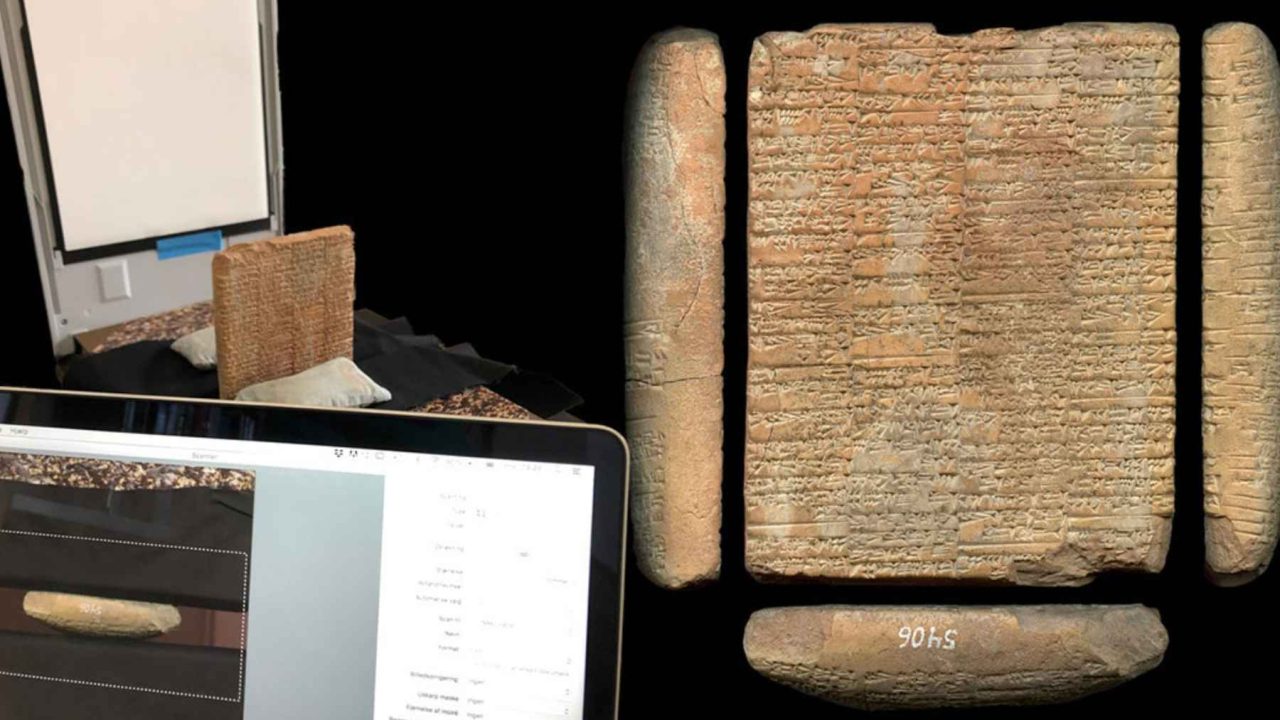
Tucked away in the storage rooms of the National Museum of Denmark, a collection of clay tablets sat largely undisturbed for generations — until researchers finally took a closer look. What they found wasn’t just ancient history. It was a window into the daily lives of people who lived 4,000 years ago, people who tracked beer deliveries, feared witchcraft, and worried about the stability of their rulers in ways that feel surprisingly familiar today.
The tablets, written in cuneiform — a wedge-shaped script pressed into wet clay — have been newly decoded as part of a collaborative research effort called the “Hidden Treasures” project. The findings reveal that ancient Middle Eastern societies wove together religion, medicine, and government recordkeeping in the fabric of ordinary life. And for millennia, almost nobody knew these particular examples even existed.
The story of what’s on these tablets is remarkable. But so is the story of how long they waited to be read.
What the “Hidden Treasures” Project Actually Found
The “Hidden Treasures” project brought together staff from the National Museum of Denmark and university researchers to take a fresh look at a long-stored collection. The goal was straightforward: examine what had been sitting in the archive and figure out what it actually said.
The range of material they found is striking. On one end of the spectrum, there are royal lists — formal records of rulers and their reigns, the kind of texts historians have long associated with ancient empires. On the other end, there’s something far more grounded: a beer receipt. A record of who got what, and presumably who owed for it.
That combination — the grand and the mundane sharing the same shelf — tells us something important. Cuneiform wasn’t reserved for kings and priests. It was a working tool, used by administrators, merchants, and households to keep track of the business of everyday life.
The 4,000-Year-Old Clay Tablets and What They Contain
The decoded tablets cover a surprisingly wide range of subject matter. Researchers identified several distinct categories of text within the collection, each offering a different glimpse into ancient society.
- Royal lists: Formal records documenting rulers, likely used to establish legitimacy and historical continuity.
- Practical accounts: Records tracking goods, debts, and transactions — including what appears to be a beer receipt.
- Staff lists: Administrative documents recording personnel, suggesting organized institutional management.
- Letters: Written communications tracking who owed what to whom.
- Anti-witchcraft rituals: Ceremonial texts designed to protect against perceived supernatural threats.
One of the most vivid finds is an anti-witchcraft ritual traced to Hama, a Syrian city that was destroyed in 720 BC. The ceremony, according to the decoded text, lasted all night. It involved burning small figures made of wax and clay while an exorcist recited fixed spells. The purpose was protection — likely for a ruler or a royal household — against the threat of dark magic.
| Type of Text | Origin / Context | Notable Detail |
|---|---|---|
| Anti-witchcraft ritual | Hama, Syria (destroyed 720 BC) | All-night ceremony; burning of wax and clay figures; exorcist recited spells |
| Beer receipt | Ancient Middle East | Everyday administrative record tracking goods |
| Royal lists | Ancient Middle East | Formal records of rulers and reigns |
| Staff lists | Ancient Middle East | Personnel records suggesting organized administration |
| Letters | Ancient Middle East | Tracked debts and obligations between individuals |
Why an Ancient Beer Receipt Matters More Than You’d Think
It’s easy to get caught up in the drama of the anti-witchcraft ritual — all-night ceremonies, burning effigies, royal anxiety about invisible enemies. That’s genuinely compelling material. But the beer receipt might actually be the more historically significant find.
Administrative records like accounts and staff lists are among the earliest known uses of writing anywhere in the world. Scholars have long argued that writing wasn’t invented primarily for literature or religion — it was invented to keep track of stuff. Grain. Livestock. Labor. Debts. The moment humans started accumulating surplus goods and organizing complex societies, they needed a reliable way to record transactions.
Finding that kind of everyday paperwork preserved in a Danish museum collection — sitting quietly in storage for generations — is a reminder that the ancient world was full of bureaucrats, not just kings and priests. Someone had to count the beer. Someone had to write it down. And 4,000 years later, we can still read what they wrote.
What This Tells Us About Ancient Power and Fear
The anti-witchcraft ritual from Hama adds a different dimension to the collection. It points to something researchers describe as political anxiety — the sense that even a powerful ruler, commanding an empire, could feel threatened in ways that went beyond armies and politics.
The ceremony’s structure is telling: it ran through the night, involved the physical destruction of symbolic figures, and required a trained exorcist reciting memorized spells. This wasn’t improvised. It was a formal, institutionalized response to fear. The fact that it was written down and preserved suggests it was meant to be repeated, referenced, and passed on.
Researchers note that this kind of text is a reminder that royal power could feel fragile even when an empire looked strong from the outside. The gap between official strength and private fear is apparently not a modern invention.
What Happens Now With These Decoded Tablets
The “Hidden Treasures” project represents an ongoing collaboration between the National Museum of Denmark and university researchers. The newly decoded tablets are part of a broader effort to revisit long-stored collections that haven’t received sustained scholarly attention in decades — or longer.
The work raises a natural question: how many other museum storage rooms around the world contain objects that haven’t been properly examined? The answer, based on what projects like this one keep turning up, is almost certainly: quite a few.
For now, the decoded tablets from Denmark offer one of the clearest recent examples of what careful archival research can produce. A beer receipt that survived 4,000 years. A spell recited through the night in a city that no longer exists. And a reminder that the distance between ancient daily life and our own is, in some ways, much shorter than we assume.
Frequently Asked Questions
Where are these clay tablets currently held?
The tablets are stored at the National Museum of Denmark and were examined as part of the “Hidden Treasures” project, a collaboration between museum staff and university researchers.
What script were the tablets written in?
The tablets were written in cuneiform, a wedge-shaped script created by pressing marks into wet clay, widely used across the ancient Middle East.
What is the anti-witchcraft ritual described in the tablets?
It was an all-night ceremony originating from Hama, a Syrian city destroyed in 720 BC, involving the burning of small wax and clay figures while an exorcist recited fixed spells.
How old are the tablets?
The tablets are approximately 4,000 years old, making them among the earliest known written traces of everyday administration.
What kinds of everyday records were found among the tablets?
Researchers identified accounts, staff lists, letters tracking debts, and at least one record that resembles a beer receipt — evidence of routine administrative activity.
Are there more unexamined objects like these in museum collections?
Specific figures on the scale of unexamined holdings have not been confirmed.




Leave a Reply