
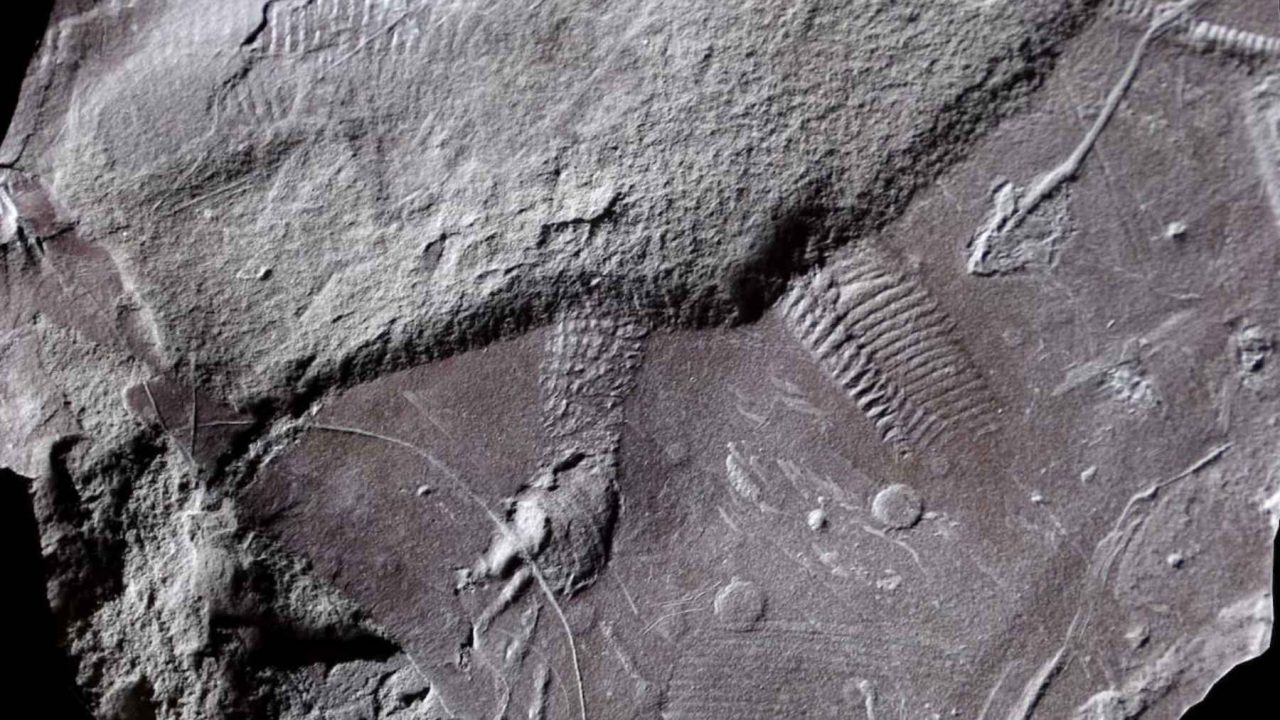
Almost 300 million years ago, a small reptile pressed its body into soft, wet sediment on the floor of what is now central Germany — and somehow, impossibly, that impression survived. Not just the footprints. The skin itself, in exquisite scaly detail, preserved in rock for nearly three hundred million years.
Scientists have now confirmed these impressions as the oldest direct evidence of reptile skin ever identified. The findings were announced by the Museum für Naturkunde Berlin and published in the journal Current Biology, and they are already reshaping what paleontologists thought they knew about early reptile evolution and the conditions that made such preservation possible.
The discovery raises a question that is almost hard to wrap your head around: how does skin — tissue that normally breaks down within days or weeks after death — leave a legible, detailed impression in stone for three hundred million years?
What Was Actually Found in the Thuringian Forest
The fossils come from two sites in the Thuringian Forest region of central Germany. The first is the Cabarz quarry, near the town of Tabarz. The second is located in the municipality of Floh-Seligenthal. Both sites sit within a geological unit called the Goldlauter Formation.
What makes these specimens extraordinary is that they are not simply footprints. The rock slabs preserve what researchers call “resting traces” — the subtle, full-body impressions left when an animal settled its weight onto soft ground, rather than simply walking across it. These kinds of traces are rare in the fossil record under any circumstances. Finding one with skin texture preserved is rarer still.
The newly described resting trace has been formally named Cabarzichnus pulchrus. It captures far more than toe marks. The fine sediment recorded the texture of the animal’s scales across its body surface — and one specimen may even preserve the outline of a cloacal opening near the base of the tail, an anatomical detail almost never seen in fossils of this age.
The research was led by paleontologist Lorenzo Marchetti and an international team of scientists. Using modern radiometric dating of volcanic ash layers found within the same sediment package as the impressions, the team dated the fossils to approximately 298 to 299 million years ago — placing them firmly in the early Permian period.
Why These Oldest Reptile Skin Fossils Matter So Much
Soft tissue preservation is one of paleontology’s great puzzles. Bones and teeth fossilize relatively easily because they are hard and mineral-rich. Skin, scales, and other soft structures almost always decompose long before sediment can lock them in place.
When soft tissue impressions do survive, it is usually because a very specific combination of conditions aligned: fine-grained sediment, rapid burial, the right chemical environment, and a degree of luck that is hard to quantify. The Goldlauter Formation apparently provided exactly that, preserving not just the shape of scales but enough surface detail for researchers to describe their texture as looking “surprisingly modern.”
The fact that these scales appear modern in form is itself significant. It suggests that the basic architecture of reptile skin — the overlapping, keratinized scales that protect reptiles today — was already well-established nearly 300 million years ago. That has implications for understanding how early amniotes, the group that includes reptiles, birds, and mammals, adapted to life on land.
Key Facts at a Glance
| Detail | Information |
|---|---|
| Estimated age of fossils | Approximately 298–299 million years old |
| Location discovered | Thuringian Forest, central Germany |
| Geological formation | Goldlauter Formation |
| Specific sites | Cabarz quarry (near Tabarz) and Floh-Seligenthal |
| Formal trace name | Cabarzichnus pulchrus |
| Lead researcher | Paleontologist Lorenzo Marchetti |
| Published in | Current Biology |
| Announced by | Museum für Naturkunde Berlin |
- The fossils include both footprints and full-body resting traces
- Skin texture is visible and described as looking surprisingly modern
- One specimen may preserve the outline of a cloacal opening near the tail base
- Dating was confirmed using radiometric analysis of volcanic ash in the same sediment layers
What a Cloacal Opening Tells Scientists
One of the most remarkable details in the findings is the possible preservation of a cloacal opening — the single posterior opening used by reptiles for reproduction, digestion, and waste elimination. If confirmed, this would be an extraordinary level of anatomical detail for a fossil of this age.
Finding even a hint of this structure in an impression fossil suggests the animal was pressing its body flat against the sediment surface with enough force and duration for even soft anatomical features to leave a mark. It also opens the door to questions about the animal’s behavior: was it resting? Thermoregulating? Sheltering?
Researchers have not yet identified exactly which species of early reptile made these traces. The Permian period was populated by a wide range of early amniotes, and trace fossils — impressions left by animals rather than the animals’ own bones — are often difficult to match to a specific creature without additional skeletal evidence from the same location.
What Researchers Are Looking at Next
The publication in Current Biology marks the formal scientific introduction of these fossils to the broader research community. From here, the work shifts toward deeper analysis: examining the skin texture under higher magnification, comparing the scale patterns to known early Permian reptile groups, and continuing to survey the Goldlauter Formation for additional specimens.
The Thuringian Forest sites have already proven unusually productive. The combination of fine sediment, preserved volcanic ash layers for precise dating, and the presence of both track and resting trace fossils suggests these localities may still have more to offer. Scientists familiar with the region have noted that fine-grained sedimentary environments like this one are among the most promising targets for soft-tissue trace preservation.
For now, the rock slabs from Cabarz and Floh-Seligenthal stand as the oldest window into what reptile skin actually looked like — not reconstructed, not inferred, but pressed directly into stone by the animal itself, nearly three centuries of millions of years ago.
Frequently Asked Questions
Where were the oldest reptile skin impressions discovered?
They were found at two sites in the Thuringian Forest region of central Germany — the Cabarz quarry near Tabarz and a location in the municipality of Floh-Seligenthal, both within the Goldlauter Formation.
How old are the reptile skin fossils?
Radiometric dating of volcanic ash layers in the same sediment places the impressions at approximately 298 to 299 million years old, making them the oldest direct evidence of reptile skin identified so far.
What is Cabarzichnus pulchrus?
It is the formal scientific name given to the newly described resting trace fossil — the full-body impression left when the reptile settled onto soft sediment, preserving skin texture and possibly a cloacal outline.
Who led the research?
The international research team was led by paleontologist Lorenzo Marchetti, with the findings announced by the Museum für Naturkunde Berlin and published in the journal Current Biology.
Do scientists know which species made the impressions?
The exact species has not yet been confirmed. Trace fossils like these are difficult to attribute to a specific animal without additional skeletal remains from the same site.
Why is soft tissue preservation so rare in fossils this old?
Skin and other soft tissues typically decompose within days or weeks after death. Preservation requires a precise combination of fine-grained sediment, rapid burial, and favorable chemical conditions — all of which appear to have aligned at these Thuringian Forest sites.



Leave a Reply