
The gray dust coating the Moon’s surface may be hiding something extraordinary — a multi-billion-year record of Earth’s own atmosphere, quietly deposited particle by particle across geological time. That’s the striking implication of new research that reframes how scientists think about the relationship between our planet and its nearest neighbor.
A study led by physicist Shubhonkar Paramanick at the University of Rochester suggests that tiny charged particles — ions — have been escaping Earth’s atmosphere and raining down onto the lunar surface for billions of years. The mechanism, according to the research, may be Earth’s own magnetic field, which appears to have acted less like a barrier and more like a highway for these atmospheric particles.
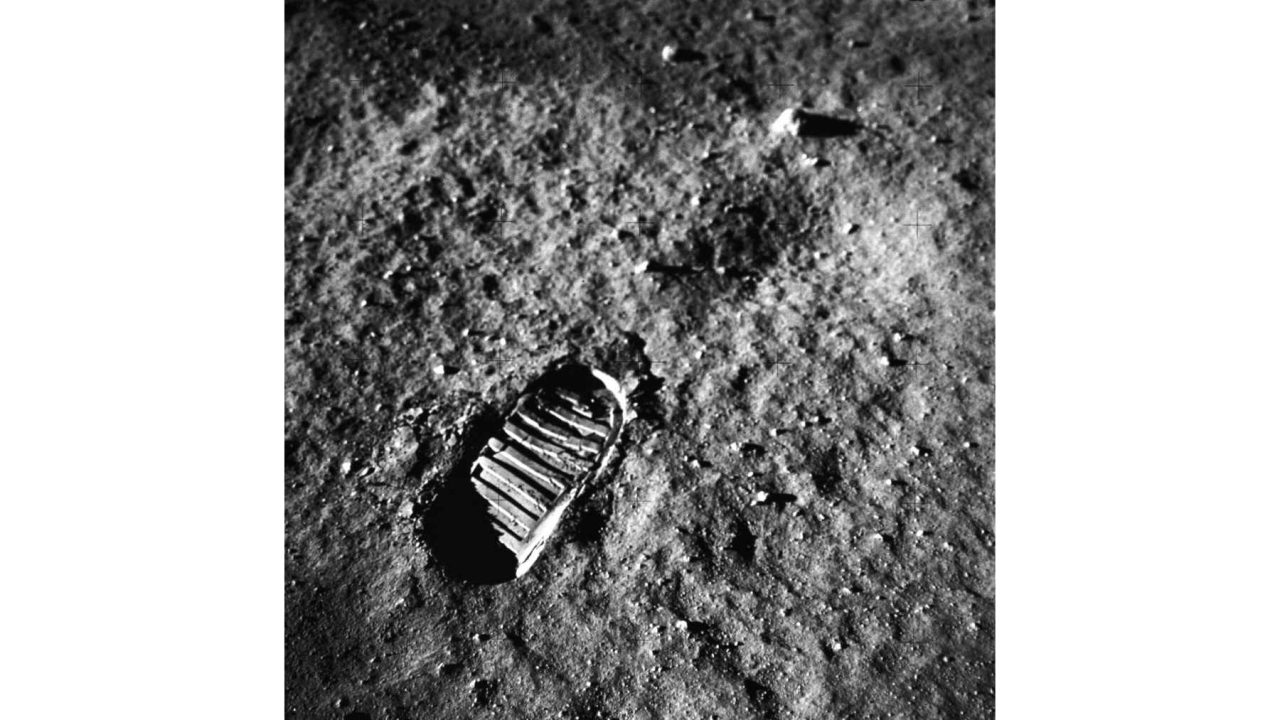
The findings don’t just rewrite our understanding of the Moon. They raise a remarkable possibility for future space exploration: that astronaut boots treading the lunar soil could be disturbing a hidden archive of Earth’s deep atmospheric history.
How Earth Has Been “Fertilizing” the Moon
The research combines advanced computer models of Earth’s magnetic field with real measurements taken from Apollo lunar samples — the rocks and soil brought back by NASA astronauts during the Moon landings. What the team found challenges some long-standing assumptions about where certain elements in lunar soil actually came from.
The Moon’s loose surface soil contains light elements such as nitrogen and noble gases. For years, scientists assumed these came primarily from the solar wind — the constant stream of charged particles blasting outward from the Sun. But Paramanick’s team found that the non-solar portion of these elements is best explained by a different source: ions that escaped directly from Earth’s atmosphere.
Crucially, the models suggest this process worked most effectively when Earth already had a strong, established magnetic field — not during some early chaotic period before the geodynamo kicked in. That’s a significant detail. It means the lunar near side appears to have been recording the history of Earth’s geodynamo itself, rather than capturing a snapshot of some brief early era when Earth may have lacked magnetic protection.
Think of it this way: Earth’s magnetic field didn’t just shield our planet. It also, under the right conditions, funneled some of our own atmosphere outward toward the Moon over billions of years.
What the Apollo Samples Actually Show
One of the more counterintuitive details in this story involves the difference between lunar rocks and lunar soil. The Apollo missions returned both, and they tell very different stories.
- Lunar rocks contain almost no light gases — they are largely sealed, ancient objects that have preserved their original composition.
- Lunar soil (the loose surface layer, sometimes called regolith) is a different story. It has been exposed to space for billions of years, accumulating particles from multiple sources.
- The presence of nitrogen and noble gases in the soil — beyond what the solar wind alone can account for — is what points researchers toward Earth as an additional source.
This distinction matters enormously. The soil is, in effect, a long-running collection trap. And if Earth’s atmospheric ions have been landing there for billions of years, the soil could preserve a chemical timeline of how our atmosphere has evolved.
| Material Type | Light Gas Content | Likely Source |
|---|---|---|
| Lunar rocks (Apollo samples) | Almost none | Original formation material, largely sealed |
| Lunar soil / regolith | Present, including nitrogen and noble gases | Solar wind plus Earth’s atmospheric ions |
| Non-solar fraction of light elements | Unexplained by solar wind alone | Earth’s atmosphere via magnetic field pathway |
Why Earth’s Magnetic Field Is the Key to This Story
Earth’s magnetic field — generated by the movement of molten iron in the planet’s outer core — is most often discussed as a protective shield. It deflects harmful solar radiation and prevents the solar wind from stripping away our atmosphere. Without it, life as we know it would likely not exist here.
But this research points to a less familiar role. Under certain geometrical conditions, the same magnetic field that protects Earth can create pathways through which atmospheric ions escape and travel toward the Moon. The study’s models suggest this wasn’t a rare accident — it was a sustained, ongoing process that operated throughout the long history of Earth’s geodynamo.
The implication is that the lunar near side — the face of the Moon that always points toward Earth — has been on the receiving end of this atmospheric drizzle for an extraordinarily long time. The near side’s soil composition reflects that exposure in ways that the far side, largely shielded from this Earth-sourced input, does not.
What This Means for Future Moon Missions
The practical stakes here are real. As space agencies and private companies plan a new era of lunar exploration — including crewed missions that will have astronauts walking and working on the surface — understanding what’s actually in the lunar soil takes on new importance.
If the research holds up, the soil isn’t just inert gray dust. It’s a potential scientific goldmine: a layered chemical record that could reveal how Earth’s atmosphere has changed over billions of years, preserved in a location far more stable than most geological archives here on Earth itself.
Future sample-return missions or in-situ analysis tools could, in theory, read that record — offering a new window into Earth’s deep past through the lens of the Moon’s surface chemistry. The Moon, in this framing, becomes not just a destination but a witness to our planet’s entire atmospheric history.
Researchers note that further work will be needed to confirm the models against a broader range of lunar samples and to refine our understanding of exactly how much of the soil’s composition can be attributed to Earth versus the solar wind. But the foundation laid by this University of Rochester study opens a genuinely new line of scientific inquiry.
Frequently Asked Questions
Who led the research into Earth fertilizing the Moon?
The study was led by physicist Shubhonkar Paramanick at the University of Rochester.
What elements from Earth’s atmosphere have been found on the Moon?
The research focuses on light elements including nitrogen and noble gases detected in lunar soil samples returned by Apollo missions.
How does Earth’s magnetic field send particles to the Moon?
According to the study’s models, Earth’s magnetic field can create pathways that allow atmospheric ions to escape and travel toward the lunar surface, rather than acting solely as a barrier.
Why does the lunar near side matter more than the far side in this research?
The near side of the Moon always faces Earth, meaning it has been exposed to Earth-sourced atmospheric ions over billions of years in a way the far side has not.
What did Apollo lunar samples reveal about this process?
Apollo rocks contain almost no light gases, but the loose lunar soil contains nitrogen and noble gases that cannot be fully explained by the solar wind alone, pointing to Earth’s atmosphere as an additional source.
Could this discovery affect how future Moon missions are planned?
Potentially yes — if the lunar soil preserves a record of Earth’s atmospheric history, future missions could analyze that soil as a scientific archive, though further research is needed to confirm the full extent of this process.


Leave a Reply