
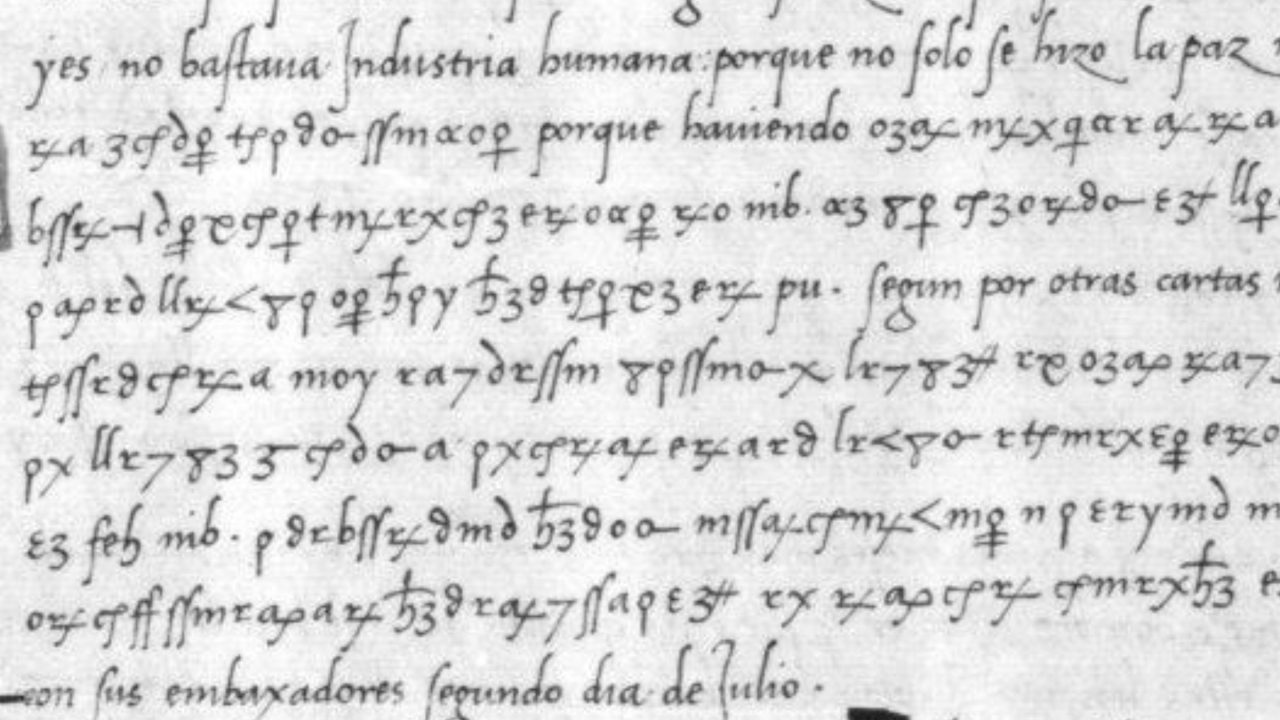
A 527-year-old coded letter that once carried sensitive intelligence about England and Scotland to the Spanish royal court has finally been fully decoded — and the secrets it held are reshaping what historians know about late medieval Britain.
The letter, written in 1498 by Spanish diplomat Pedro de Ayala, was long known to scholars but never completely translated. Now, three historians from the University of Toronto have cracked its cipher and produced what researchers are calling the most complete and accurate version of the text yet. Their findings have been published in the journal Renaissance Studies.
What they found inside is remarkable: a sweeping intelligence report covering the English royal court, Spanish marriage negotiations involving Katherine of Aragon, the political situation in Scotland, and even early accounts of John Cabot’s voyages to North America — all encoded and sent to the rulers of Spain more than five centuries ago.
Who Wrote the Letter — and Why It Was Hidden in Code
Pedro de Ayala was a nobleman from Toledo who entered the diplomatic service of the Spanish monarchs Ferdinand II of Aragon and Isabella I of Castile during the 1490s. In 1496, he was dispatched to Scotland with a specific mission: help broker a peace agreement between the Scottish and English crowns.
He would spend the next several years in Britain, becoming deeply embedded in the political life of both kingdoms. By 1498, he was well-positioned to report on everything happening at the highest levels of power — and that is exactly what this letter does.
The use of cipher was standard practice for sensitive diplomatic correspondence of the era. Intelligence about royal courts, marriage alliances, and foreign explorers was valuable and potentially dangerous in the wrong hands. Encoding it protected both the information and the messenger.
What the Decoded Letter Actually Reveals
The contents of the letter, now fully translated for the first time, cover an unusually wide range of subjects for a single diplomatic dispatch. According to the researchers, the document provides detailed reporting on several major topics of the day.
- The court of Henry VII of England — Ayala offers a close-up look at the English royal court, its workings, and its key figures during the reign of the first Tudor monarch.
- Marriage negotiations with Spain — The letter includes reporting on ongoing diplomatic discussions between England and Spain, including plans that involved Katherine of Aragon, who would later become the first wife of Henry VIII.
- Scotland and James IV — Ayala, who had spent time at the Scottish court, provides a detailed account of Scotland and its ruler, King James IV.
- John Cabot’s voyages to North America — Perhaps most strikingly, the letter contains information about the expeditions of John Cabot, the explorer who sailed to North America under an English commission in 1497 and 1498.
Together, these subjects make the letter one of the most wide-ranging diplomatic intelligence reports to survive from this period of British history.
The Scholars Behind the Decoding
The work of fully translating the letter was carried out by three scholars at the University of Toronto: Adrian William Jaime, Valeria Tapia Cruz, and Mairi Cowan. Their research builds on decades of earlier work by other historians who had studied the letter but had not produced a complete and accurate translation.
| Detail | Information |
|---|---|
| Letter author | Pedro de Ayala, nobleman from Toledo |
| Year written | 1498 |
| Intended recipients | Spanish monarchs Ferdinand II of Aragon and Isabella I of Castile |
| Researchers who decoded it | Adrian William Jaime, Valeria Tapia Cruz, Mairi Cowan (University of Toronto) |
| Published in | Renaissance Studies |
| Ayala’s original mission to Britain | Facilitate peace between Scotland and England (from 1496) |
| Topics covered in the letter | Henry VII’s court, Katherine of Aragon negotiations, James IV of Scotland, John Cabot’s voyages |
Why This Discovery Matters Beyond the History Books
At first glance, a 500-year-old coded letter might seem like a purely academic concern. But the details Ayala recorded in 1498 touch on events that shaped the modern world in very direct ways.
The marriage negotiations he described — involving Katherine of Aragon — would eventually lead to a union with the future Henry VIII, a marriage whose collapse triggered the English Reformation and permanently altered the religious and political landscape of Britain. Ayala was observing those early diplomatic threads being pulled.
The references to John Cabot’s North American voyages are equally significant. Cabot’s expeditions, launched from Bristol, were among the earliest European explorations of the North American mainland. Having a contemporary diplomatic account that mentions them adds a new primary source to historians’ understanding of how those voyages were perceived at the time — and how news of them spread across Europe through diplomatic channels.
For historians of the period, a fully decoded and accurately translated version of this letter fills gaps that partial translations simply could not. The researchers note that earlier attempts to work with the document had left it incomplete, meaning that portions of Ayala’s intelligence report had never been properly read — until now.
What Comes Next for This Research
The publication of the decoded letter in Renaissance Studies opens the document up to broader scholarly scrutiny for the first time. Researchers working on Tudor England, early modern Spain, Scottish history, and the age of exploration now have access to a more complete version of one of the era’s most detailed diplomatic dispatches.
Whether further analysis will surface additional details — or prompt re-examination of other coded correspondence from the same period — remains to be seen. The University of Toronto team’s work has, at minimum, demonstrated that documents long considered partially understood can still yield significant new information with the right combination of expertise and persistence.
Five centuries is a long time for a secret to keep. This one, it turns out, still had plenty left to say.
Frequently Asked Questions
Who wrote the secret letter that was decoded?
The letter was written by Pedro de Ayala, a Spanish nobleman from Toledo who served as a diplomat for Ferdinand II of Aragon and Isabella I of Castile.
When was the letter written and what was it used for?
The letter was written in 1498 and was used to carry sensitive diplomatic intelligence about England and Scotland to the Spanish royal court.
Who decoded the letter, and where were they based?
Three historians at the University of Toronto — Adrian William Jaime, Valeria Tapia Cruz, and Mairi Cowan — decoded the cipher and produced the first complete translation.
What subjects does the decoded letter cover?
The letter covers the court of Henry VII, marriage negotiations involving Katherine of Aragon, information about Scotland and King James IV, and details about John Cabot’s voyages to North America.
Where were the findings published?
The research was published in the academic journal Renaissance Studies.
Had anyone translated the letter before this?
Earlier historians had studied the letter, but the University of Toronto team’s translation is described as the most complete and accurate version yet produced, building on decades of prior work that left the document only partially decoded.


Leave a Reply