
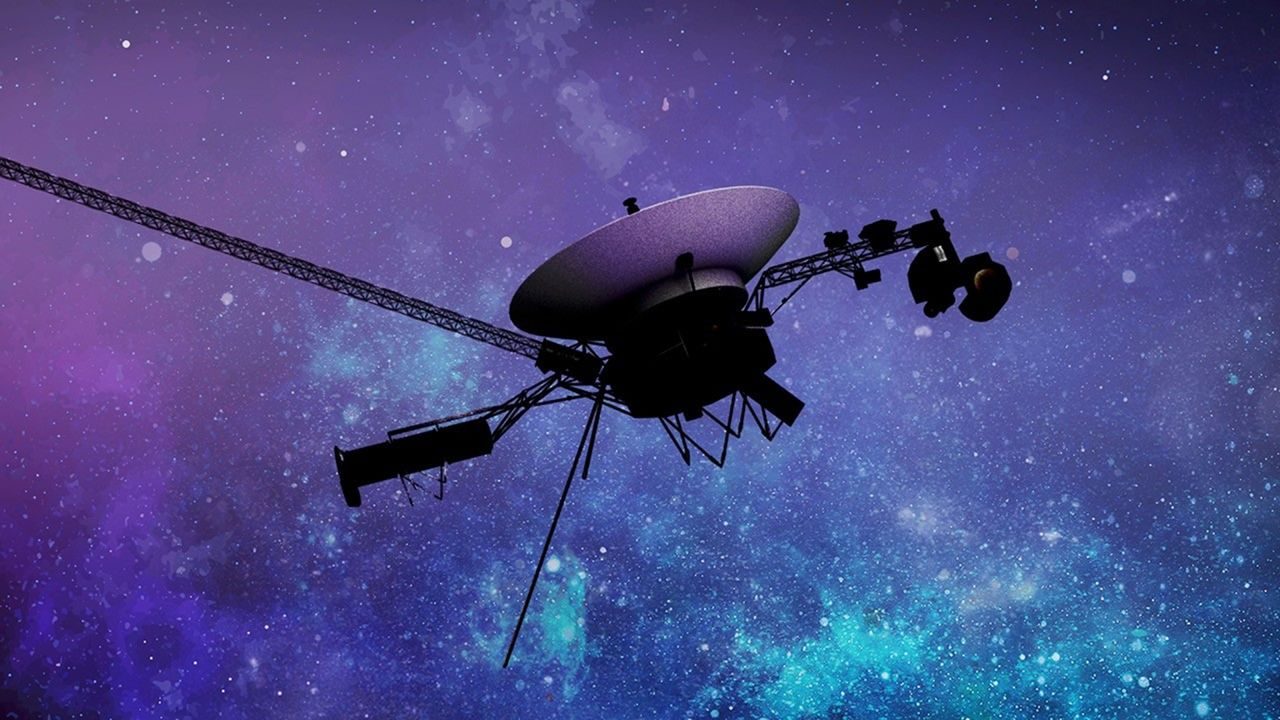
After nearly 50 years traveling through the void of space, Voyager 1 — humanity’s most distant spacecraft — is running out of power. And NASA is making increasingly difficult choices to keep it alive.
On Friday, April 17, mission controllers commanded Voyager 1 to shut down its Low-Energy Charged Particle (LECP) experiment, one of the probe’s last remaining active science instruments. The move was deliberate but not easy: the LECP has been collecting data on charged particles streaming through interstellar space, and switching it off means losing a window into a region of the universe no human-made object has ever explored before.
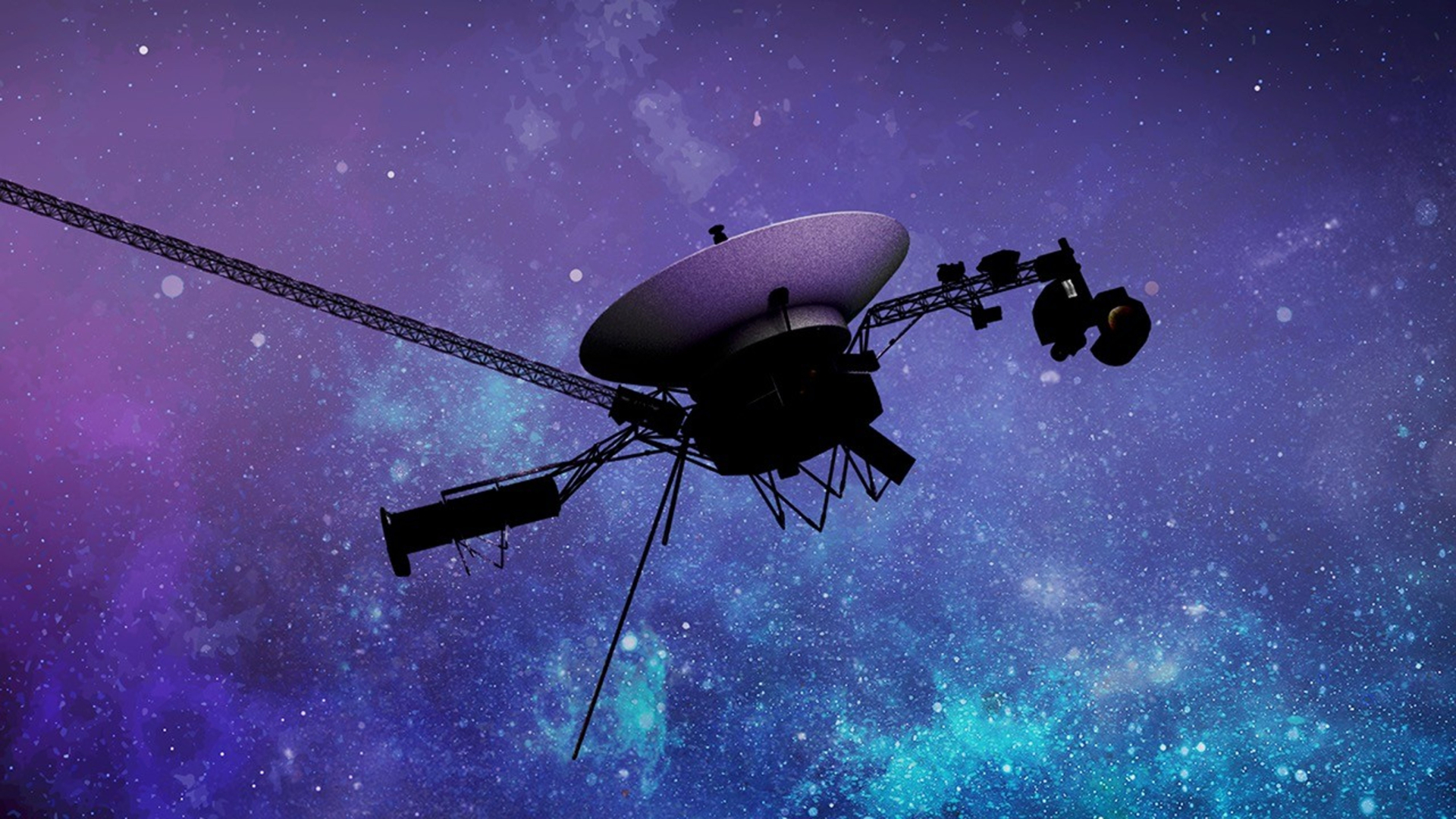
But power is finite, and time is running short. NASA is preparing for what mission managers are calling a “Big Bang” maneuver later this summer — a bold, last-ditch effort to squeeze more operational life out of both Voyager 1 and its twin, Voyager 2. The instrument shutdown is part of the careful energy conservation strategy that makes that maneuver possible.
Why Voyager 1 Is Shutting Down Its Own Eyes and Ears
Voyager 1 launched in 1977. It has been traveling through space for close to half a century, and it is now so far from Earth that a radio signal traveling at the speed of light takes more than 22 hours to reach it one way. There is no repair crew coming. There are no replacement parts. Every decision NASA makes about this spacecraft is essentially permanent.
The probe runs on power generated by a radioisotope thermoelectric generator — a device that converts heat from the natural decay of plutonium-238 into electricity. That power output has been slowly declining for decades, dropping by roughly four watts per year. At this point, the spacecraft simply cannot run all of its systems simultaneously.
Shutting down the LECP instrument is the latest in a long series of sacrifices made to keep the spacecraft’s core systems — particularly its communication equipment and flight systems — operational. Without those, Voyager 1 goes silent forever.
What the “Big Bang” Maneuver Actually Means
The phrase “Big Bang” in this context refers to a planned operational event that NASA mission managers hope will give both Voyager probes a meaningful extension of life.
The details of exactly what the maneuver involves have not been fully described in the available reporting, but the framing — “last-ditch,” “risky,” and designed to “save power” — signals that engineers are working at the very edge of what the aging spacecraft can handle. At this stage of the mission, every watt matters.
Both Voyager 1 and Voyager 2 are expected to benefit from whatever is planned, suggesting NASA is treating the two probes as a coordinated system even as they travel in different directions through interstellar space.
What Voyager 1 Has Already Given Up — and What Remains
The history of Voyager 1’s instrument shutdowns tells the story of a spacecraft being slowly, carefully wound down over the years to preserve what matters most.
| Spacecraft System / Instrument | Status |
|---|---|
| Low-Energy Charged Particle (LECP) experiment | Shut down April 17, 2025 |
| Core communication systems | Still operational (priority systems) |
| Flight control systems | Still operational (priority systems) |
| Remaining science instruments | Reduced — exact count not confirmed in source |
| Power source (plutonium-238 RTG) | Declining output, approximately 4 watts lost per year |
The LECP instrument was specifically designed to measure the energy and composition of charged particles — data that has been invaluable for understanding what interstellar space actually looks like beyond the influence of our sun. Losing it is a genuine scientific cost, not just a technical footnote.
Why This Matters Beyond the Science Community
It is easy to think of Voyager 1 as a relic — a piece of 1970s hardware drifting through the dark. But what it represents is something much larger than the sum of its aging parts.
No other human-made object has traveled as far. Voyager 1 crossed into interstellar space — the region beyond the sun’s protective bubble, known as the heliosphere — and has been sending back data from that uncharted territory ever since. Everything it tells us is genuinely new. There is no other source for this information.
The instruments being shut down one by one are not being retired because the science is finished. They are being switched off because the alternative is losing the spacecraft entirely. NASA is making a calculated trade: sacrifice some science now to preserve the possibility of any science at all later.
For anyone who has ever looked up at the night sky and wondered what lies beyond our solar system, Voyager 1 is the only object that can actually answer that question from direct experience — and it is running out of time.
What Happens Next for Voyager 1 and Its Twin
The immediate next milestone is the planned “Big Bang” maneuver expected later this summer. Mission managers hope this effort will extend the operational lives of both Voyager 1 and Voyager 2, though the maneuver is described as risky — meaning there are no guarantees.
If successful, the probes could continue transmitting data for at least a few more years. If something goes wrong, either spacecraft could go silent permanently. Given that Voyager 1 is already nearly 50 years into a mission that was originally designed to last five years, every additional day of operation is, by any measure, extraordinary.
NASA engineers will continue monitoring power levels closely and may be forced to deactivate additional instruments before or after the summer maneuver, depending on how the spacecraft’s systems respond. The agency has not publicly committed to a final shutdown date for either probe.
Frequently Asked Questions
What is the Low-Energy Charged Particle (LECP) experiment on Voyager 1?
The LECP is a science instrument designed to measure the energy and composition of charged particles in space. It was shut down on April 17, 2025, to conserve power.
Why is NASA shutting down Voyager 1’s instruments?
Voyager 1’s plutonium-powered generator produces less electricity every year, and NASA must prioritize power for the spacecraft’s communication and flight systems to keep it operational.
What is the “Big Bang” maneuver NASA is planning?
It is a planned operational event described by mission managers as a last-ditch effort to extend the lives of both Voyager probes, expected to take place later in the summer of 2025. Full technical details have not been confirmed in available reporting.
How far away is Voyager 1 from Earth?
Voyager 1 is so distant that a radio signal traveling at the speed of light takes over 22 hours to reach it one way, making it the most remote human-made object ever built.
Will both Voyager 1 and Voyager 2 benefit from the planned maneuver?
According to available reporting, yes — NASA’s plan is intended to help both Voyager probes, which are traveling in different directions through interstellar space.
When will Voyager 1 stop working entirely?
NASA has not publicly committed to a final shutdown date. Engineers continue making instrument-by-instrument decisions to extend the mission as long as physically possible.



Leave a Reply