
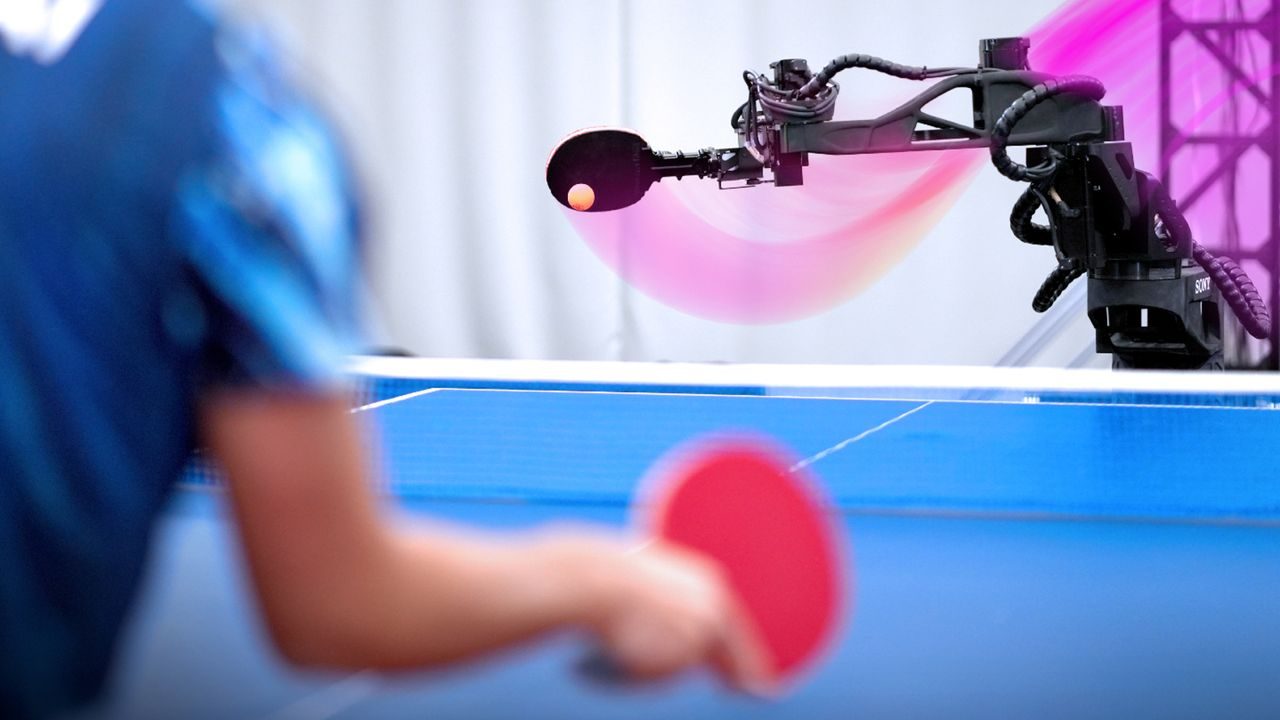
A robot just served 16 unanswered points against elite table tennis players — and the sport may never look quite the same again.
Sony’s AI division has unveiled a machine called Ace, an autonomous table tennis robot that doesn’t just rally back and forth with beginners. It competes at a level that has left expert human players unable to score a single return. That’s not a simulation. That’s not a controlled lab environment with hobbyist opponents. Those are real, elite players walking away from the table without a point.
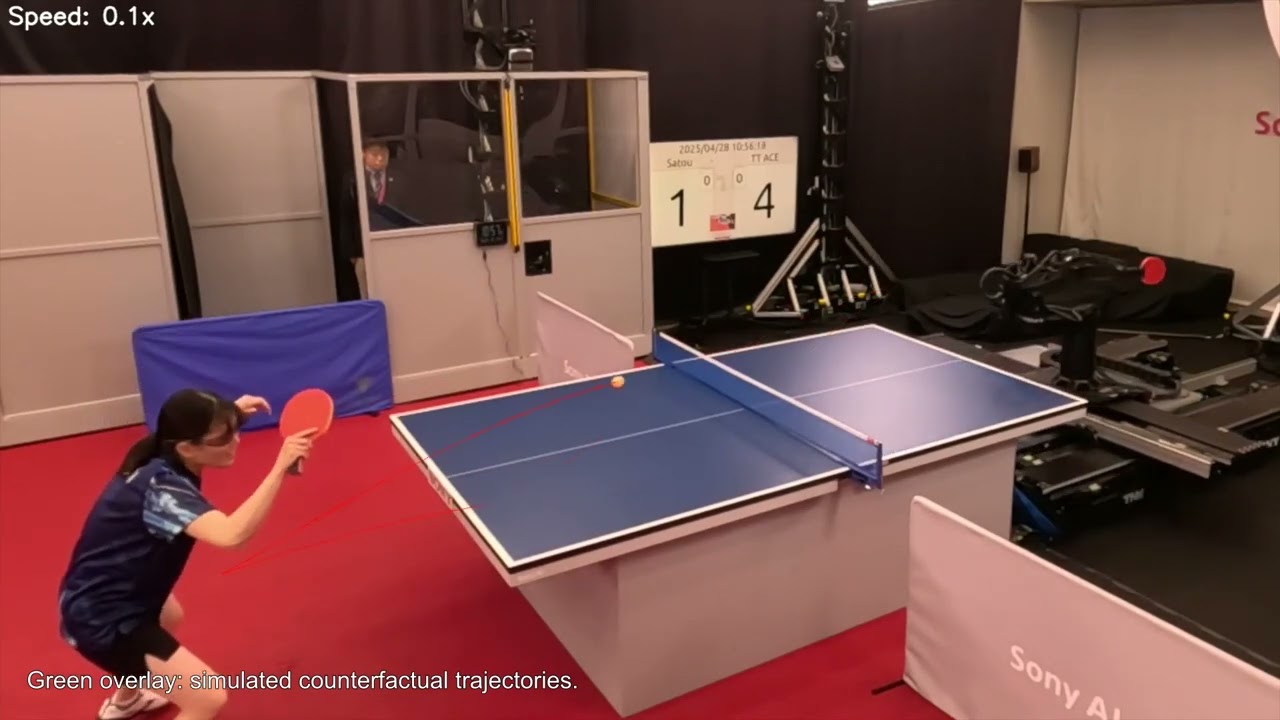
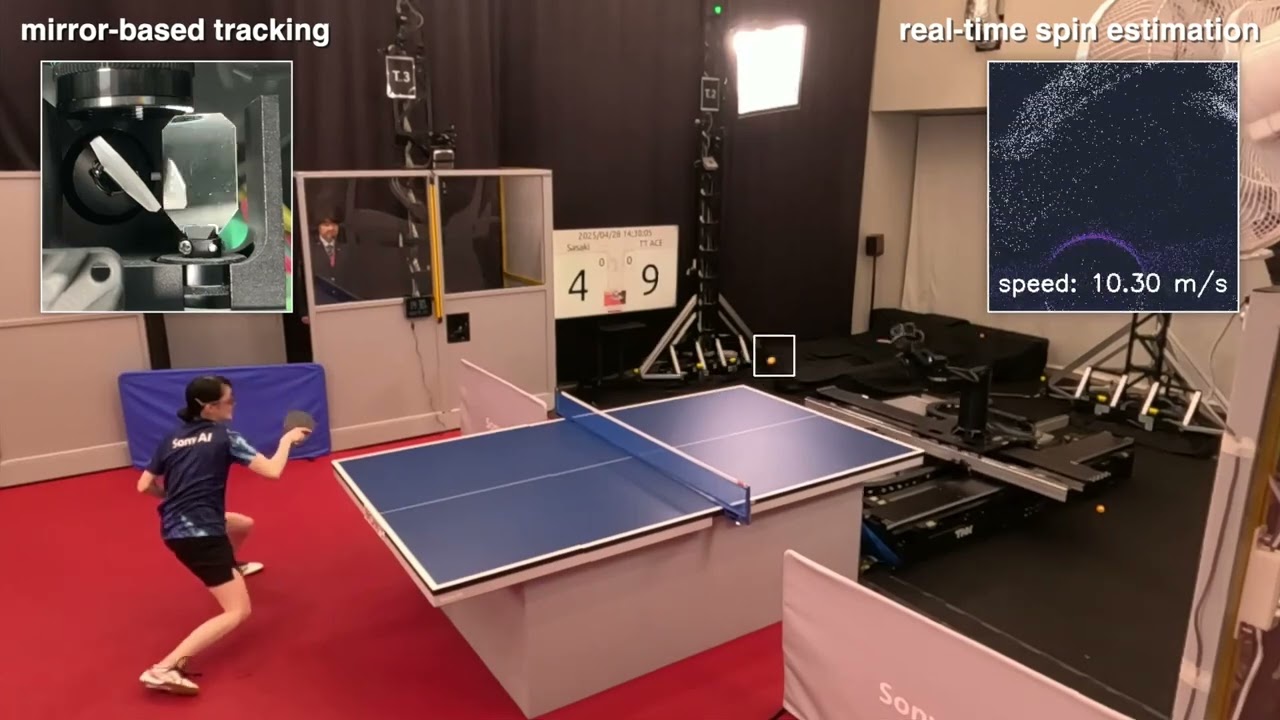
The moment marks what Sony AI representatives are calling a genuine milestone — not just in robotics, but in the broader history of competitive sport.
What Sony’s AI Robot Actually Did
Ace was built using a combination of high-speed cameras and proprietary state-of-the-art hardware developed by Sony’s AI division. During its showcase, the robot served against multiple elite table tennis players and scored 16 unchallenged points — meaning 16 consecutive serves that opponents simply could not return.
In table tennis, an unreturnable serve is called an “ace,” which is exactly where the robot gets its name. Landing one ace against a skilled player takes precision. Landing 16, across multiple elite opponents, is something else entirely.
Sony AI representatives stated that this is “the first time a robot has achieved expert-level play in a commonly played competitive sport in the physical world.” That’s a significant claim — and one worth paying attention to, given how long robotics researchers have been chasing this kind of benchmark.
Why This Is Different From What Came Before
AI has beaten humans at chess, Go, and video games for years. But those are digital or board-based environments where the AI only needs to process information and output a decision. The physical world is far more complicated.
Table tennis requires split-second mechanical responses — reading a spinning ball traveling at high speed, calculating trajectory, and executing a precise physical movement in real time. The margin for error is tiny. A slight miscalculation in angle or timing and the shot fails entirely.
That’s why robotics researchers have long viewed physical competitive sports as a much harder problem than games played on a screen or board. Ace appears to have cleared that bar, at least in the specific context of serving.
The high-speed cameras are central to how the system works. They allow Ace to process visual information fast enough to react within the timeframes that competitive table tennis demands. Combined with Sony’s proprietary hardware, the system can translate that information into physical movement with the kind of consistency human muscles simply cannot guarantee.
Key Facts About the Ace Robot at a Glance
| Detail | What We Know |
|---|---|
| Developer | Sony AI division |
| Robot name | Ace |
| Key technology | High-speed cameras and proprietary hardware |
| Points scored | 16 unchallenged aces against elite players |
| Opponents | Multiple elite table tennis players |
| Claimed milestone | First robot to achieve expert-level play in a commonly played competitive physical sport |
- Ace is autonomous — it operates without human control during play
- The robot’s name directly references the table tennis term for an unreturnable serve
- Sony AI framed the achievement as a first in the broader field of physical sport robotics
- The system relies on real-time visual processing through high-speed cameras
What This Means for Sport, Robotics, and the Rest of Us
For the robotics community, Ace represents a proof of concept that has been difficult to achieve: a machine that can hold its own against expert humans not in a controlled digital space, but on a real playing surface with real physics.
For the table tennis world, the implications are still unfolding. Serving is one component of the game, and 16 aces — while remarkable — doesn’t mean Ace is ready to win a full match against a world champion. But it demonstrates that the technical gap between machines and elite humans in physical sport is closing faster than many expected.
More broadly, the technology behind Ace — high-speed visual processing combined with precise physical actuation — has applications well beyond sport. Manufacturing, surgery, logistics, and any field where machines need to respond to fast-moving physical environments could benefit from the same underlying advances.
Sony’s decision to demonstrate this capability through sport is deliberate. Sport provides a clear, measurable, universally understood benchmark. When a robot beats elite human players at their own game, the achievement is impossible to dismiss or minimize.
What Comes Next for AI-Powered Robotics in Sport
Sony AI has not publicly confirmed what the next phase of Ace’s development looks like, or whether the robot will be tested in full match conditions against ranked players. Those details have not yet been released.
What is clear is that the bar has moved. The question researchers and sports organizations will now be asking is not whether AI-powered robots can compete with elite human athletes in physical sports — Ace has answered that, at least in part. The question now is how far that capability can extend.
Whether that future arrives in table tennis first, or spreads to other sports, the moment Sony’s robot served its 16th unreturnable point, something shifted. Machines competing in the physical world at expert human level is no longer a theoretical milestone. It has happened.
Frequently Asked Questions
What is the Sony AI table tennis robot called?
The robot is called Ace, a name that references the table tennis term for an unreturnable serve.
How many points did the Ace robot score against elite players?
Ace scored 16 unchallenged points, known as aces, while serving against multiple elite table tennis players.
What technology does the Ace robot use?
Ace uses a combination of high-speed cameras and proprietary state-of-the-art hardware developed by Sony’s AI division.
Has a robot ever beaten elite players in a physical sport before?
According to Sony AI representatives, this is the first time a robot has achieved expert-level play in a commonly played competitive sport in the physical world.
Can Ace play a full table tennis match against a human champion?
This has not yet been confirmed. The reported achievement specifically involves serving, and Sony AI has not publicly detailed plans for full match testing.
Who built the Ace robot?
Ace was developed by Sony’s AI division, which unveiled the robot and described its performance against elite players.




Leave a Reply