
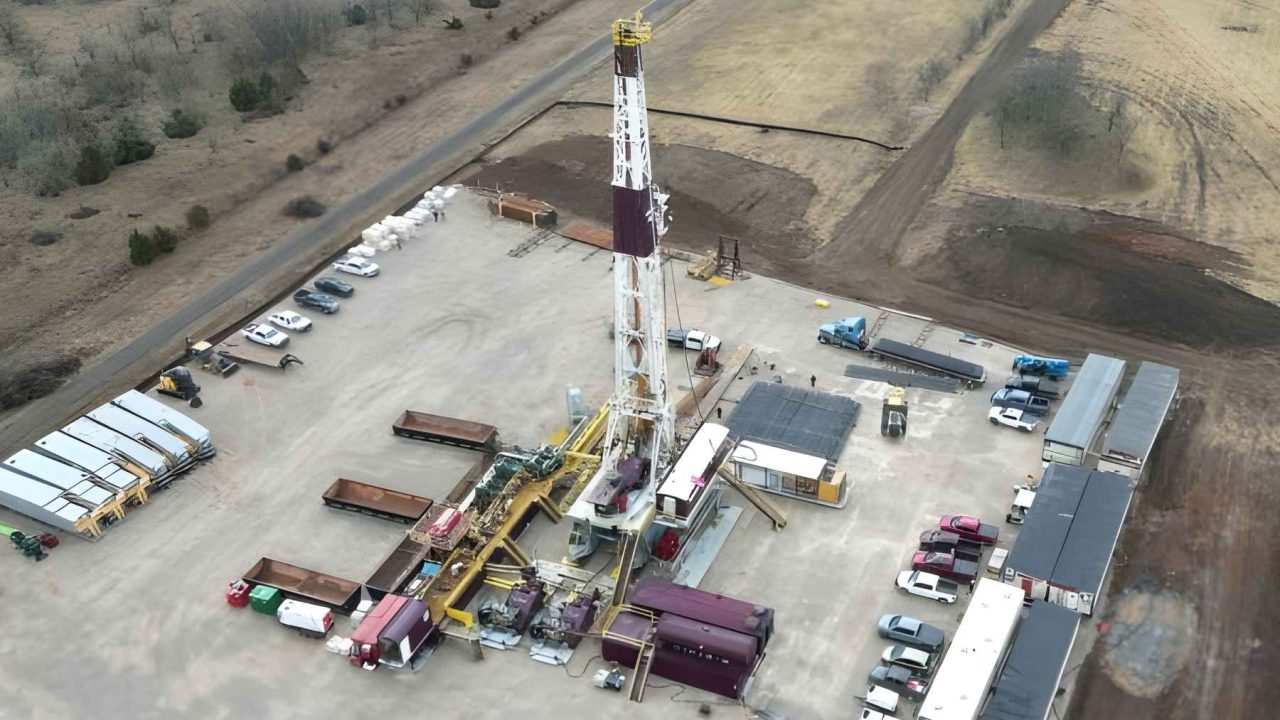
What if the safest place to put a nuclear reactor wasn’t behind reinforced concrete walls above ground — but buried nearly a mile and a half beneath the earth’s surface? That’s the core idea behind a California startup called Deep Fission, which has begun drilling in Parsons, Kansas, for something the U.S. nuclear industry has never attempted before.
The company is working toward a small pressurized water reactor designed to sit nearly 6,000 feet underground, using the surrounding rock itself as a primary containment and safety system. And according to Deep Fission, the target date for the reactor reaching “criticality” — the point at which a sustained nuclear chain reaction begins — is July 2026.
That timeline is aggressive. But the concept, if it proves viable, could quietly reshape how the United States thinks about nuclear energy, grid reliability, and the infrastructure needed to power an increasingly electricity-hungry economy.
Why Bury a Reactor Underground?
Traditional nuclear plants are engineering monuments. They require massive surface foundations, thick concrete-and-steel containment domes, sprawling cooling systems, and enormous security perimeters. They take years — sometimes decades — to permit and build, and they cost billions of dollars before a single watt of power flows to the grid.
Deep Fission’s pitch flips that model. Instead of constructing elaborate above-ground containment structures, the company proposes lowering a reactor into a narrow borehole shaft — essentially treating it like a piece of industrial equipment being deployed into a well — and letting the geology do the heavy lifting.
At nearly 6,000 feet underground, the surrounding rock provides natural shielding, pressure containment, and thermal management that would otherwise require expensive engineered systems at the surface. The approach is described as both simpler and potentially far less costly than conventional nuclear construction.
Supporters of the concept argue that this design could dramatically reduce the physical footprint of a nuclear facility, lower construction costs, and speed up deployment timelines — three of the biggest obstacles that have plagued the U.S. nuclear industry for decades.
The Kansas Drilling Project: What’s Actually Happening
Deep Fission says it has started drilling the first of three planned exploratory wells at its Parsons, Kansas site. These boreholes are described as the opening move in a broader effort to validate the underground deployment concept before the pilot reactor goes live.
The exploratory drilling phase is critical. Before any reactor hardware goes into the ground, the company needs to confirm that the geology at the site is suitable — that the rock formations at depth will behave as expected and support the containment strategy the entire design depends on.
The pilot reactor, if it proceeds on schedule, would aim to reach criticality in July 2026. That would mark the first time in American history that a nuclear reactor has operated at that kind of depth, making it a genuine first for the U.S. nuclear sector.
| Detail | Specification |
|---|---|
| Company | Deep Fission (California-based startup) |
| Drilling Location | Parsons, Kansas |
| Reactor Depth | Nearly 6,000 feet underground |
| Reactor Type | Pressurized water reactor |
| Exploratory Wells Planned | Three |
| Target Criticality Date | July 2026 |
The Energy Problem This Is Trying to Solve
The timing of Deep Fission’s project is not accidental. Across the United States, electricity demand is rising sharply — driven in large part by the explosive growth of data centers and energy-intensive industrial operations that require reliable, around-the-clock power.
Wind and solar energy have expanded rapidly and play an increasingly important role in the grid. But they cannot always provide power on demand. When the wind doesn’t blow and the sun doesn’t shine, something else has to fill the gap. Nuclear energy, which generates power continuously regardless of weather conditions, is one of the few carbon-free sources that can do that reliably.
The challenge has always been cost and construction time. If Deep Fission’s underground approach can deliver nuclear power at a smaller scale, faster, and at lower cost than conventional plants, it could become a meaningful option for utilities, data center operators, and industrial sites that need firm, clean power and can’t wait a decade for it.
That’s a significant “if.” But it’s the kind of question the Kansas project is designed to start answering.
What Makes This Different from Other Small Reactor Projects
The U.S. nuclear industry has seen considerable interest in small modular reactors, or SMRs, in recent years. Several companies are pursuing above-ground designs that aim to be cheaper and faster to build than traditional large plants. Deep Fission’s approach is distinct from all of them.
Rather than simply scaling down a conventional reactor and building it at the surface, Deep Fission is proposing a fundamentally different deployment strategy — one where the earth itself becomes part of the safety architecture. That’s a concept the U.S. nuclear industry has never operationalized before at this scale or depth.
Whether regulators, investors, and the public will embrace that concept remains an open question. Underground nuclear deployment raises novel questions about monitoring, maintenance access, and emergency response that conventional licensing frameworks weren’t built to address.
What Comes Next for Deep Fission
The immediate next step is completing the exploratory drilling phase in Parsons, Kansas. The results of those three boreholes will determine whether the site’s geology supports the full pilot reactor deployment.
If the geology checks out and the project stays on schedule, Deep Fission is targeting July 2026 as the date for its pilot reactor to achieve criticality — the milestone that would confirm a sustained nuclear chain reaction is occurring underground for the first time in U.S. history.
Beyond that, the path to commercial deployment would involve regulatory approval, additional testing, and the kind of public and investor confidence that only a successful pilot can build. For now, Deep Fission is focused on proving the concept works at all — starting with what’s happening beneath a field in Kansas.
Frequently Asked Questions
What is Deep Fission trying to build?
Deep Fission is a California-based startup working to deploy a small pressurized water reactor nearly 6,000 feet underground, using surrounding rock as a key part of its safety and containment strategy.
Where is the project located?
The company has begun drilling exploratory wells in Parsons, Kansas, which is the planned site for its pilot underground reactor.
Has anything like this been done before in the United States?
No. According to the available reporting, this type of underground nuclear reactor deployment at this depth has never been attempted in the United States before.
When is the reactor expected to go live?
Deep Fission is targeting July 2026 for the pilot reactor to reach “criticality,” meaning a sustained nuclear chain reaction would begin underground.
Why does the depth matter for safety?
The company’s concept relies on the rock surrounding the reactor at nearly 6,000 feet to provide natural containment and shielding, reducing the need for the massive engineered containment structures required by conventional surface-level nuclear plants.
Who would benefit from this kind of reactor if it works?
Data centers, industrial facilities, and utilities that need continuous, reliable, carbon-free power are identified as potential beneficiaries, particularly in situations where wind and solar cannot consistently meet demand on their own.

Leave a Reply