
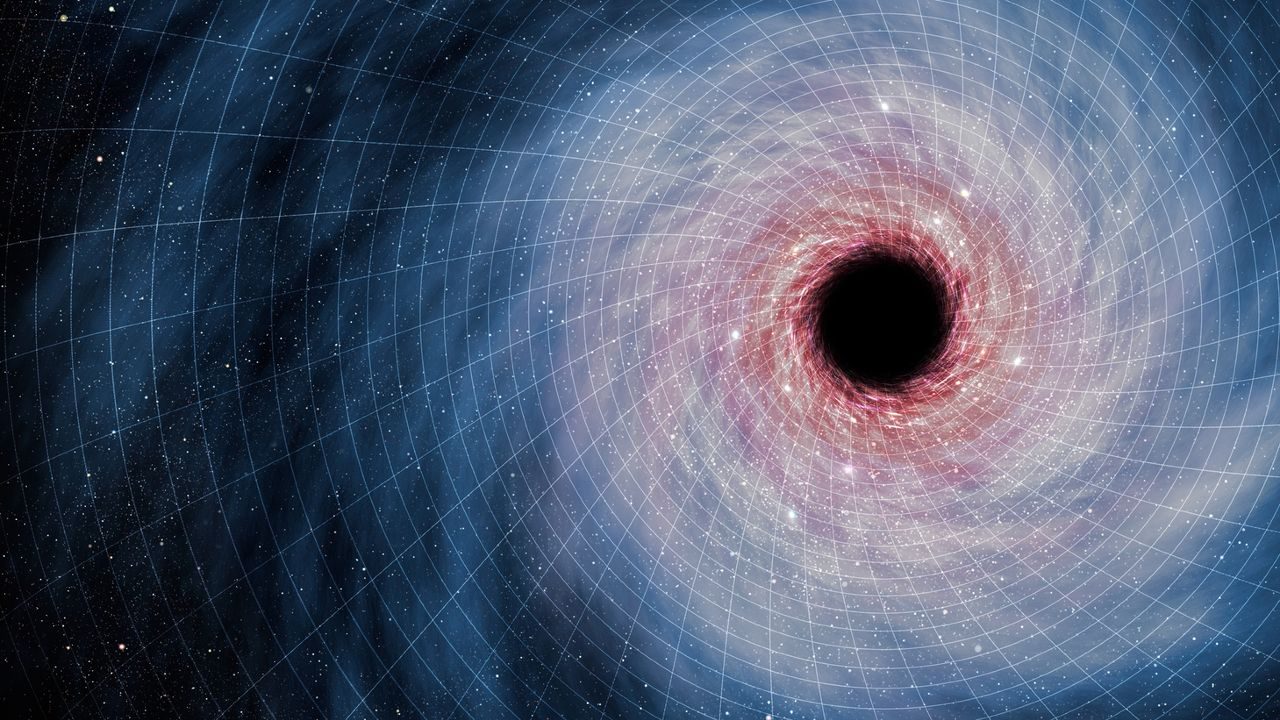
What if one of the most famous unsolved problems in all of physics — a paradox that haunted Stephen Hawking for decades — could be resolved by the existence of hidden dimensions we cannot see or touch? A new theoretical study suggests exactly that, and its implications reach into the deepest questions about the nature of reality, information, and whether anything in the universe is ever truly lost forever.
The research proposes that black holes may never fully evaporate. Instead, they could leave behind tiny, stable remnants — microscopic structures that quietly hold onto every piece of information the black hole ever swallowed. If that turns out to be correct, it would resolve one of the most stubborn contradictions in modern physics: the black hole information paradox.
The twist? The solution may depend on the universe having not four dimensions, not five or six, but seven dimensions — three of them hidden from anything we can currently observe or measure.
What the Black Hole Information Paradox Actually Is
To understand why this matters, it helps to know what the paradox is in the first place. In the 1970s, Stephen Hawking made a stunning theoretical discovery. He showed that black holes are not entirely black — they slowly emit radiation, now called Hawking radiation, and over an enormous span of time, a black hole will radiate away all of its mass and eventually evaporate completely.
That sounds remarkable enough on its own. But the problem runs deeper. According to quantum mechanics — the branch of physics that governs the behavior of particles at the smallest scales — information cannot be destroyed. Every piece of data about the state of a physical system must be preserved somewhere, in some form, even as that system changes.
Hawking’s evaporating black hole appeared to violate that rule. If a black hole swallows matter and then disappears entirely, what happens to all the information that matter carried? Where does it go? Hawking’s original calculations suggested it was simply gone — which put two of the most powerful frameworks in physics, general relativity and quantum mechanics, on a direct collision course.
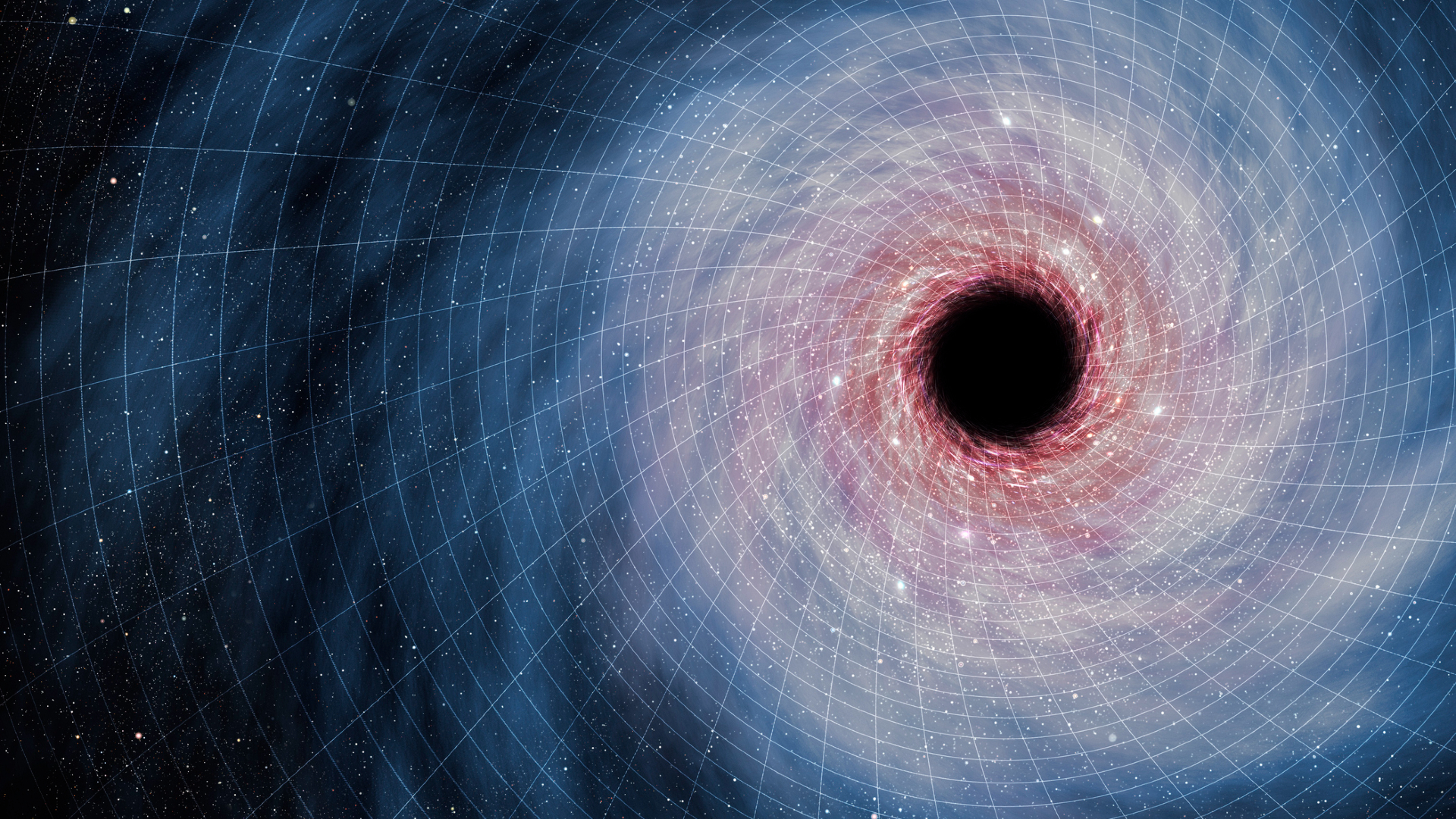
That collision has never been cleanly resolved. Physicists have proposed various workarounds over the years, but none has achieved universal acceptance. The paradox has remained open for roughly half a century.
Why Seven Dimensions Could Change Everything
The new theoretical research introduces a striking possible answer: black holes never actually finish evaporating. The study suggests that if the universe contains three additional hidden spatial dimensions beyond the four we experience — length, width, height, and time — then the evaporation process halts before completion.
What gets left behind is a stable remnant. Tiny, yes, but not nothing. And crucially, that remnant would store all the information the black hole accumulated over its lifetime.
This would mean the information is never destroyed. It is locked inside the remnant, preserved in a form that does not violate quantum mechanics. The paradox, under this framework, dissolves — not because information escapes the black hole, but because the black hole itself never fully disappears.
The idea of extra dimensions is not new to theoretical physics. String theory and related frameworks have long proposed that the universe contains additional spatial dimensions that are compactified — curled up so tightly at scales far below anything current instruments can probe that they are effectively invisible. The new research builds on that tradition, applying it specifically to the fate of black holes.
What the Research Confirms — and What It Does Not
It is worth being clear about what this study is and is not. This is theoretical work — a mathematical framework exploring what would follow if certain assumptions about the structure of spacetime hold true. It has not been experimentally verified. There is no instrument currently capable of detecting the kinds of remnants the study describes, nor of directly observing hidden spatial dimensions.
| Concept | What It Means | Status |
|---|---|---|
| Hawking Radiation | Thermal radiation theoretically emitted by black holes, causing gradual mass loss | Theoretical — not directly observed |
| Black Hole Information Paradox | The conflict between Hawking’s evaporation theory and quantum mechanics’ rule that information cannot be destroyed | Unresolved — active area of research |
| Seven-Dimension Universe | The proposal that three hidden spatial dimensions exist beyond the four we experience | Theoretical — not confirmed |
| Stable Black Hole Remnants | Tiny structures left behind if black holes halt evaporation before disappearing entirely | Proposed by new study — not verified |
The study’s significance lies in the fact that it offers a mathematically coherent path through a problem that has resisted clean solutions for decades. Researchers argue that the hidden dimensions would fundamentally alter the dynamics of Hawking radiation near the endpoint of evaporation, preventing the black hole from shrinking all the way to nothing.
Why This Question Matters Beyond the Physics Classroom
The information paradox is not merely an academic puzzle. It sits at the intersection of the two greatest theories in modern physics — quantum mechanics and general relativity — and the fact that they appear to contradict each other in this scenario signals that our understanding of the universe is incomplete.
Resolving the paradox is widely considered a necessary step toward a unified theory of physics, sometimes called a theory of everything. Hawking himself returned to this problem repeatedly throughout his career, proposing and revising potential solutions. The question outlived him and remains one of the most actively debated topics in theoretical physics.
If the universe does contain hidden dimensions, and if those dimensions do prevent black holes from fully evaporating, it would represent a profound shift in how physicists understand the structure of spacetime itself. It would also vindicate quantum mechanics’ insistence that information is indestructible — a principle so fundamental that abandoning it would require rewriting physics from the ground up.
What Comes Next for This Research
Theoretical proposals like this one typically face a long road before they gain broader acceptance. The next steps involve scrutiny from other physicists, attempts to find mathematical inconsistencies or alternative interpretations, and — ideally — the identification of some observable prediction that could eventually be tested.
Black hole physics is entering an unusually productive era. The Event Horizon Telescope has produced the first direct images of black hole shadows, and gravitational wave observatories continue to detect signals from black hole mergers. Whether any future instrument could probe the scales relevant to Hawking radiation or extra-dimensional effects remains an open question, but the field is moving faster than at any point in its history.
For now, the idea that three hidden dimensions could hold the answer to one of Stephen Hawking’s greatest puzzles remains exactly that — an idea. But it is a serious one, emerging from rigorous theoretical work, and it adds a compelling new thread to one of the most fascinating unsolved problems in science.
Frequently Asked Questions
What is the black hole information paradox?
It is the conflict between Stephen Hawking’s theory that black holes eventually evaporate completely and the quantum mechanics principle that information can never be destroyed. If a black hole disappears entirely, the information it absorbed appears to vanish with it — which quantum mechanics says is impossible.
What does the new study propose?
The study suggests that black holes may never fully evaporate, instead leaving behind tiny stable remnants that store all the information the black hole once contained, potentially resolving the paradox.
How would seven dimensions solve the problem?
According to the research, three hidden spatial dimensions beyond the four we experience would alter the dynamics of black hole evaporation, halting the process before the black hole disappears entirely and preserving the information inside a stable remnant.
Has this been proven or experimentally confirmed?
No. This is theoretical research. Neither hidden dimensions nor black hole remnants of this kind have been directly observed or experimentally verified.
Did Stephen Hawking ever solve the information paradox himself?
Hawking proposed and revised various approaches to the paradox throughout his career, but no universally accepted solution was reached. The problem remains open and is one of the most actively studied questions in theoretical physics.
Could we ever test this theory?
This has not yet been confirmed. Identifying an observable prediction that could be tested with current or near-future instruments remains an ongoing challenge for researchers working in this area.




Leave a Reply