
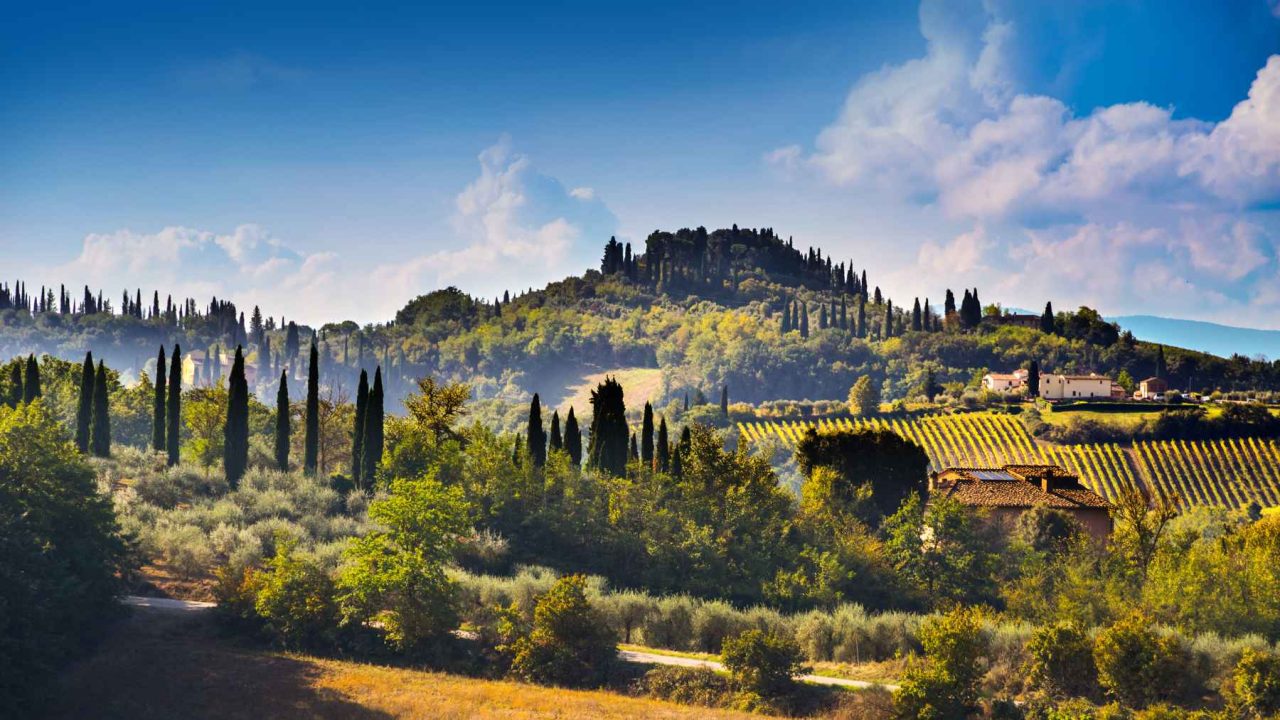
Beneath the rolling vineyards and cypress-lined hills of Tuscany — one of Europe’s most photographed and seemingly peaceful landscapes — scientists have discovered roughly 6,000 cubic kilometers of magma and partially molten rock hiding just miles below the surface. That is a volume comparable to the famous magma reservoir beneath Yellowstone, and it was sitting largely undetected until now.
The finding, detailed in a University of Geneva press release dated April 14, 2026, came from a Swiss-Italian research team that mapped the enormous zone of hot, partly melted rock beneath parts of central Italy. At the same time, a separate team released new research on Yellowstone’s own magma system, suggesting its supply works very differently than previously thought. Together, the two studies are reshaping how scientists understand what is happening deep beneath some of the world’s most-watched volcanic regions.
And before the alarm bells start ringing — researchers in both cases are saying the same thing: big discovery, but no eruption imminent.
What Scientists Actually Found Beneath Tuscany
The Swiss-Italian team identified approximately 1,440 cubic miles — or around 6,000 cubic kilometers — of magma and partially molten rock sitting beneath geothermal areas in Tuscany, specifically around Larderello and Monte Amiata. The material is located roughly 5 to 9 miles below the surface, deep enough that it has gone largely unnoticed despite sitting under a region that millions of tourists visit every year.
What makes the discovery particularly striking is not just the scale of it. It is how hidden it was. The Tuscan landscape gives almost no dramatic outward signs of what lies beneath — no bubbling geysers like Yellowstone, no obvious volcanic cones dominating the skyline. The geothermal activity around Larderello is well known to energy producers — Italy actually generates geothermal electricity there — but the sheer volume of partially molten material mapped by this team went well beyond what most had estimated.
Magma, to be clear, is molten rock that exists underground. The presence of a large magma body does not automatically mean a volcano is about to erupt. Many such reservoirs exist around the world in various states of activity, and scientists monitor them continuously to track any changes in behavior.
How This Compares to Yellowstone — and Why That Matters
The Yellowstone comparison is worth taking seriously, not because it signals danger, but because it puts the scale into perspective. Yellowstone’s magma system is one of the most studied in the world precisely because of its size and the public attention it attracts. Finding a reservoir of similar volume beneath Tuscany is a significant scientific moment.
| Feature | Tuscany Reservoir | Yellowstone (for comparison) |
|---|---|---|
| Estimated volume | ~6,000 cubic kilometers (~1,440 cubic miles) | Comparable scale |
| Depth below surface | ~5 to 9 miles | Varies by zone |
| Location | Beneath Larderello and Monte Amiata, Tuscany | Yellowstone National Park, USA |
| Research published | April 14, 2026 (University of Geneva) | Separate study, early April 2026 |
| Eruption risk flagged? | No — researchers stress no imminent risk | No — researchers stress no imminent risk |
The Yellowstone study, released around the same time, introduced another layer of complexity. A separate research team used computer modeling to argue that Yellowstone’s magma supply is pushed in from the side, not rising straight up from deep inside Earth as the traditional model assumed. That is a meaningful revision to how volcanologists understand the plumbing of one of the planet’s most-watched systems.
The Part of This Story Most Reports Are Missing
Both studies point to something broader than just two individual discoveries. They suggest that the tools scientists now have — seismic imaging, computer modeling, and improved geophysical surveys — are revealing underground structures that existing maps simply did not capture before.
In other words, there may be more of these large magma bodies sitting beneath populated or tourist-heavy regions than the current scientific consensus accounts for. The Tuscany finding was a surprise in terms of its scale. The Yellowstone finding was a surprise in terms of its geometry. Both hint that Earth’s volcanic plumbing is more complex, and in some ways more extensive, than researchers had assumed even a decade ago.
For regions like Tuscany, which already harnesses geothermal energy from the same underground heat source, better mapping of these reservoirs also has practical value beyond volcanic risk assessment. Understanding the structure and volume of heat sources underground can directly inform energy development decisions.
What This Means for People Living in or Visiting the Region
The honest answer, based on what scientists have said, is that daily life in Tuscany is not affected by this discovery. Researchers were explicit: the finding does not indicate an eruption is coming. Magma reservoirs of this kind can remain geologically stable for extremely long periods.
What it does mean is that the region will likely attract more scientific attention going forward. More monitoring, more research, and more refined models of what sits beneath the surface. For residents and local authorities, that increased scientific scrutiny is generally a positive development — better data leads to better preparedness, even when no immediate threat exists.
For the broader public, both studies serve as a reminder that some of the most dramatic geological activity on Earth happens completely out of sight, beneath landscapes that look entirely ordinary from above.
What Researchers Are Expected to Do Next
Both studies were released in early April 2026, meaning the scientific community is still in the early stages of absorbing and responding to the findings. Follow-up research, peer review responses, and refined modeling are the natural next steps for work of this kind.
The University of Geneva press release from April 14, 2026 presented the Tuscany findings as a significant new contribution to the understanding of European geothermal and volcanic systems. Further studies building on the new magma mapping are expected, particularly given the region’s existing importance to geothermal energy production.
For Yellowstone, the new lateral-supply model will need to be tested against existing seismic and geological data before it becomes the accepted framework — but it has already opened a new line of inquiry into how the system behaves over time.
Frequently Asked Questions
How much magma was found beneath Tuscany?
Researchers identified approximately 6,000 cubic kilometers — or about 1,440 cubic miles — of magma and partially molten rock beneath parts of Tuscany.
Where exactly is the magma located?
The hot material sits roughly 5 to 9 miles below the surface, beneath geothermal areas around Larderello and Monte Amiata in Tuscany.
Does this mean Tuscany is about to have a volcanic eruption?
No. Scientists who conducted the research were clear that the discovery does not indicate an eruption is imminent.
How does this compare to Yellowstone?
The volume of the Tuscany reservoir is described as comparable to Yellowstone’s magma system, which is one of the most studied volcanic systems in the world.
Who conducted the Tuscany research?
A Swiss-Italian research group carried out the study, with the findings detailed in a University of Geneva press release dated April 14, 2026.
What was the new finding about Yellowstone released at the same time?
A separate team used computer modeling to argue that Yellowstone’s magma supply is pushed in from the side rather than rising straight up from deep inside Earth, which challenges the traditional understanding of how the system works.



Leave a Reply