
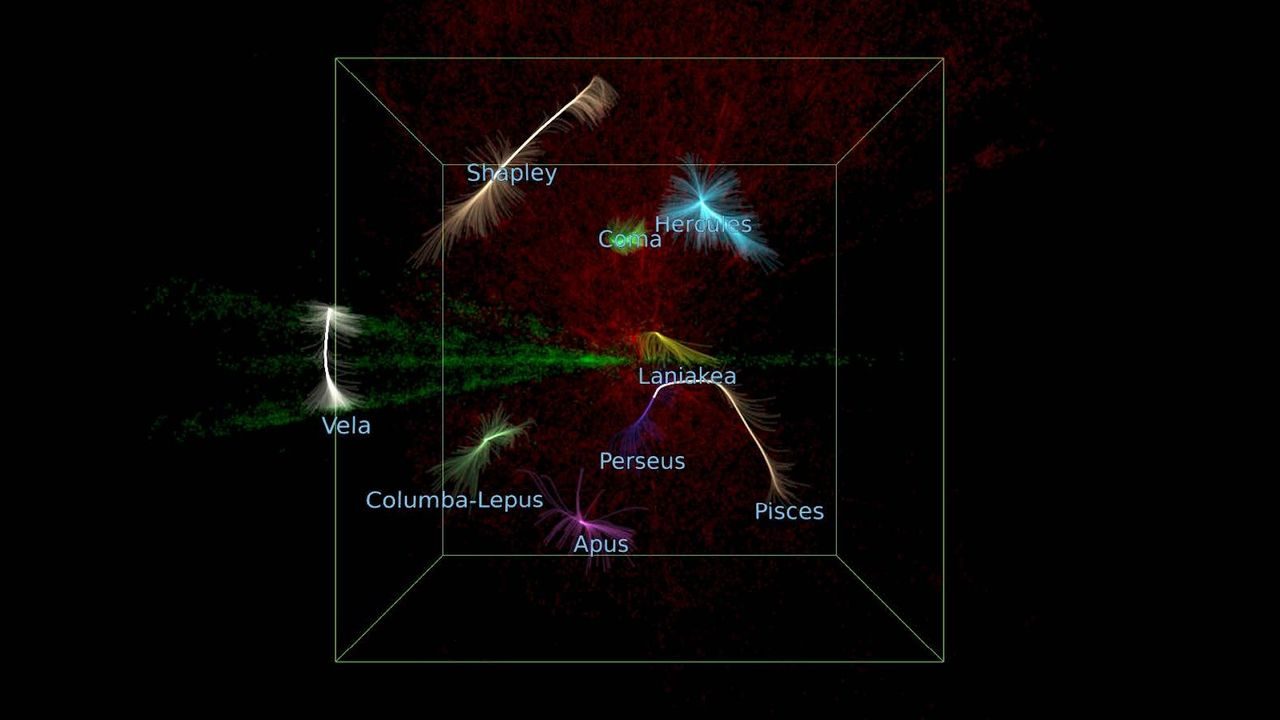
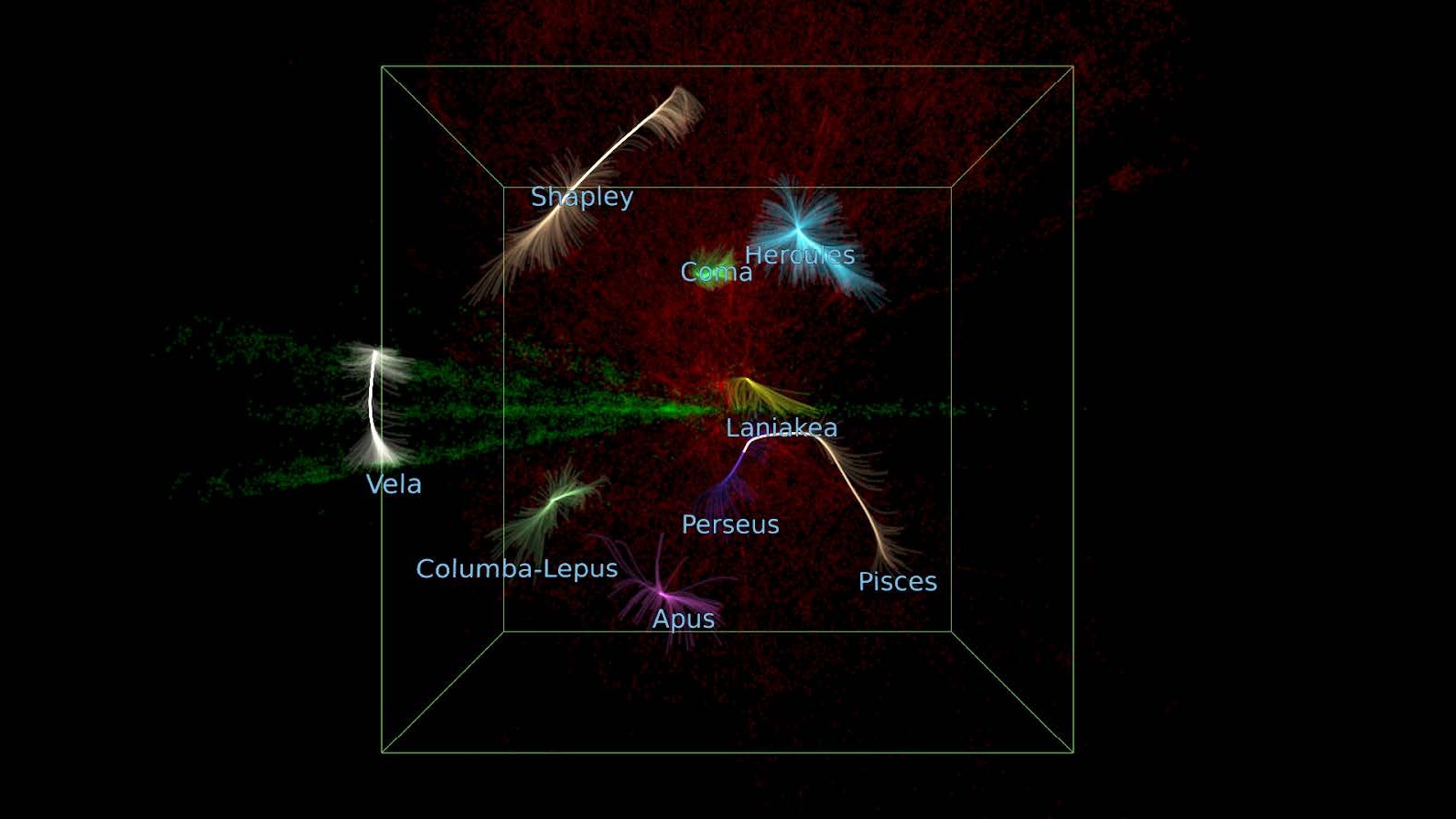
Hidden behind the dense curtain of our own galaxy, one of the largest known structures in the universe has spent a decade eluding astronomers — until now. Scientists have finally produced a full map of the Vela Supercluster, and what they found has rewritten our understanding of just how enormous this cosmic giant really is.
The Vela Supercluster sits in a region of sky astronomers call the “Zone of Avoidance” — a band of space obscured by the Milky Way’s own stars, gas, and dust. For ground-based telescopes, peering through that interference is extraordinarily difficult. As a result, Vela remained largely a mystery for the ten years since its discovery, its true scale impossible to measure.
Now, with the first complete mapping of the structure completed, researchers have confirmed that Vela ranks among some of the most massive objects in the entire known universe. The numbers are staggering, and the implications for cosmology are still being worked through.
What Is the Vela Supercluster, Exactly?
A supercluster is a vast grouping of galaxy clusters — themselves collections of hundreds or thousands of individual galaxies — bound together by gravity into a single enormous structure. They are among the largest objects that can exist in the universe, sitting at the very top of the cosmic hierarchy.
The Vela Supercluster is made up of at least 20 galaxy clusters. Each of those clusters contains its own galaxies, stars, planets, and all the matter that goes with them. When you bundle that all together, the resulting structure stretches across a volume of space that is genuinely difficult to put into human terms.
What makes Vela particularly remarkable is where it sits. The Zone of Avoidance — the region of sky blocked by the plane of the Milky Way — has long been one of astronomy’s great blind spots. Structures hiding there are notoriously hard to study, which is why it took a decade after Vela’s initial discovery to produce a proper map of it.
Why the Milky Way Was Blocking the View
When we look out into space from Earth, we are always looking through our own galaxy first. In most directions, that is manageable. But when we look toward the galactic plane — the flat disk of the Milky Way where most of its stars and gas are concentrated — the interference becomes overwhelming.
Optical telescopes struggle to see through the dust. Radio signals get scrambled. The sheer density of stars in that band of sky makes it extremely difficult to pick out faint, distant objects lurking behind it. Astronomers have long known that significant structures almost certainly exist in the Zone of Avoidance; the challenge has always been proving it.
Vela was first detected about ten years ago, but that early detection only gave researchers a rough sense that something large was there. Pinning down its actual dimensions, mass, and structure required a dedicated mapping effort — which has now been completed for the first time.
The Scale of What Was Just Mapped
The newly completed map reveals that the Vela Supercluster is far larger than previous estimates suggested. It now takes its place among the most massive structures in the known universe, comparable in scale to other enormous superclusters that astronomers have identified across the cosmos.
To give a sense of where Vela fits in the broader picture, here is how superclusters generally compare in terms of their position in the cosmic structure:
| Structure Type | Description | Position in Cosmic Hierarchy |
|---|---|---|
| Individual Galaxy | Billions of stars bound by gravity | Smallest of the large-scale structures |
| Galaxy Cluster | Hundreds to thousands of galaxies | Mid-level grouping |
| Galaxy Supercluster | Multiple clusters bound together | Among the largest structures possible |
| Vela Supercluster | At least 20 galaxy clusters | Among the most massive known objects in the universe |
The fact that a structure of this size was sitting largely uncharted for ten years speaks to how challenging the Zone of Avoidance has been for astronomers — and how much may still be hiding there.
Why This Discovery Changes the Cosmic Picture
Superclusters are not just impressive for their size. They play a meaningful role in how cosmologists understand the large-scale structure of the universe. The universe is not uniformly filled with matter — it is organized into a vast cosmic web of filaments, voids, clusters, and superclusters. Mapping that web accurately requires knowing where the major structures are.
If a supercluster as massive as Vela was missing from our models, that gap could distort our understanding of how matter is distributed across the cosmos. Researchers have noted that large, previously unmapped concentrations of mass can also influence the motion of galaxies across vast distances — including, potentially, the motion of our own Local Group of galaxies.
Getting Vela on the map is not just an achievement in observation. It is a correction to our picture of the universe itself.
What Comes Next for Vela Research
Now that a full map exists for the first time, researchers have a foundation to build on. The confirmed structure of the Vela Supercluster — with its at least 20 constituent galaxy clusters — gives astronomers specific targets to study in more detail.
Future observations can now focus on understanding the mass distribution within the supercluster, how its clusters are moving relative to one another, and what gravitational influence the entire structure exerts on surrounding regions of space. The Zone of Avoidance itself remains a frontier, and Vela’s successful mapping may encourage further efforts to probe what else is hidden behind the Milky Way’s obscuring plane.
For a structure that spent a decade in the shadows, Vela is only just beginning to reveal what it is.
Frequently Asked Questions
What is the Vela Supercluster?
The Vela Supercluster is a massive collection of at least 20 galaxy clusters, making it one of the largest known structures in the universe. It was discovered approximately ten years ago but has only now been fully mapped.
Why was the Vela Supercluster so hard to study?
Vela sits behind the Milky Way’s “Zone of Avoidance,” a region of sky where the galaxy’s own stars, gas, and dust block the view from Earth-based telescopes, making detailed observation extremely difficult.
How large is the Vela Supercluster?
The new mapping confirms it is far larger than previously estimated and now ranks among some of the most massive objects in the known universe, though precise dimensional figures were not detailed in
When was the Vela Supercluster first discovered?
Vela was first discovered approximately ten years ago, but its full structure has only recently been mapped for the first time.
Does the Vela Supercluster affect our own galaxy?
Large concentrations of mass like superclusters can influence the motion of galaxies across vast distances, though the specific gravitational effects of Vela on our Local Group are still being studied.
Are there other structures hidden in the Zone of Avoidance?
Astronomers widely believe other significant structures may be hidden behind the Milky Way’s obscuring plane, and Vela’s successful mapping could encourage further exploration of that region.

Leave a Reply