
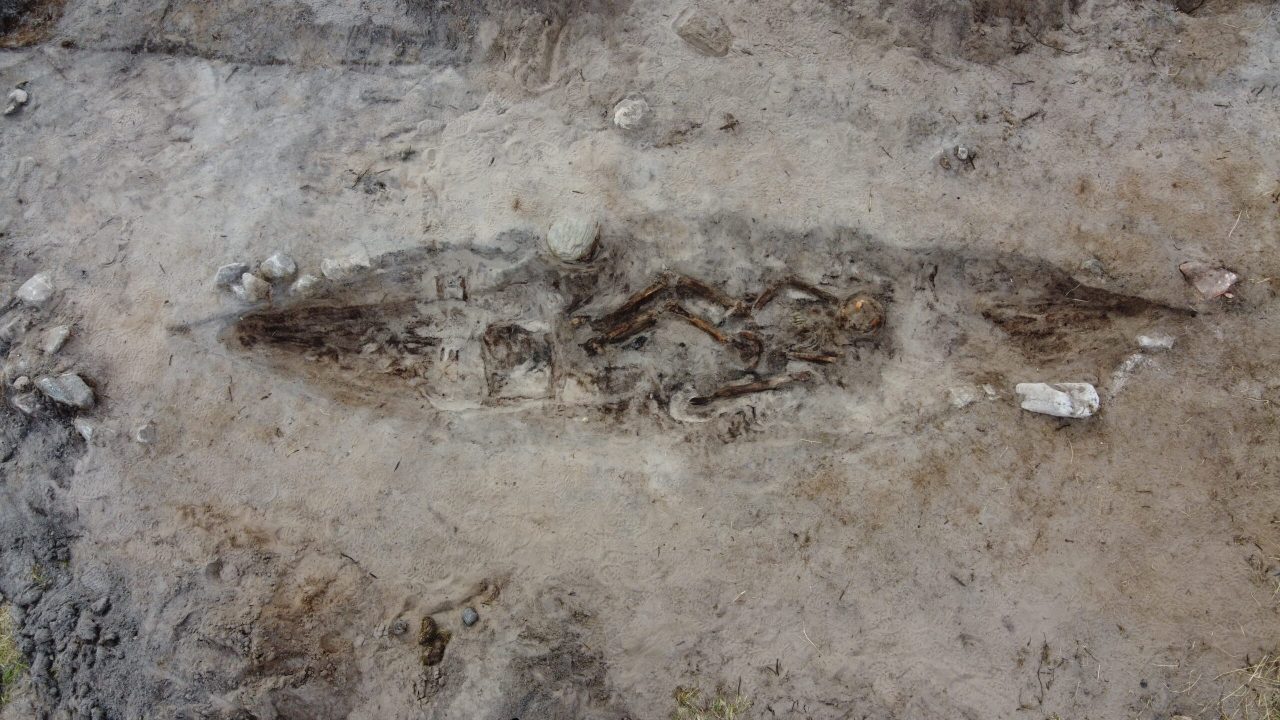
More than a thousand years ago, a woman was laid to rest inside a wooden boat on a Norwegian island — and she wasn’t alone. Beside her lay her dog, buried together with her as if the bond between them was too important to leave behind in the living world.
The discovery of this Viking-Age boat burial near the village of Sand on Senja, an island in the Troms region of northern Norway, has been identified as one of the most significant archaeological finds in the country from 2025. The site sits roughly 1,200 kilometres north of Oslo, in a landscape that has quietly held this secret for over a millennium.
What makes this find remarkable isn’t just its age. It’s the story it tells — of a woman’s life, her status, her craft, and the companion she carried with her into death.
How a Pair of Metal Detectorists Changed Norwegian History
The grave wasn’t found by a professional archaeological team. In 2023, two metal detectorists were scanning farmland near Sand when they uncovered something unusual: a pair of bowl-shaped brooches dating to the Viking Age, along with fragments of human bone.
They did exactly what responsible detectorists should do — they reported the find to local authorities. That decision set everything in motion.
Archaeologists from the Arctic University Museum of Norway returned to the site and carried out full excavations in 2025. What they uncovered was a boat burial, one of the most distinctive and prestigious burial traditions of the Viking world. The boat measured approximately 5.5 metres in length, and inside it lay the skeleton of a woman surrounded by the objects of her daily life.
The dog was there too, placed alongside her — a detail that has captured the imagination of researchers and history enthusiasts alike. Animals buried with their owners weren’t unheard of in Viking-Age Scandinavia, but the practice speaks to something deeply personal. This wasn’t just ritual. It suggests the dog held genuine significance to this woman during her lifetime.
What Was Found Inside the Viking-Age Boat Burial
The grave goods recovered from the site paint a picture of a woman who was skilled, active, and likely of some social standing. Boat burials weren’t granted to everyone — they required resources, community effort, and cultural recognition of the deceased’s importance.
Here’s a breakdown of the key objects found in the burial:
| Object | Category | Significance |
|---|---|---|
| Bowl-shaped brooches | Costume decoration | Classic Viking-Age female dress ornaments; helped identify the burial’s date |
| Disc-shaped beads (bone or amber) | Costume decoration | Worn as personal adornment, indicating care for appearance and status |
| Ring with two glass beads | Hair or headdress ornament | Found in or near the head area, suggesting a decorated headdress |
| Weaving sword | Tool | Used in textile production; a common marker of female craft identity |
| Whetstone | Tool | Used for sharpening blades and implements |
| Sickle | Tool / implement | Associated with agricultural or harvesting work |
| Handrail | Implement | Functional object placed among her burial goods |
| Dog skeleton | Animal companion | Buried alongside the woman, suggesting a meaningful bond in life |
The combination of textile tools and agricultural implements suggests a woman deeply involved in the practical work of her household and community. The weaving sword in particular is a recurring motif in Viking-Age female burials — weaving was not considered a minor domestic task but a skilled, valued craft with economic and social weight.
Why Boat Burials Matter in the Viking World
Boat burials are among the most striking expressions of Viking-Age belief and social hierarchy. The idea was rooted in the notion that the boat would carry the deceased into the afterlife — a vessel for a final journey, not just a coffin.
Not everyone received this treatment. The effort required to bury someone inside a boat, along with carefully chosen possessions, points to a person who mattered to their community. The Senja burial, with its mix of personal ornaments, craft tools, and an animal companion, gives researchers a rare window into the life of a real woman — not a queen or a saga heroine, but someone whose identity was bound up in work, relationships, and daily existence.
The presence of the dog complicates and enriches that picture. Animals appear in Viking-Age graves across Scandinavia, but a dog buried alongside a woman in a boat burial carries particular emotional resonance. It suggests that whoever arranged this burial wanted her accompanied — not just equipped.
The Broader Picture: Norway’s Top Archaeological Finds of 2025
The Senja boat burial didn’t emerge in isolation. It was named one of the most intriguing archaeological discoveries in Norway from 2025, alongside other significant finds including 1,500-year-old hunting equipment and additional graves from the early medieval period.
Together, these discoveries are filling in gaps in the historical record of northern Norway — a region that, despite its distance from the great Viking centres of the south, was clearly home to communities with sophisticated burial practices and strong cultural identities.
The Arctic University Museum of Norway, which led the 2025 excavations, has been central to bringing these finds to light. Northern Norway’s remote landscape has preserved sites that might have been disturbed or destroyed elsewhere, making the region increasingly important to Viking-Age research.
What Researchers Are Watching Next
The excavation has concluded, but the analysis is ongoing. The human and animal remains, along with the artefacts, will be subject to further study — potentially including isotope analysis to learn more about where the woman came from, what she ate, and how she lived. Such techniques have transformed what archaeologists can learn from burial sites in recent years.
Whether the dog was a working animal, a hunting companion, or simply a beloved pet is a question that may never be fully answered. But the fact that someone chose to bury them together says something that transcends the archaeological record. Some bonds, it seems, were considered worth preserving beyond death.
Frequently Asked Questions
Where was the Viking-Age boat burial discovered?
The burial was found near the village of Sand on Senja, an island in the Troms region of northern Norway, approximately 1,200 kilometres north of Oslo.
How was the grave originally found?
Two metal detectorists searching farmland in the area in 2023 uncovered bowl-shaped brooches and fragments of human bone, which led to the formal archaeological excavation in 2025.
What was buried alongside the woman?
Her grave contained a dog, costume decorations including disc-shaped beads and a ring with glass beads, and tools including a weaving sword, whetstone, sickle, and handrail.
How large was the boat used in the burial?
The boat measured approximately 5.5 metres in length.
Why is a dog being buried with the woman significant?
Animals were occasionally buried with their owners in Viking-Age Scandinavia, and the practice suggests the dog may have been an important companion to the woman during her lifetime.
Who carried out the excavation?
Archaeologists from the Arctic University Museum of Norway conducted the excavations at the site in 2025.



Leave a Reply