
For roughly 40 years, scientists watched warm Atlantic water push deeper and deeper into the Arctic through the Barents Sea — and struggled to fully explain why. A new study suggests researchers have finally identified the missing piece of that puzzle, and it has less to do with wind speed than with something subtler: a change in the rhythm of the atmosphere itself.
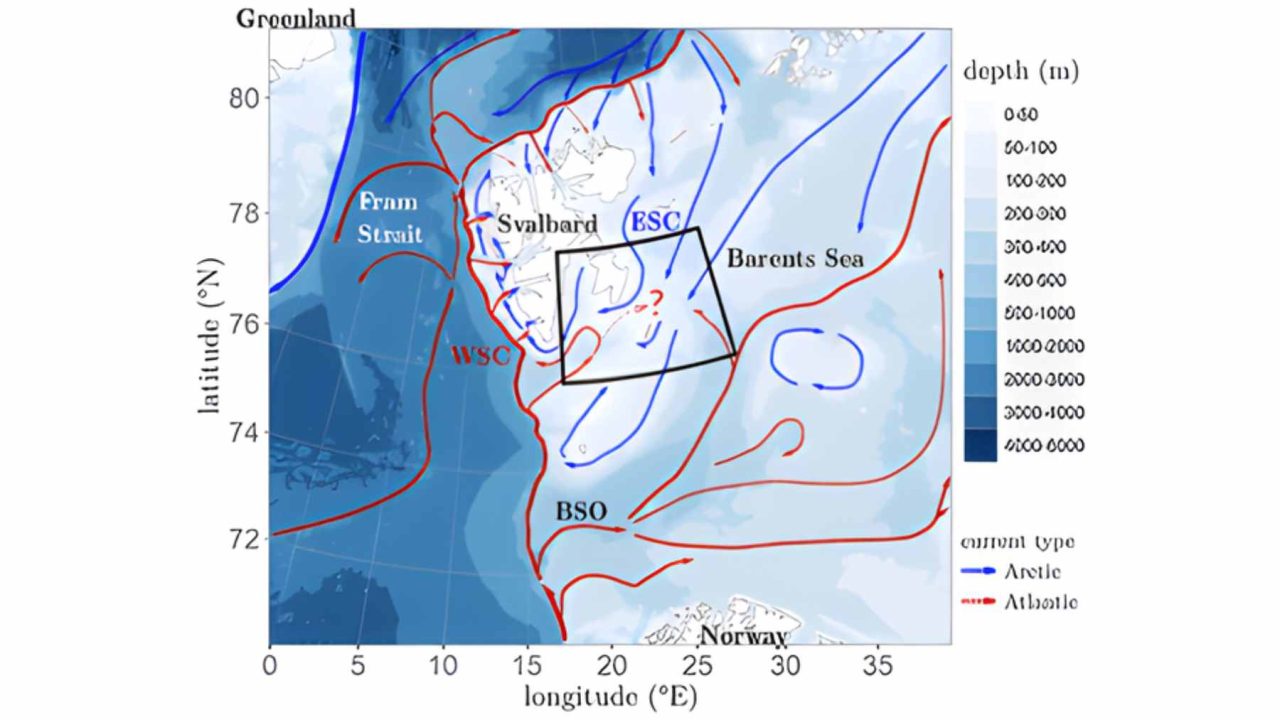
The Barents Sea sits at a critical gateway between mainland Norway and Bear Island, making it one of the main entry points for Atlantic water flowing into the Arctic. What happens at that gateway has consequences far beyond the region — for sea ice coverage, marine ecosystems, and ultimately the global climate system.
The process at the center of this research is called atlantification, and understanding it has become one of the more pressing questions in modern oceanography.
What Atlantification Actually Means — and Why the Barents Sea Is Ground Zero
Atlantification is the term scientists use to describe what happens when parts of the Arctic begin behaving more like the Atlantic Ocean. In practical terms, it means warmer, saltier water moving north — making it harder for sea ice to form and easier for existing ice to melt.
Think of the Barents Sea as a door between two very different environments. On one side is the relatively warm, salty Atlantic. On the other is the cold, fresher Arctic. When that door stays open longer — or opens wider — the temperature balance on the Arctic side shifts. Researchers have described it as something like leaving a refrigerator door cracked open: eventually, everything inside starts to warm up.
The Barents Sea is a particular hotspot for this process because of its geography. It lies directly on the main route Atlantic water takes into the Arctic, which means even small changes in how much warm water passes through can have outsized effects downstream.
The 40-Year Mystery: What Scientists Knew and What They Couldn’t Explain
Oceanographers have tracked the steady increase of Atlantic water entering the Barents Sea for decades. The trend has been clear. The full explanation, however, has not been.
The assumption for much of that time was that stronger winds were the primary driver — pushing more warm surface water northward. But that explanation never quite fit all the data. Something else was contributing to the pattern, and researchers couldn’t pin it down.
The new study argues the missing clue is not simply stronger winds, but a change in the pace of the atmosphere — specifically, shifts in the typical rhythm of low-pressure systems over the Nordic Seas. According to the researchers, when those storm systems alter their usual timing or behavior, the ocean responds in a surprisingly sensitive way. Over time, that atmospheric shift can help funnel more Atlantic water into the Barents Sea, compounding the warming effect.
This is a meaningful distinction. It suggests the ocean’s response to climate change is being shaped not just by the strength of atmospheric forces, but by their timing and pattern — a more complex relationship than previously accounted for.
Key Findings at a Glance
Based on what the study reports, here is what the research has identified:
- Warm, salty Atlantic water has been moving farther into the Arctic through the Barents Sea for decades.
- This process — atlantification — reduces sea ice formation and accelerates existing ice melt.
- Previous explanations focused primarily on stronger winds as the main driver.
- The new study points to changes in the rhythm of low-pressure systems over the Nordic Seas as a key missing factor.
- When these atmospheric systems shift their typical pattern, the ocean responds in ways that allow more Atlantic water to enter the Barents Sea.
- The Barents Sea’s location — between mainland Norway and Bear Island — makes it especially sensitive to these changes.
| Factor | Previous Understanding | New Research Suggests |
|---|---|---|
| Primary driver of atlantification | Stronger winds pushing water north | Changes in atmospheric rhythm, not just wind strength |
| Key atmospheric feature | Wind intensity over the region | Shifts in the timing of low-pressure systems over the Nordic Seas |
| Ocean response | Gradual, proportional to wind force | Surprisingly sensitive to atmospheric timing shifts |
| Duration of mystery | — | Approximately 40 years |
What This Means for Sea Ice, Marine Life, and the Broader Arctic
The real-world consequences of atlantification extend well beyond abstract oceanography. Sea ice loss in the Barents Sea directly affects the marine ecosystems that depend on cold Arctic conditions — from the fish species that form the base of the food web to the larger predators, including polar bears and walruses, that rely on ice platforms for hunting and breeding.
Reduced sea ice also has feedback effects on the global climate. Ice reflects sunlight back into space. When it melts, the darker ocean surface absorbs more solar energy instead, accelerating warming further. This feedback loop is one of the reasons the Arctic is warming several times faster than the global average.
For communities and industries connected to Arctic fisheries, shipping routes, and resource extraction, a warmer, more Atlantic-like Barents Sea also signals significant practical change. Fishing stocks shift as water temperatures rise. Ice-free seasons lengthen, opening new shipping corridors but also creating new environmental pressures.
What Researchers Are Watching Next
Identifying the atmospheric rhythm as a key factor does not close the book on this research — it opens new questions. Scientists will likely want to understand how those low-pressure systems over the Nordic Seas are themselves being altered by broader climate change, and whether the pace of atlantification is expected to accelerate further as global temperatures rise.
The Barents Sea will remain a closely monitored region. As one of the most sensitive indicators of Arctic change, what happens at this narrow gateway between the Atlantic and the Arctic continues to tell researchers a great deal about the direction the planet’s climate system is heading.
For now, the study represents a significant step forward — a 40-year gap in scientific understanding, researchers believe, has finally started to close.
Frequently Asked Questions
What is atlantification?
Atlantification is the process by which parts of the Arctic begin behaving more like the Atlantic Ocean, as warmer, saltier Atlantic water moves northward, reducing sea ice formation and melting existing ice.
Why is the Barents Sea so important to this process?
The Barents Sea sits at a key gateway between mainland Norway and Bear Island, making it one of the main entry routes for warm Atlantic water flowing into the Arctic.
What did scientists previously think was driving more Atlantic water into the Barents Sea?
The leading explanation had been stronger winds pushing warm surface water northward, but researchers found that explanation alone did not fully account for what they were observing.
What does the new study identify as the missing factor?
The study points to changes in the rhythm of low-pressure systems over the Nordic Seas — shifts in atmospheric timing, not just wind strength — as a key driver of increased Atlantic water entering the Barents Sea.
How long has this been a mystery in science?
According to the research, scientists have been trying to fully explain the drivers of atlantification in the Barents Sea for approximately 40 years.
What are the consequences of atlantification for sea ice and wildlife?
More warm Atlantic water makes it harder for sea ice to form and easier for existing ice to melt, which disrupts marine ecosystems and removes ice platforms that Arctic wildlife such as polar bears and walruses depend on.



Leave a Reply