
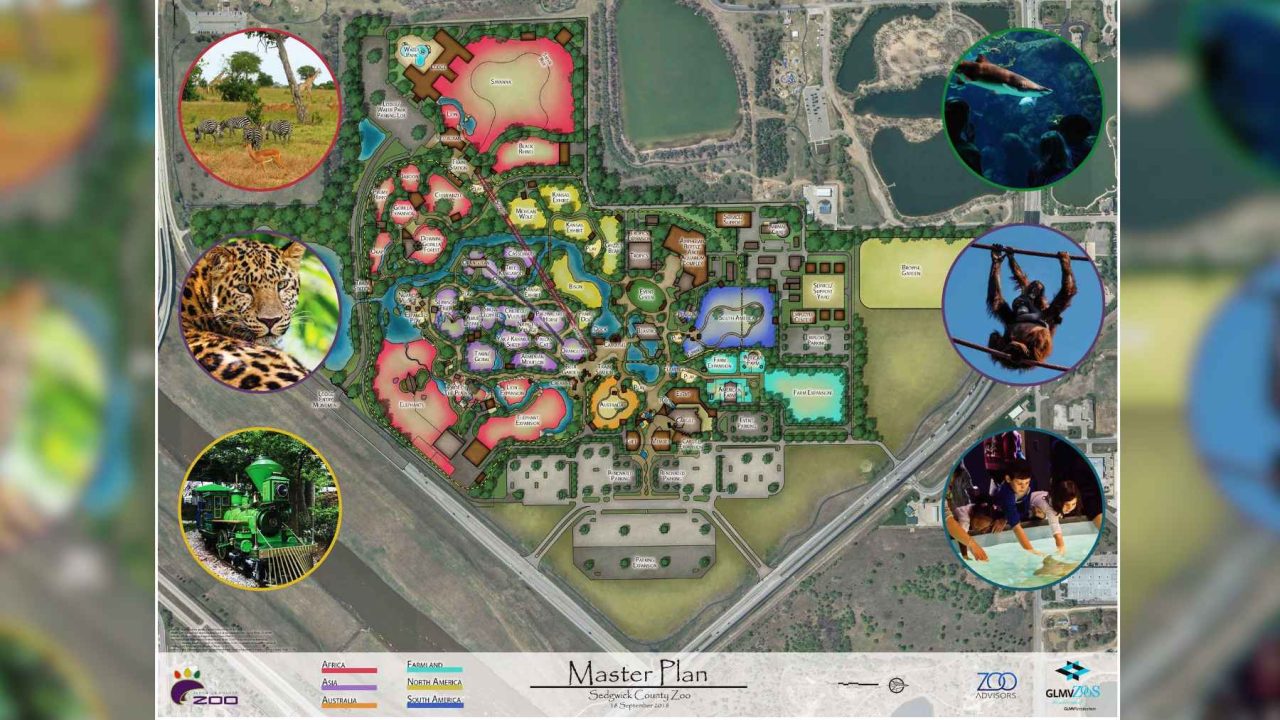
A zoo in Wichita, Kansas is planning one of its most ambitious overhauls in recent memory — and the headline attraction might not be the animals at all. Sedgwick County Zoo is developing a $46 million African savanna expansion that would give giraffes, rhinos, and other large African species a dramatically larger habitat. But tucked into the proposal is something far less expected: a hotel, built on land adjacent to the new exhibit, with a direct view straight into the animals’ new home.
It’s the kind of idea that sounds almost too cinematic to be real. Wake up, pull back the curtains, and find yourself looking out at a giraffe stretching for leaves at sunrise. For zoo visitors who have always wanted more than a few hours on a Saturday, this expansion could represent something genuinely different — a place where the experience doesn’t end when the gates close.
The full plan is still being developed, with costs still being worked out and the most expensive components described as early estimates. But what has already been presented gives a clear sense of the scale and ambition behind it.
What Sedgwick County Zoo Is Actually Building
The centerpiece of the project is a new zone called “the Savanna,” planned for the southwest part of the zoo’s property. The concept draws from the natural landscape of sub-Saharan Africa — open grassland dotted with scattered trees, the kind of wide, unhurried terrain that large animals actually need to move, graze, and behave naturally.
Giraffes and rhinos are named as the headline residents of the new habitat, alongside other African species. The goal is to give these animals more space than what current enclosures allow, while also creating a more immersive visual experience for visitors standing on the other side of the exhibit.
The hotel component would be built on nearby land, positioned so that guests could look directly out at the savanna habitat. That detail alone separates this project from a standard zoo renovation. It’s not just about adding square footage for animals — it’s about fundamentally rethinking what a zoo stay can feel like.
Officials have noted that the expansion would also create new options for events and private rentals, adding revenue streams that could help support the zoo’s long-term operations.
The $46 Million Question — What We Know and What We Don’t
The total projected cost of the expansion sits at $46 million, though it’s worth being clear about what that figure represents at this stage. The most expensive elements of the plan are still early estimates, and the full financial picture is still being worked out.
That kind of transparency is actually useful context for anyone following this story. Large zoo capital projects routinely shift in cost as designs are refined, permits are secured, and construction realities set in. The $46 million figure gives a sense of the order of magnitude — this is a major investment, not a modest upgrade — but it should be understood as a planning benchmark rather than a locked-in final number.
| Project Element | Details Confirmed | Status |
|---|---|---|
| New African habitat zone (“the Savanna”) | Southwest portion of zoo property | Proposed |
| Primary animals | Giraffes, rhinos, other African species | Proposed |
| On-site hotel | Adjacent land, direct habitat view | Proposed |
| Events and rental space | Part of the broader expansion plan | Proposed |
| Total estimated cost | $46 million | Early estimate |
Why a Zoo Hotel Changes the Whole Conversation
Overnight zoo experiences aren’t entirely new — a handful of facilities around the world offer glamping-style stays near animal habitats. But they remain rare enough that the concept still stops people in their tracks when they hear about it.
The appeal is straightforward. Animals behave differently in the early morning and at dusk than they do during peak visitor hours. A hotel guest who wakes up at 6 a.m. and looks out a window facing the savanna is going to see something most day visitors never will. That’s a fundamentally different product than a zoo ticket.
For the zoo itself, a hotel adds a revenue model that isn’t dependent on gate admissions. Events, overnight packages, and private rentals create income streams that can help fund conservation programs, animal care, and future expansions. Supporters of the plan point to this kind of financial diversification as a smart long-term strategy for zoological institutions facing rising operating costs.
For families, the practical draw is obvious. A multi-day zoo visit — arriving in the evening, spending a full day, and catching morning hours before crowds arrive — becomes possible in a way it simply isn’t when the nearest hotel is miles down the road.
What This Means for Wichita and Zoo Visitors
Sedgwick County Zoo already draws visitors from across the region. An expansion of this scale, combined with an on-site overnight option, would position it as more of a destination attraction — the kind of place worth traveling to specifically, rather than just visiting on a local afternoon out.
For Wichita as a city, that distinction matters. Destination attractions bring extended stays, which means more spending on hotels, restaurants, and local businesses beyond the zoo itself. The ripple effects of a well-executed expansion can reach well beyond the zoo’s gates.
For the animals, the core promise of the project is more space and a habitat designed to reflect the landscapes they would naturally inhabit. Larger enclosures with appropriate terrain and vegetation generally support better physical and behavioral health for large mammals like giraffes and rhinos, which need room to move in ways that compact older exhibits often can’t provide.
Where the Project Goes From Here
The plan was presented publicly, but significant work remains before any ground is broken. Cost estimates for the most expensive components are still being refined, and the full financial and logistical picture has not yet been finalized.
What’s clear is that the ambition behind the project is real. A $46 million investment — even as an early estimate — signals that this isn’t a casual proposal. The zoo is seriously exploring a transformation that would affect the back end of its property, the experience it offers visitors, and potentially its role in the broader regional tourism landscape.
Whether the hotel becomes a reality alongside the savanna habitat, or whether costs and planning push certain elements back or off the table entirely, this expansion bears watching. It’s one of the more genuinely interesting zoo development stories in the country right now.
Frequently Asked Questions
Which zoo is building the African savanna expansion?
Sedgwick County Zoo in Wichita, Kansas is the zoo behind the proposed expansion.
How much is the expansion expected to cost?
The total projected cost is $46 million, though officials have noted that the most expensive elements are still early estimates and the full cost is being worked out.
What animals will live in the new savanna habitat?
Giraffes and rhinos are named as the primary residents, along with other African species.
Where exactly within the zoo will the savanna be built?
The new habitat zone is planned for the southwest portion of the zoo’s property.
Is the hotel confirmed, or is it still just a proposal?
The hotel is part of the broader proposal presented to the public, but it has not yet been confirmed as a finalized component of the project.
When will construction begin?
A construction timeline has not yet been confirmed based on the information currently available about the project.



Leave a Reply