
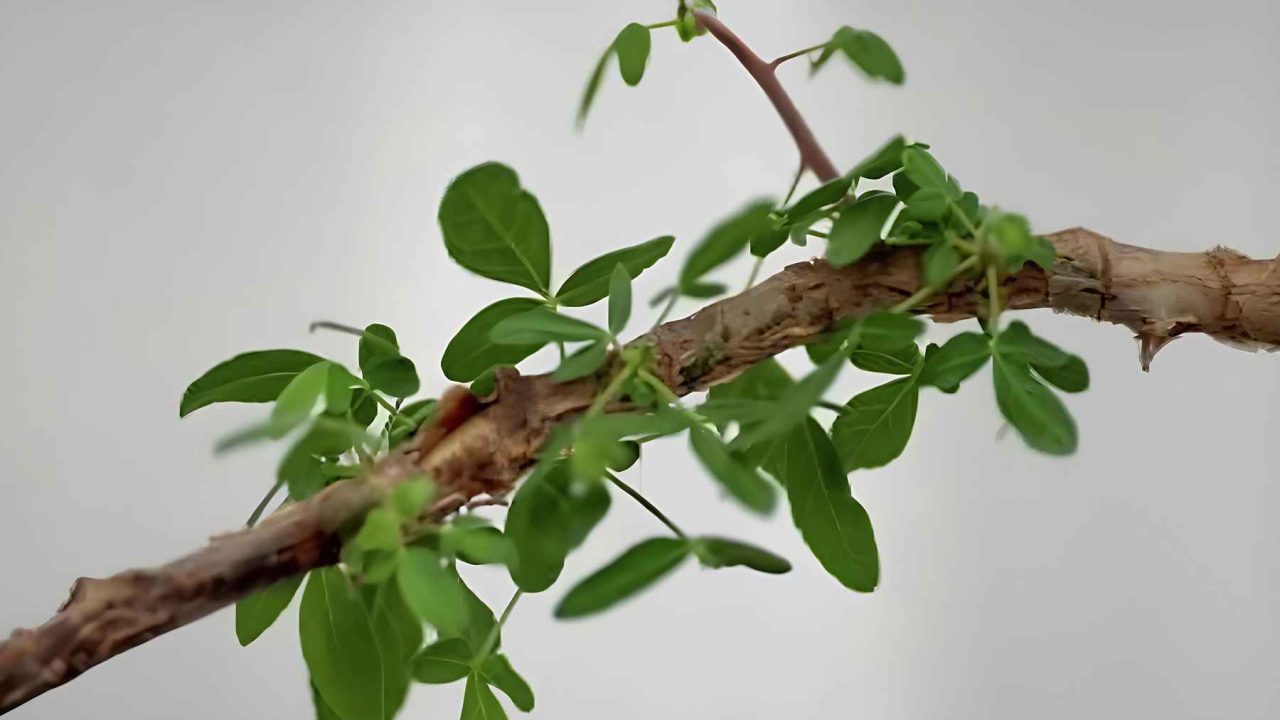
A seed that sat untouched in a desert cave for roughly a thousand years has just reopened one of the most baffling botanical cold cases in history. Researchers have successfully germinated it — and what grew may hold the key to understanding a plant so valuable it once shaped the economy, medicine, and fragrance trade of ancient Judea.
The plant in question is known as afarsimon. For centuries, it was considered one of the most prized botanical commodities in the ancient world. Then, sometime around the first century, it disappeared. No confirmed living specimens. No verified seeds. Just historical records, a few ancient coins, and a lot of unanswered questions.
Now, a tree nicknamed “Sheba” — grown from a seed recovered from a Judean Desert cave — may not be afarsimon itself, but researchers believe it could be a related plant that helps explain how ancient farmers cultivated afarsimon in one of the harshest environments on earth.
The Ancient Perfume Plant That Made Judea Famous
Afarsimon was not just a pleasant scent. Ancient sources describe it as a symbol of power, wealth, and prestige. Its resin was used in perfumes, medicines, and rituals. The Dead Sea region — brutal, salt-crusted, and scorching — was somehow its ideal home, and Judea leveraged that monopoly aggressively.
The plant’s rarity and the difficulty of cultivating it outside its native region made it extraordinarily valuable. Historical accounts suggest rulers guarded its cultivation jealously, and it featured on ancient Judean coins as a marker of regional identity and economic strength.
What exactly caused its disappearance remains one of the great unsolved questions of ancient botany. The leading explanation connects its vanishing to the turbulent events of the first century — the Roman-Jewish wars, the destruction of agricultural infrastructure, and the deliberate or accidental loss of cultivation knowledge. Once the people who knew how to grow it were gone or displaced, the plant may simply have had no one left to tend it.
A Seed That Waited a Thousand Years
The seed that became Sheba was recovered from a cave in the northern Judean Desert. It had been stored among archaeological material gathered during excavations in the 1980s and sat in storage for decades before being selected for germination research.
Dr. Sarah Sallon of Hadassah Medical Center identified the seed for germination work. Dr. Elaine Solowey of the Arava Institute for Environmental Studies carried out the process of bringing it back to life.
That it germinated at all is remarkable. Seeds are biological material. They degrade. They dry out, get eaten, or simply lose viability over time. But the Judean Desert’s extreme aridity creates a near-perfect preservation environment — cool, dry caves act almost like natural freezers, slowing the biological clock in ways that still aren’t fully understood.
The seed is estimated to be approximately 1,000 years old, making Sheba one of the oldest seeds ever successfully germinated anywhere in the world.
What the Researchers Found — and What It Means
Researchers are careful not to overclaim. Sheba may not be afarsimon itself. But they believe it could represent a related species — one that ancient farmers may have used alongside afarsimon, perhaps as a rootstock, a companion crop, or a botanical relative that thrived in similar conditions.
That distinction matters. If Sheba is closely related to the lost afarsimon, studying it could reveal what made the original plant so well-suited to the Dead Sea region, what its chemical compounds were, and whether anything like it could be cultivated again.
| Detail | What We Know |
|---|---|
| Seed nickname | Sheba |
| Estimated seed age | Approximately 1,000 years |
| Seed recovery location | Cave in the northern Judean Desert |
| Original excavation period | 1980s |
| Germination lead researchers | Dr. Sarah Sallon (Hadassah Medical Center); Dr. Elaine Solowey (Arava Institute for Environmental Studies) |
| Confirmed as afarsimon? | No — possibly a related species |
Why Afarsimon Vanished — The First-Century Detail
The timing of afarsimon’s disappearance is not a coincidence. Ancient Judea was torn apart by conflict during the first century. The Roman-Jewish wars brought widespread destruction to agricultural regions, including the carefully managed groves around the Dead Sea where afarsimon was cultivated.
Specialized crops like this one don’t survive upheaval the way wild plants do. They need tending, pruning, harvesting at the right moment, and knowledge passed from one generation to the next. When that chain of knowledge breaks — through war, displacement, or the death of the people who held it — the plant can vanish even if the seeds technically still exist somewhere.
That is the leading explanation for why afarsimon disappeared so completely that modern botanists couldn’t even confirm what species it was. The knowledge died with the civilization that cultivated it.
What This Discovery Could Change
Sheba is alive and growing. That alone is scientifically significant. Researchers now have the opportunity to study a living specimen from the ancient Judean botanical world — something that was unthinkable just decades ago.
The broader implications reach into several fields:
- Archaeology: A living plant related to afarsimon could help confirm or revise historical accounts of what the plant looked like, how it grew, and how it was used.
- Medicine: Ancient sources credited afarsimon with medicinal properties. If Sheba shares similar chemical compounds, those claims could be tested scientifically for the first time.
- Conservation: The successful germination of a 1,000-year-old seed raises new questions about what else might be preserved in desert caves — and what other lost species might be recoverable.
- History: Understanding afarsimon more clearly would shed light on how ancient Judea built and maintained its reputation as a center of trade and luxury goods.
The Judean Desert, it turns out, has been holding onto secrets for a very long time. Sheba is one of them — and researchers are only beginning to understand what she has to say.
Frequently Asked Questions
What is afarsimon?
Afarsimon was a highly valuable plant cultivated in ancient Judea, prized for its use in perfumes, medicine, and trade. It disappeared around the first century and no confirmed living specimens have been identified since.
Who grew the seed nicknamed Sheba?
Dr. Sarah Sallon of Hadassah Medical Center selected the seed for germination work, and Dr. Elaine Solowey of the Arava Institute for Environmental Studies carried out the germination process.
How old is the Sheba seed?
The seed is estimated to be approximately 1,000 years old, making it one of the oldest seeds ever successfully germinated.
Is Sheba actually the lost afarsimon plant?
Researchers say Sheba may not be afarsimon itself, but could be a related species that helps explain how ancient farmers cultivated afarsimon in the Dead Sea region.
Why did afarsimon disappear?
The leading explanation ties its disappearance to the first-century Roman-Jewish wars, which disrupted agricultural infrastructure and likely broke the chain of cultivation knowledge needed to keep the specialized crop alive.
Where was the seed found?
The seed was recovered from a cave in the northern Judean Desert, where it had been stored among archaeological material gathered during excavations in the 1980s.

Leave a Reply