
What if the best defense against a catastrophic earthquake required no power grid, no sensors, and no software — just steel balls packed inside a cylinder? That is exactly the premise behind a newly patented device developed by a civil engineering professor, and early lab results suggest it may actually work.
The invention comes from Moussa Leblouba, a civil engineering professor at the University of Sharjah, and it targets one of the most persistent problems in structural engineering: how do you protect a building or bridge from violent shaking when the power goes out at the same moment the ground starts moving?
A United States patent published on December 16, 2025 describes the device in detail. Early laboratory tests reported a damping ratio of approximately 14 percent — a meaningful figure in the world of vibration control, where every percentage point can translate into less structural damage and fewer lives at risk.
The Simple Idea Behind the Steel-Ball Earthquake Damper
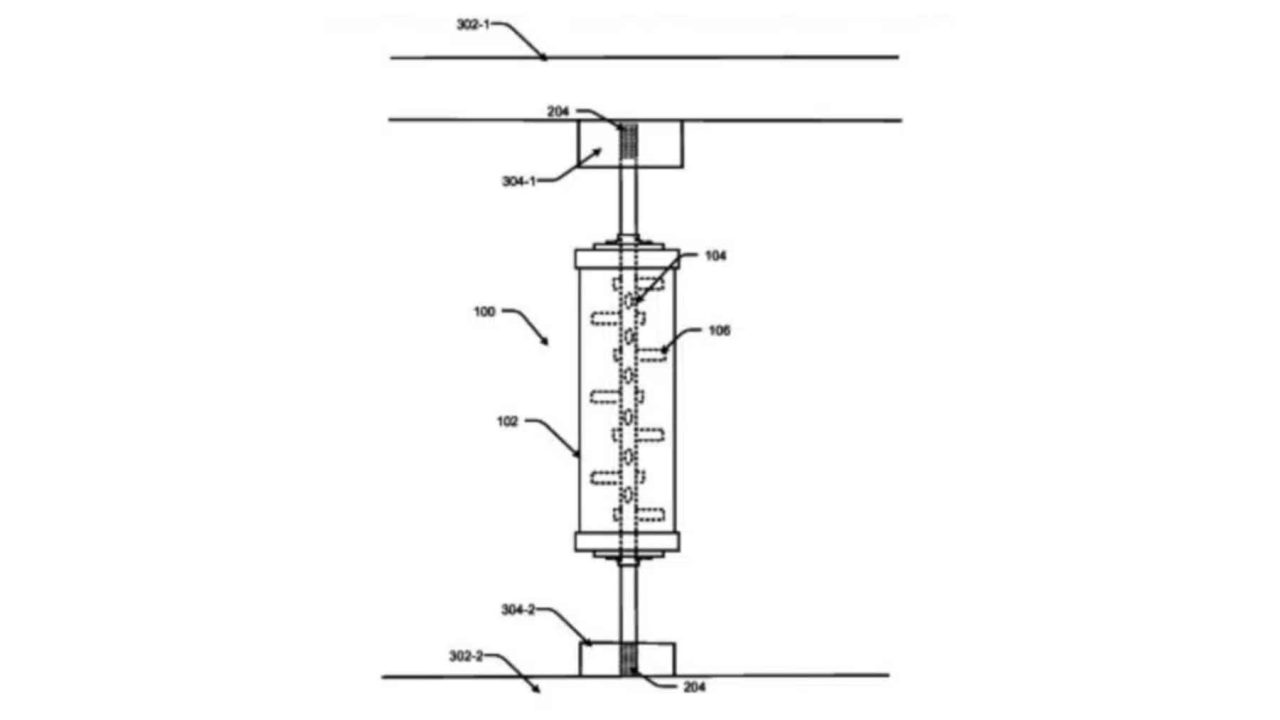
At its core, the device is not complicated. It is a hollow steel cylinder packed tightly with solid steel balls. Running through the center of that cylinder is a shaft — a rod that can slide back and forth. Attached to that shaft are smaller rods that stick outward, pressing directly against the surrounding steel balls.
When an earthquake, strong wind, train vibration, or industrial machinery causes a structure to move, that central shaft shifts inside the cylinder. As it moves, the protruding rods push against the packed balls, generating friction. That friction converts a portion of the vibration energy into heat and internal movement within the device itself, rather than allowing all of it to travel through the building or bridge.
Think of it as a mechanical shock absorber — the same basic principle that cushions your car on a rough road, but scaled and engineered for the forces that tear apart infrastructure during major seismic events.
What makes this approach particularly notable is what it does not require. There is no electricity, no computer control system, no sensor network, and no external power source of any kind. The device is entirely passive. It works the moment it is installed and keeps working whether the lights are on or off.
Why Passive Earthquake Protection Matters So Much Right Now
Modern structural engineering has produced some genuinely sophisticated tools for protecting buildings from earthquakes. Active damping systems can sense vibrations and respond in real time. Smart materials can stiffen or soften on command. Tuned mass dampers — the giant pendulums used in skyscrapers like Taipei 101 — can counteract swaying with impressive precision.
But all of those systems share a critical vulnerability: they depend on electricity and functioning infrastructure. In a major earthquake, power lines fail. Backup generators can be damaged. Communication networks go down. The very moment a sophisticated active system is needed most is often the moment it is least likely to function.
Passive devices sidestep that problem entirely. They respond to physical forces with physical mechanisms. No signal required. No power source needed. For bridges in remote areas, older buildings in developing regions, or any structure where continuous power cannot be guaranteed, that reliability has enormous practical value.
The device is also described as applicable beyond earthquakes. According to the patent documentation, the same friction-based mechanism could help protect structures from strong wind loads, vibrations from passing trains, and the kind of steady mechanical vibration produced by industrial equipment — making it potentially useful across a wide range of engineering challenges.
What the Lab Tests Actually Showed
Here is what has been confirmed so far:
| Metric | Result | Source |
|---|---|---|
| Effective damping ratio (early lab tests) | ~14% | U.S. Patent, December 16, 2025 |
| Patent publication date | December 16, 2025 | United States Patent Office |
| Lead researcher | Prof. Moussa Leblouba | University of Sharjah |
| Power requirement | None (fully passive) | Device design specification |
A 14 percent damping ratio from a passive mechanical device is a result that structural engineers would consider worth investigating further. It does not mean the device is ready to be installed in every high-rise tomorrow — but it does mean the underlying physics are performing as intended in controlled conditions.
Who Could Benefit From This Kind of Technology
The practical applications are broad. Buildings in earthquake-prone regions — from California to Japan to Turkey — represent the most obvious use case. But bridges may be equally important. Long-span bridges are highly vulnerable to both seismic activity and wind-induced vibration, and retrofitting them with passive damping systems has been a long-standing engineering priority.
Sensitive equipment also comes up in the device’s described applications. Scientific instruments, industrial machinery, and critical infrastructure components can all be disrupted or damaged by vibration — not just earthquakes. A passive, low-maintenance device that reduces that exposure without requiring a dedicated power source could find a market far beyond traditional earthquake engineering.
For developing regions in particular, the no-electricity requirement is not a minor detail. It is the whole point. Sophisticated active systems are expensive to install, expensive to maintain, and dependent on infrastructure that many parts of the world simply do not have. A steel cylinder packed with balls offers a very different cost and complexity profile.
What Comes Next for the Device
The patent was published in December 2025, which means the invention is formally protected and the research has cleared a significant institutional milestone. However,
The typical path from this point would involve more extensive testing under a wider range of simulated conditions, followed by potential pilot installations in real structures before any broader rollout. How quickly that process moves will depend on funding, regulatory pathways, and interest from the construction and civil engineering sectors.
What is clear is that the idea has enough scientific credibility to earn a U.S. patent and produce measurable results in a lab. For a device this mechanically simple, that is a promising starting point.
Frequently Asked Questions
Who invented the steel-ball earthquake damping device?
The device was developed by Moussa Leblouba, a civil engineering professor at the University of Sharjah.
How does the device reduce earthquake damage?
A central shaft moves through a cylinder packed with steel balls. Rods attached to the shaft push against the balls, creating friction that converts vibration energy into heat rather than structural movement.
Does the device require electricity to work?
No. It is entirely passive and requires no power source, sensors, or computer systems of any kind.
What damping ratio did early tests show?
Early laboratory tests reported an effective damping ratio of approximately 14 percent, according to the U.S. patent published on December 16, 2025.
Can the device be used for things other than earthquakes?
According to the patent documentation, the device is also described as applicable to strong wind loads, train vibrations, and industrial machinery vibration.
Is the device currently installed in any real buildings or bridges?
Real-world structural deployment has not yet been confirmed based on available reporting.




Leave a Reply