
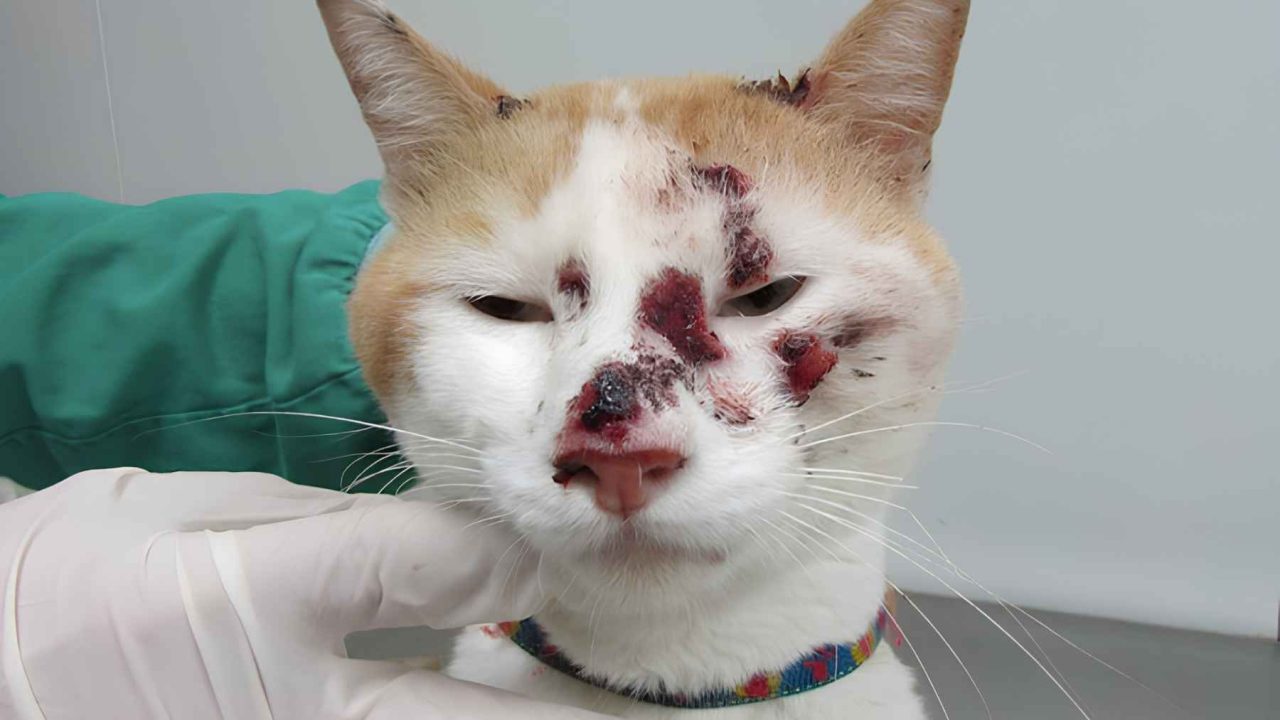
A fungus that spreads from cats to humans has now been confirmed in Uruguay — and doctors are warning that its earliest symptoms are easy to dismiss as something far less serious. The pathogen, Sporothrix brasiliensis, was identified following a family outbreak and subsequently linked to sick cats in the Uruguayan departments of Maldonado and Rocha. Public health experts, veterinarians, and physicians across South America are now paying close attention.
What makes this particular discovery notable is not just the geography. It is the nature of the fungus itself — how it spreads, how it behaves inside the body, and how easily its first signs can be confused with an ordinary skin irritation or minor wound. For most healthy adults, the infection can be treated. But for young children, older adults, and anyone with a compromised immune system, the stakes are considerably higher.
If you share your home with a cat, this is a story worth understanding.
What Sporothrix brasiliensis Actually Is — and Why Cats Are Central to It
Sporothrix brasiliensis is a fungal pathogen that causes a condition called sporotrichosis — an infection that primarily targets the skin and the tissue directly beneath it. While sporotrichosis has historically been associated with soil, plants, and gardening injuries (it was once known as “rose thorn disease”), this particular species is strongly and specifically linked to infected cats.
The fungus is described as thermally dimorphic, which means it physically changes form depending on the temperature of its environment. Outside a living body, at around 77 degrees Fahrenheit, it grows in a filament-like structure. But once inside a warm mammal — at a body temperature closer to 98.6 degrees Fahrenheit — it can shift into a yeast-like form. That biological flexibility is part of what makes it capable of establishing an infection in human tissue.
Transmission from cats to humans typically occurs through scratches, bites, or direct contact with an infected animal. Cats with the infection can carry the fungus in their claws, saliva, and skin lesions, making even routine handling a potential exposure route.
Why the Symptoms Can Be So Easy to Miss
This is where doctors are urging particular caution. The early signs of sporotrichosis do not announce themselves dramatically. They tend to begin as a small, firm bump or nodule at the site of infection — often where a scratch or bite occurred. Over time, the lesion can ulcerate or develop into a chain of similar bumps tracking along the lymph system.
Because the initial presentation looks like a minor skin wound, an insect bite, or even a pimple, many people do not seek medical attention early. By the time the lesion changes or spreads, valuable treatment time may have been lost.
Experts note that treatment, while generally effective, can take weeks or months to complete — reinforcing why early diagnosis matters.
Who Is Most at Risk and What the Spread Looks Like
The confirmed cases in Uruguay were traced back to sick cats in the departments of Maldonado and Rocha, and the initial discovery came through a family outbreak. That detail is significant — it suggests the fungus is not confined to isolated animal cases but is already making the jump to human households.
Doctors and public health officials have identified specific groups who face more serious risks if infected:
- Young children, who may handle cats more frequently and less cautiously
- Older adults, whose immune response may be slower or weaker
- People with weakened immune systems, including those on immunosuppressive medications or living with conditions like HIV
For these groups, sporotrichosis can move beyond the skin and potentially affect deeper tissue, joints, or — in severe cases — the lungs or central nervous system, though disseminated infection remains uncommon in otherwise healthy individuals.
| Factor | Detail |
|---|---|
| Pathogen | Sporothrix brasiliensis |
| Condition caused | Sporotrichosis (skin and subcutaneous tissue infection) |
| Primary transmission route | Contact with infected cats (scratches, bites, direct handling) |
| Confirmed location | Uruguay (departments of Maldonado and Rocha) |
| Fungal behavior | Thermally dimorphic — filament form at ~77°F, yeast form at ~98.6°F |
| Typical treatment duration | Weeks to months |
| Higher-risk groups | Young children, older adults, immunocompromised individuals |
What Pet Owners Should Actually Watch For
Doctors are encouraging cat owners — particularly in South America, but more broadly as awareness grows — to take a few practical steps seriously.
First, pay attention to your cat’s health. Cats infected with Sporothrix brasiliensis often develop visible skin lesions, hair loss, or wounds that do not heal normally. A sick or wounded cat is a higher-risk animal to handle without precautions.
Second, treat any scratch or bite from a cat as something worth monitoring, not dismissing. If a small nodule or unusual bump develops at the site of a scratch — particularly one that does not heal or begins to grow — that is a signal to seek medical evaluation promptly.
Third, people in higher-risk categories should consider wearing gloves when handling cats showing any signs of skin disease, and should consult both a physician and a veterinarian if they have concerns.
The fact that this fungus can be treated successfully is genuinely reassuring. The risk is not that sporotrichosis is untreatable — it is that delayed recognition leads to longer, more difficult treatment courses and, for vulnerable individuals, greater potential for complications.
Where Things Stand Across South America
The confirmation in Uruguay is part of a broader pattern that health experts have been tracking across South America, where Sporothrix brasiliensis has been spreading — most extensively documented in Brazil — for years. The Uruguayan cases represent a geographic expansion of that spread.
Public health experts, veterinarians, and physicians are now working to raise awareness among pet owners and healthcare providers alike. One of the key challenges is that many clinicians outside endemic areas may not immediately consider sporotrichosis when a patient presents with a skin lesion, making the education component as important as the clinical response.
The concern is not a mass outbreak in the way people might picture a contagious respiratory illness. But the steady, quiet spread of a zoonotic fungus through cat populations — and from cats into households — is exactly the kind of slow-moving public health issue that benefits from early attention rather than late alarm.
Frequently Asked Questions
What is Sporothrix brasiliensis?
It is a fungal pathogen that causes sporotrichosis, an infection affecting the skin and tissue beneath it. Unlike other forms of the fungus linked to soil or plants, this species is strongly associated with infected cats.
How does the fungus spread from cats to humans?
Transmission typically occurs through scratches, bites, or direct contact with an infected cat, which can carry the fungus in its claws, saliva, and skin lesions.
Where have human cases been confirmed?
According to
What are the early symptoms of sporotrichosis?
Early signs typically include a small, firm nodule or bump at the site of a scratch or bite, which can be easily mistaken for a minor wound or insect bite. The lesion may ulcerate or spread over time.
Who faces the most serious risk from this infection?
Doctors identify young children, older adults, and people with weakened immune systems as the groups most at risk for more serious complications.
Can sporotrichosis be treated?
Yes, it can generally be treated, but the process typically takes weeks or months, which is why early diagnosis is considered important by medical experts.



Leave a Reply