
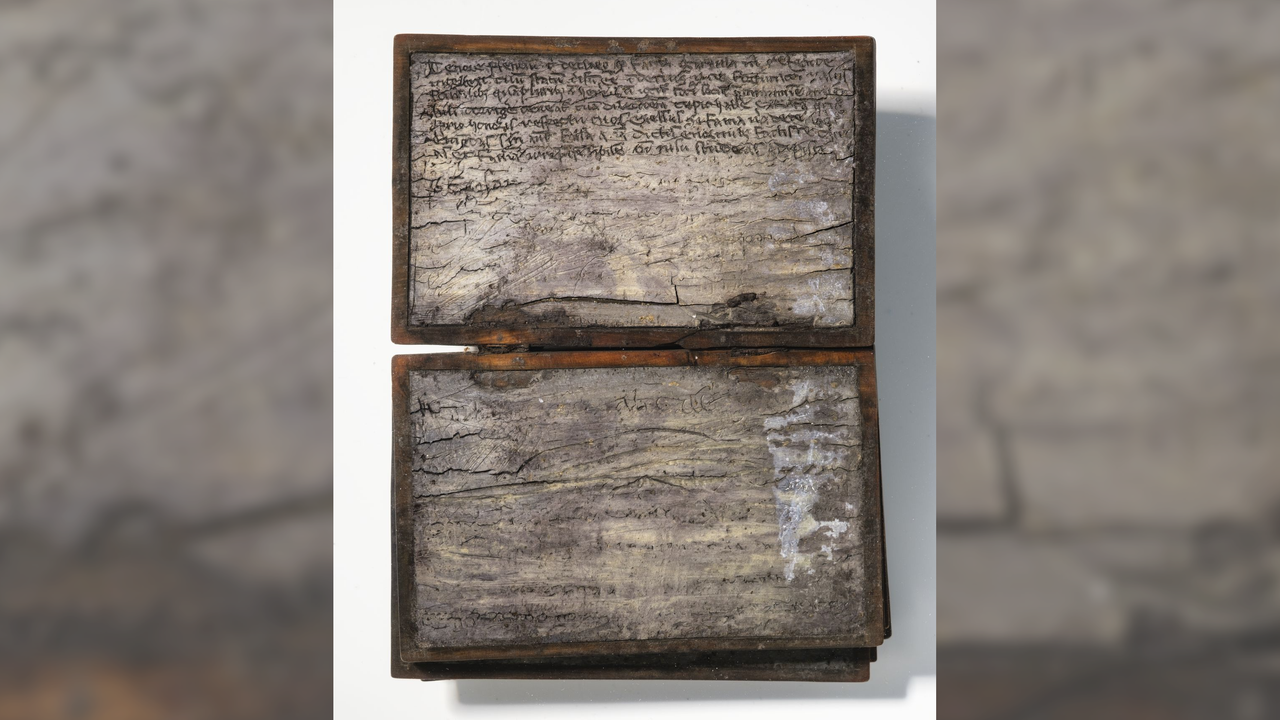
A small leather satchel, sitting undisturbed at the bottom of a medieval latrine for nearly 800 years, turned out to contain one of the most remarkable archaeological finds in recent German history — a perfectly preserved wood-and-wax notebook, complete with Latin cursive writing, still legible after all this time.
The discovery was made in the northern German city of Paderborn, during construction work for a new building. Archaeologists uncovered five medieval latrines that had been sealed and airtight — conditions that protected organic materials that would otherwise have rotted away completely over the centuries.
And if the notebook wasn’t surprising enough on its own, researchers also found evidence of something else in that same latrine: silk toilet paper. Whoever dropped this satchel was no ordinary traveler.
How an 800-Year-Old Notebook Survived in a Medieval Latrine
The find was announced on May 12 in a translated statement from the Regional Association of Westphalia-Lippe (LWL). Archaeologists didn’t immediately recognize what they had. During routine cleaning of recovered items in the lab, experts realized that what appeared to be an unremarkable clod of earth was actually a small leather case — with a lid.
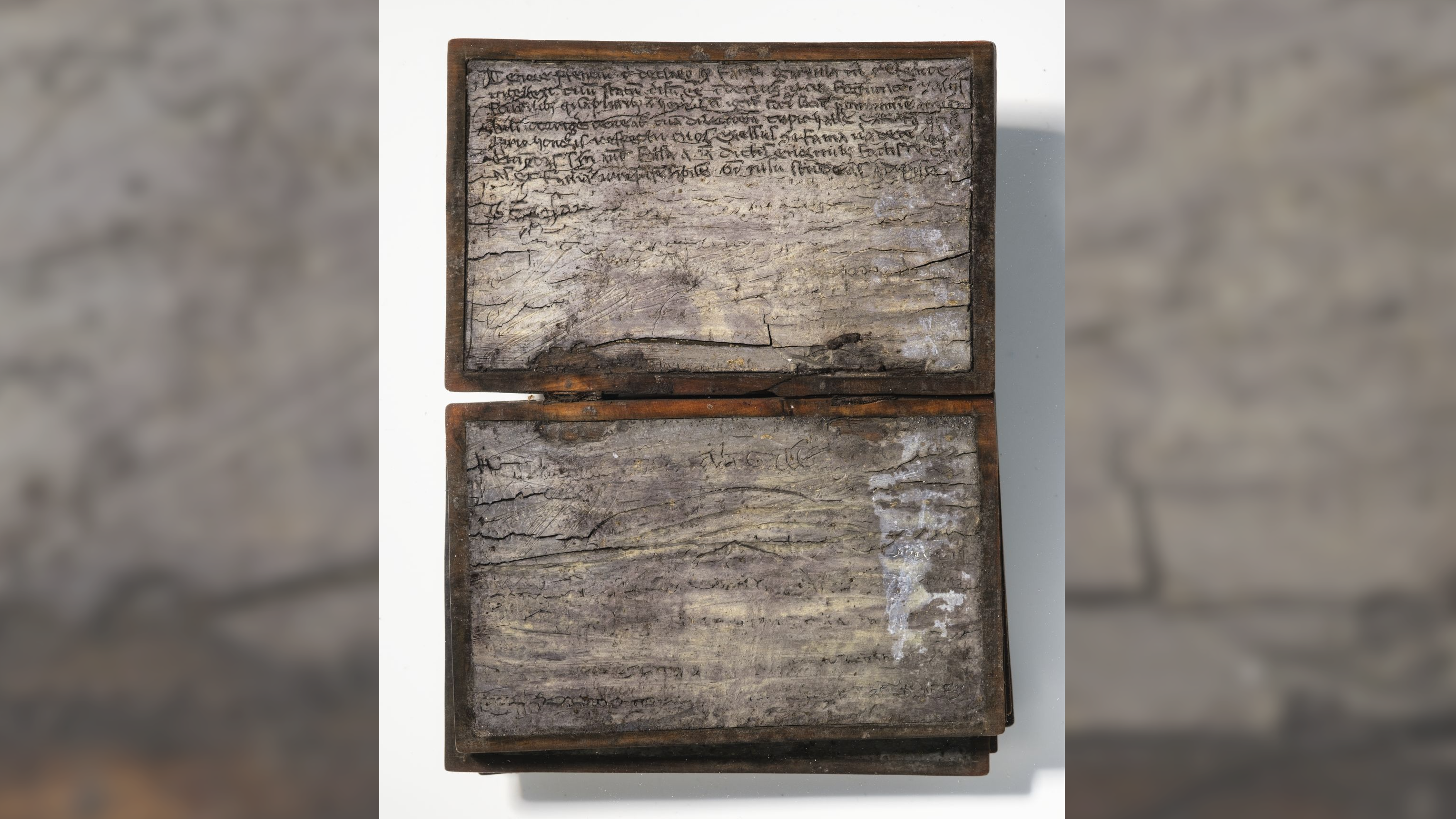
Inside that case was the notebook. The small notepad measures just 3.4 by 2.2 inches (8.6 by 5.5 centimeters) — small enough to fit in a coat pocket — and consists of 10 pages. The wax surface on the interior pages still bears traces of Latin cursive writing. The leather case itself is slightly larger than the notebook and is decorated with a fleur-de-lis pattern, a symbol historically associated with nobility and high social standing.
The airtight conditions inside the sealed latrines are the reason any of this survived at all. Wood, leather, and wax are organic materials — they decompose quickly in normal soil conditions. The latrine environment, as unpleasant as it sounds, acted almost like a time capsule.
“Even after so many centuries in the ground, the latrine find still had a rather unpleasant odor,” said Susanne Bretzel, a conservator at LWL.
What the Notebook and Silk Toilet Paper Tell Us About Its Owner
Researchers believe the notebook was most likely dropped by a medieval merchant — and the details surrounding the find paint a picture of someone with considerable wealth and education.
Latin writing in the medieval period wasn’t something the average person could produce. Literacy itself was relatively rare, and writing in Latin cursive required formal education. The notebook’s small size suggests it was a portable tool, the kind a traveling merchant or educated professional might carry to record transactions, notes, or correspondence on the road.
Then there’s the silk. The discovery of what researchers describe as fancy silk toilet paper in the same latrine context is a remarkable detail. Silk was an expensive imported luxury in medieval Europe — using it as toilet paper would have been an almost ostentatious display of wealth. It strongly suggests the person who used this latrine occupied a privileged position in medieval society.
The fleur-de-lis decoration on the leather satchel adds another layer. That symbol was widely associated with royalty and aristocracy across medieval Europe. Whether the owner was nobility, a wealthy merchant, or a church official, they clearly weren’t short of money.
Key Facts About the Medieval Latrine Discovery
| Detail | Confirmed Information |
|---|---|
| Location | Paderborn, northern Germany |
| Discovery context | Construction site for a new building |
| Number of latrines excavated | Five medieval latrines, all sealed and airtight |
| Notebook dimensions | 3.4 x 2.2 inches (8.6 x 5.5 cm) |
| Number of pages | 10 pages |
| Writing language | Latin cursive |
| Case decoration | Fleur-de-lis pattern |
| Estimated age | Nearly 800 years old |
| Announcing institution | Regional Association of Westphalia-Lippe (LWL) |
| Conservator named | Susanne Bretzel, LWL |
- The notebook was stored inside a leather case with a lid — missed at first because it resembled a clod of dirt
- The wax interior pages still preserve readable Latin writing
- Silk fabric consistent with toilet use was also recovered from the latrine
- The sealed, airtight conditions of the latrines preserved organic materials that would not normally survive
Why This Find Matters Beyond the Curiosity Factor
Finds like this one are genuinely rare. Organic materials — wood, leather, textile, wax — almost never survive in the archaeological record. Stone, metal, and ceramics make up the bulk of what we typically recover from medieval sites. When something like a leather satchel holding a wax notebook emerges intact, it offers a window into daily life that no coin hoard or stone wall can provide.
The Latin writing, once fully analyzed, could reveal details about commerce, travel routes, prices, or personal affairs of a medieval individual — the kind of granular, human-scale history that rarely makes it into the record. Researchers at LWL will continue working to decode and interpret the text on the wax tablets.
The silk toilet paper, meanwhile, challenges some of the rougher assumptions people tend to make about life in the Middle Ages. Wealth in medieval Europe could be extraordinary, and the material culture of the upper classes was sometimes more refined than popular imagination allows.
What Researchers Are Working on Now
The artifacts are currently undergoing conservation and analysis at LWL facilities. The priority is stabilizing the materials — wax, leather, and wood all require careful treatment to prevent deterioration now that they’ve been removed from their preserved environment.
Decoding the Latin cursive text on the notebook pages is an ongoing process. Depending on what the writing contains, this single small notebook could add meaningful detail to what historians know about medieval trade, literacy, and daily life in the Paderborn region.
No public display date has been announced for the artifacts, and full analysis results have not yet been published. Given the significance of the find, further announcements from LWL are expected as the research progresses.
Frequently Asked Questions
Where exactly was the medieval notebook discovered?
The notebook was found in the northern German city of Paderborn, during construction work for a new building, inside one of five excavated medieval latrines.
How old is the notebook?
Researchers estimate the notebook is nearly 800 years old, based on the context of the find.
What language is the writing in the notebook?
The notebook contains Latin cursive writing on its wax interior pages.
Why was the notebook so well preserved?
The five latrines were sealed and airtight, which created conditions that prevented organic materials like wood, leather, and wax from decomposing over the centuries.
Who is believed to have owned the notebook?
Researchers believe it was most likely dropped by a medieval merchant, based on the portable size of the notebook and the context of the find.
What is the significance of the silk toilet paper found in the same latrine?
Silk was a costly imported luxury in medieval Europe, and its presence suggests the latrine’s user was a person of considerable wealth and high social standing.




Leave a Reply