
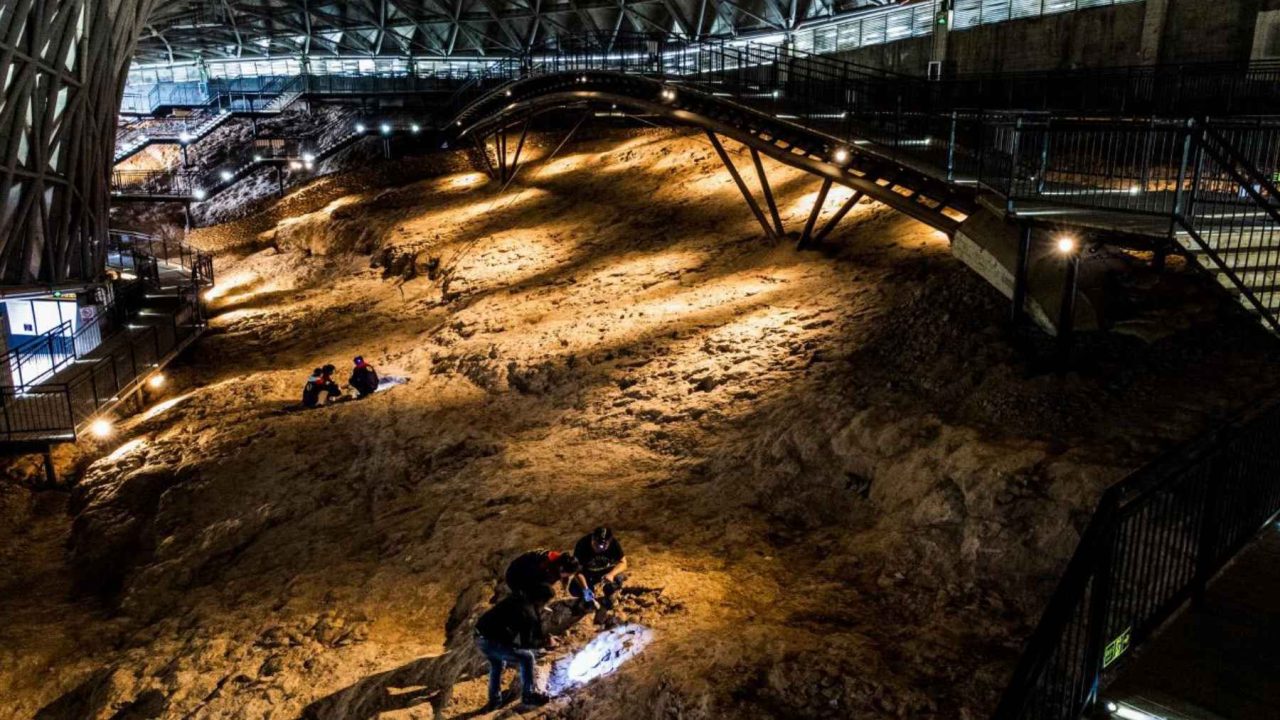
Eggshells that have spent 85 million years locked inside rock are now helping scientists rewrite what we know about Earth’s ancient climate — and the method used to date them is unlike anything paleontologists have relied on before.
Researchers working with dinosaur eggs from central China have applied a new laser-based dating technique that pins the fossils to approximately 85 million years ago, during the Late Cretaceous period. The result is a far more precise timestamp for a whole nesting site — and a clearer window into the world those dinosaurs actually lived in.
It sounds like a niche technical achievement. But for scientists trying to understand how life on Earth evolved alongside dramatic climate shifts, knowing exactly when something lived changes everything.
Why Dating Dinosaur Eggs Has Always Been So Difficult
Dinosaur eggs are not especially rare in the fossil record. What is rare is being able to say with confidence when, precisely, those eggs were laid.
Traditional dating methods focus on the rock surrounding a fossil — things like volcanic ash layers, mineral crystals, or other geological markers embedded nearby. The problem is that those surrounding materials are not always the same age as the fossil itself. Rock layers shift, erode, and get redeposited over millions of years. A crystal found next to an egg might be older or younger than the moment it was laid.
You are working with context clues, not direct evidence.
For paleontologists, that uncertainty carries real consequences. If you cannot trust the date attached to a fossil, you cannot reliably compare nesting sites across different regions. You cannot confidently link animal behavior to climate events. The entire interpretive framework becomes shakier.
The Laser-Based Technique That Changes the Equation
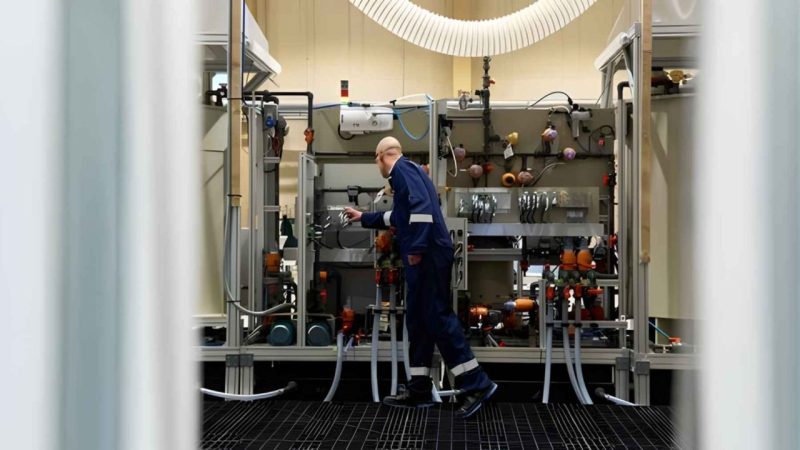
The new approach sidesteps the problem by dating the eggshell itself — not the rock around it. Using a laser-based test, researchers were able to extract precise timing information directly from tiny fragments of shell that had survived 85 million years of fossilization.
Dr. Bi Zhao of the Hubei Institute of Geosciences described the technique as working
“like an atomic clock for fossils,”
turning small fragments of shell into a reliable time marker for studying both dinosaur life and the shifting climate conditions of the Late Cretaceous.
That framing matters. An atomic clock does not estimate — it measures. Applying that kind of precision to a fossil that would otherwise carry a wide margin of uncertainty represents a meaningful shift in what paleontologists can actually claim to know.
What the 85-Million-Year Date Actually Tells Us
The Late Cretaceous was a period of significant environmental change. Temperatures, sea levels, and ecosystems were all in flux. Pinning a nesting site to a specific point within that era — rather than a broad range — allows researchers to ask much more targeted questions about how dinosaurs responded to those changes.
Were certain species nesting in particular ways because of temperature shifts? Were egg-laying behaviors tied to seasonal or longer-term climate patterns? With an imprecise date, those questions are hard to answer. With a sharper timestamp, the data becomes far more useful.
The eggs from central China now serve as a more reliable reference point — not just for that site, but potentially for comparing other nesting locations across the region and beyond.
Key Facts About This Discovery at a Glance
| Detail | Information |
|---|---|
| Fossil age confirmed | Approximately 85 million years old |
| Fossil location | Central China |
| Geological period | Late Cretaceous |
| Dating method used | Laser-based testing of eggshell fragments |
| Lead researcher institution | Hubei Institute of Geosciences |
| Key researcher named in source | Dr. Bi Zhao |
- Traditional dating methods rely on volcanic ash, crystals, or minerals in surrounding rock — not the fossil itself
- Those surrounding materials can be older or younger than the fossil, introducing uncertainty
- The new laser method targets the eggshell directly, producing a more reliable date
- The technique gives scientists a cleaner timestamp for comparing nesting sites across different regions
- A precise date also allows researchers to link fossil evidence to specific climate conditions of the Late Cretaceous
Why This Matters Beyond One Nesting Site
The real significance here is not just about these particular eggs. It is about what becomes possible when you can reliably date fossil material that was previously difficult to pin down.
Dinosaur eggs have been found across multiple continents. Many of those sites carry uncertain or contested dates. A laser-based method that works directly on eggshell could, in principle, be applied broadly — giving researchers a new tool to revisit existing collections and sharpen timelines that have long been treated as approximate.
That has downstream effects for climate science too. The Late Cretaceous is studied partly because it offers a natural record of how life on Earth responded to a warmer, higher-carbon-dioxide environment. Better-dated fossils mean better-calibrated models of what that world actually looked like — and potentially, more precise comparisons to climate patterns being studied today.
What Comes Next for This Research
If the laser-based method can produce reliable results on 85-million-year-old eggshell from central China, researchers will likely want to test it against other nesting sites and other fossil types.
For now, the central China site stands as the proof of concept — a nesting ground with a timestamp precise enough to serve as a genuine reference point for Late Cretaceous paleontology. That alone represents a meaningful step forward for a field that has long had to work around the limitations of indirect dating.
The eggs did not change. The rock around them did not change. What changed is our ability to read what they have always been telling us.
Frequently Asked Questions
How old are the dinosaur eggs discovered in central China?
The eggs have been dated to approximately 85 million years ago, placing them in the Late Cretaceous period.
What makes this dating method different from previous techniques?
Unlike traditional methods that date the rock surrounding a fossil, this laser-based technique dates the eggshell itself, producing a more direct and reliable timestamp.
Who led the research on these dinosaur eggs?
Dr. Bi Zhao of the Hubei Institute of Geosciences is named in
Why does precise dating of dinosaur fossils matter for climate science?
A more accurate date allows scientists to link fossil evidence to specific climate conditions of the Late Cretaceous, improving our understanding of how life responded to ancient environmental changes.</p



Leave a Reply