
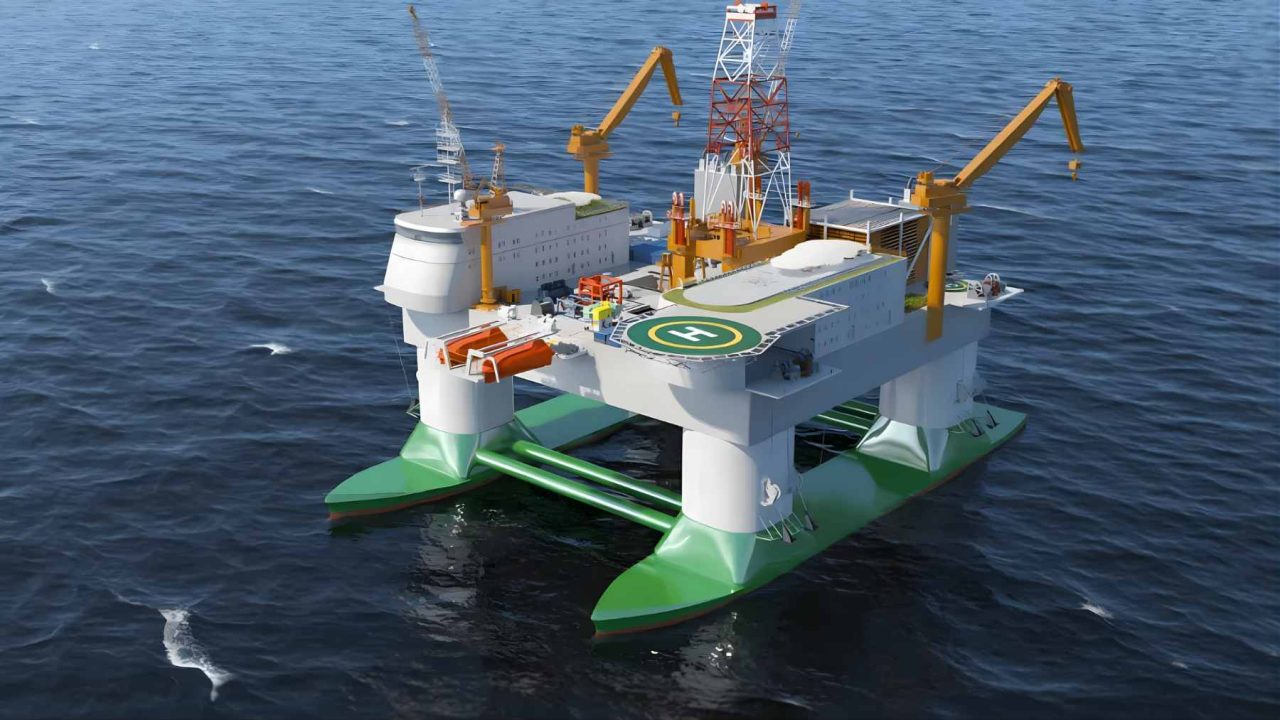
At nearly 33,000 feet below the ocean surface — roughly six miles straight down — lies a world that humans have barely touched. China just built something designed to reach it.
China has launched what it describes as the world’s first ultra-large deep-sea floating research platform, unveiled in Shanghai and built to support scientific work spanning marine ecosystems, offshore equipment testing, and full-ocean-depth exploration. The announcement marks a significant moment in the global race to understand — and potentially control — the deep sea.
But the platform’s debut arrives alongside a troubling backdrop. A Reuters investigation published just days before the launch detailed years of Chinese seabed mapping operations across the Pacific, Indian, and Arctic oceans — activity that naval experts say could carry strategic military implications alongside its scientific ones. That tension between research and geopolitics is impossible to ignore.
What China Actually Built — and Why It’s Different
The platform was developed by Shanghai Jiao Tong University and uses a semi-submersible twin-hull design. That configuration is specifically chosen for stability in rough, open-ocean conditions — meaning this isn’t a vessel meant to stay close to shore or operate in calm waters.
Think of it less like a traditional research ship and more like a floating island that can travel to remote stretches of ocean, anchor itself in position, and function as a long-stay laboratory for extended research missions. The goal is to bring the lab to the sea, not the other way around.
The platform is engineered for full-ocean-depth exploration down to approximately 32,800 feet — about 6.2 miles. That depth range puts it in territory covering some of the least-studied environments on Earth, including deep ocean trenches where pressure, darkness, and temperature create conditions that standard research vessels simply cannot access or study effectively over long periods.
The Numbers Behind China’s Deep-Sea Research Platform
| Feature | Detail |
|---|---|
| Launch location | Shanghai, China |
| Developed by | Shanghai Jiao Tong University |
| Design type | Semi-submersible twin-hull |
| Maximum exploration depth | ~32,800 feet (approximately 6.2 miles) |
| Designated research areas | Marine ecosystems, offshore equipment development |
| Claimed status | World’s first ultra-large deep-sea floating research platform |
The semi-submersible design is worth paying attention to. This class of structure sits partially below the waterline, which dramatically reduces the effect of waves on the platform above. It’s the same basic principle used in offshore oil drilling rigs — structures engineered to stay stable in some of the most hostile marine environments on the planet.
Science and Strategy — Where the Lines Blur
Here is where the story gets complicated.
The Reuters investigation that surfaced days before the platform’s launch described extensive Chinese seabed mapping operations conducted across three major ocean regions: the Pacific, the Indian Ocean, and the Arctic. Naval experts cited in that reporting suggested the mapping activity could serve purposes well beyond pure oceanography — potentially providing data useful for undersea military operations, submarine navigation, or strategic positioning.
China is not alone in conducting dual-use ocean research. Many nations operate scientific programs that also generate data with strategic value. But the scale and scope of the mapping described by Reuters, combined with the launch of a platform capable of reaching full ocean depth, has amplified questions about what exactly China’s deep-sea ambitions encompass.
Observers have noted that trust and transparency are foundational to international ocean research. When a platform of this capability is deployed amid unresolved questions about a nation’s seabed mapping activities, it complicates cooperation — even when the stated goals are entirely scientific.
- The platform is designed to study marine ecosystems at depths rarely reached by sustained human observation
- It is also intended to support development and testing of advanced offshore equipment
- Its operational range covers ocean zones that overlap with areas described in the Reuters seabed mapping investigation
- Naval analysts have flagged that detailed seabed maps are operationally valuable for undersea military planning
Why This Matters Beyond China’s Borders
The deep ocean is not just a scientific curiosity. It is home to ecosystems that influence global climate, fisheries that feed hundreds of millions of people, and mineral deposits that are increasingly contested as resources on land become harder to access. Whoever understands the deep sea best holds real leverage — scientific, economic, and potentially military.
A platform capable of sustained operation at six-mile depths gives China a significant research advantage in territory that most other nations have only briefly visited with robotic probes or short-duration submersible dives. Extended, on-site study is a different category of capability entirely.
For environmental researchers specifically, the platform’s focus on marine ecosystems could yield genuinely valuable data about deep-sea biodiversity, pressure-zone chemistry, and the effects of climate change on ocean systems at depth. That kind of knowledge is broadly useful — but only if it is shared openly with the international scientific community.
That openness is precisely what critics say has been inconsistent with China’s broader pattern of ocean data collection, as described in the Reuters investigation. Scientific data gathered by state-affiliated institutions does not always flow freely into global research databases, and the seabed mapping described in that report was reportedly not fully disclosed to international bodies.
What Comes Next for Deep-Sea Research
The platform has been launched, but its full operational status and research mission schedule have not yet been publicly confirmed in detail. Shanghai Jiao Tong University is the institution behind its development, and further announcements about deployment locations and research programs are expected as the platform moves toward active use.
The broader question — how the international community responds to China’s rapidly expanding deep-sea capabilities — will likely play out across scientific conferences, diplomatic channels, and naval policy discussions in the months ahead. The platform itself is a piece of engineering. What it means for global ocean governance is a much longer conversation.
Frequently Asked Questions
What is China’s new deep-sea floating research platform?
It is described as the world’s first ultra-large deep-sea floating research platform, launched in Shanghai and developed by Shanghai Jiao Tong University. It uses a semi-submersible twin-hull design for stability in open-ocean conditions.
How deep can this platform explore?
The platform is designed for full-ocean-depth exploration down to approximately 32,800 feet, which is roughly 6.2 miles below the ocean surface.
What will the platform be used for?
According to the announcement, it is built to support research into marine ecosystems and the development and testing of advanced offshore equipment.
What is the concern about China’s seabed mapping activities?
A Reuters investigation published shortly before the platform’s launch described years of Chinese seabed mapping across the Pacific, Indian, and Arctic oceans — activity that naval experts say could also support undersea military planning.
Who developed the platform?
Shanghai Jiao Tong University is credited with developing the platform, which was launched in Shanghai.
Has the platform begun active research operations?
The platform has been launched, but its full operational schedule and specific research mission details have not yet been publicly confirmed.


Leave a Reply