
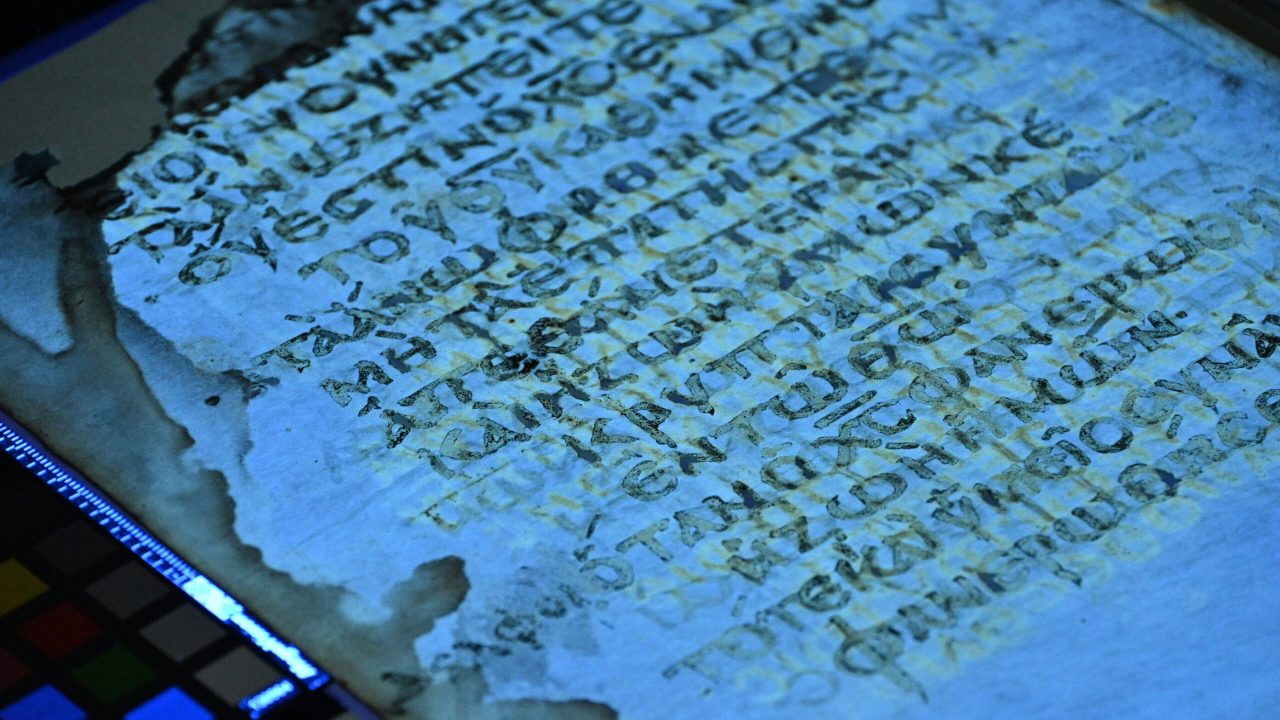
Forty-two pages of a sixth-century biblical manuscript — erased, repurposed, and hidden inside the bindings of other books for centuries — have been recovered by researchers using cutting-edge imaging technology. What they found is rewriting what historians know about how the earliest copies of the New Testament were made, preserved, and, in some cases, quietly dismantled.
The discovery centers on a manuscript known as Codex H, a sixth-century copy of the Letters of St. Paul. Its story is part archaeological detective work, part accidental preservation miracle — and it offers a rare, direct window into the working life of medieval monks and the manuscripts they handled every day.
For anyone who has ever wondered how ancient texts survive at all, this find is a striking reminder: sometimes the most important pages aren’t lost. They’re just hiding.
What Researchers Actually Found Inside Codex H
Codex H was not destroyed in a fire or swept away in a flood. It was taken apart — deliberately — sometime in the thirteenth century at the Great Lavra Monastery on Mount Athos in Greece. Monks there routinely dismantled older manuscripts and repurposed their pages as binding material and flyleaves in newer books. It was practical, not reckless. Old parchment was valuable, and reinforcing a new volume with the pages of an older one was standard book repair work.
What no one anticipated was that those repurposed pages would end up scattered across libraries on two continents, surviving inside the spines of books that were themselves eventually rediscovered and preserved.
Today, the surviving fragments of Codex H are held in libraries across Italy, Greece, Russia, Ukraine, and France. Many of them spent centuries tucked inside the bindings of later manuscripts before scholars even realized they were there.
The new discovery came from examining those surviving pages with multispectral imaging — a technique that captures light across different wavelengths, making faint or erased writing visible to the human eye again. When the manuscript’s pages were re-inked for reuse centuries ago, traces of the original text transferred onto neighboring leaves. Researchers call these impressions “ghost” text — and it turns out those ghostly impressions contain 42 previously unknown pages of New Testament writing.
The Technology That Made This Possible
Multispectral imaging has transformed the field of manuscript studies over the past two decades. Where older methods might require physical intervention — or simply couldn’t recover erased text at all — multispectral imaging works by illuminating a surface with different wavelengths of light and capturing the results with specialized cameras.
Ink and parchment respond differently to those wavelengths. Writing that appears completely invisible to the naked eye can suddenly become legible when viewed under the right spectrum. The technique has been used to recover text from ancient papyri, damaged medieval documents, and famously, from palimpsests — manuscripts where earlier writing was scraped away and written over.
In the case of Codex H, the key wasn’t just recovering erased text from the original pages. It was identifying the faint “ghost” impressions left on neighboring leaves — text that had transferred during the re-inking process and survived unnoticed for centuries.
| Detail | Information |
|---|---|
| Manuscript name | Codex H |
| Date of origin | Sixth century |
| Content | Letters of St. Paul (New Testament) |
| Dismantled at | Great Lavra Monastery, Mount Athos, Greece |
| Approximate date of dismantling | Thirteenth century |
| Pages recovered | 42 previously unknown pages |
| Current fragment locations | Italy, Greece, Russia, Ukraine, France |
| Imaging technique used | Multispectral imaging |
Why This Discovery Matters Beyond the Pages Themselves
The recovery of 42 new pages from a sixth-century New Testament manuscript is significant on its own. But the broader implications go further than the text itself.
What Codex H reveals is a detailed picture of how biblical works were copied, preserved, and repurposed in the medieval world. These weren’t sacred, untouchable objects locked away in vaults. They were working documents — handled, worn down, repaired, and sometimes cannibalized to keep other books alive.
The fact that Codex H was deliberately dismantled at Mount Athos tells researchers something important: monks there were making practical decisions about which manuscripts to preserve intact and which to break apart. Understanding those decisions helps historians reconstruct the intellectual and material culture of medieval monasteries in ways that written records alone cannot.
It also raises a compelling possibility. If 42 pages of Codex H survived hidden inside other books, similar discoveries may still be waiting in libraries and archives around the world — inside manuscripts that haven’t yet been examined with modern imaging technology.
What Happens Next for Codex H
The fragments of Codex H remain physically scattered across multiple countries. Researchers now face the complex work of analyzing the recovered text in detail — comparing it against other known copies of the Letters of St. Paul to understand what variants or unique readings it might contain.
Multispectral imaging has opened the door. The scholarly work of interpreting what’s behind it is just beginning. Given that the fragments are spread across libraries in five countries, that process will require ongoing international collaboration among institutions that hold different pieces of the same puzzle.
For manuscript scholars, the recovery is both a result and a starting point. Every page recovered from Codex H adds another data point to the larger picture of how the New Testament was transmitted across centuries — and how close some of those transmissions came to disappearing entirely.
Frequently Asked Questions
What is Codex H?
Codex H is a sixth-century manuscript containing the Letters of St. Paul, part of the New Testament. It was dismantled in the thirteenth century at the Great Lavra Monastery on Mount Athos in Greece.
How many pages were recovered?
Researchers recovered 42 previously unknown pages from Codex H using multispectral imaging techniques.
Why was the manuscript taken apart in the first place?
The manuscript was deliberately dismantled as part of routine book repair work at Mount Athos, where older manuscripts were commonly reused as binding material and flyleaves for newer volumes.
Where are the surviving fragments of Codex H held today?
The surviving fragments are currently scattered across libraries in Italy, Greece, Russia, Ukraine, and France.
What is multispectral imaging and how did it help?
Multispectral imaging captures light across different wavelengths to reveal writing invisible to the naked eye. In this case, it uncovered faint “ghost” text that had transferred onto neighboring pages when the manuscript was re-inked centuries ago.
Will the fragments ever be reunited in one place?
This has not yet been confirmed. The fragments remain in multiple institutions across several countries, and any physical reunification would require significant international coordination.



Leave a Reply