
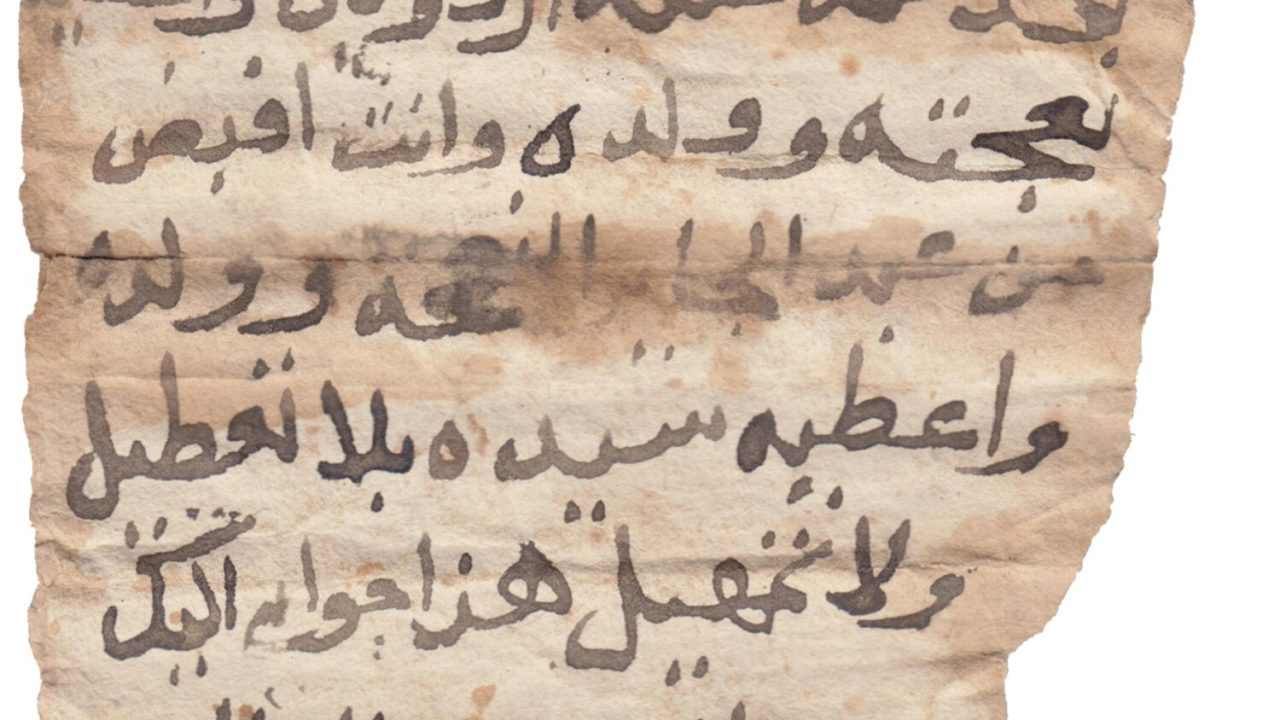
A single scrap of Arabic text, buried for centuries beneath the sands of Sudan, has just rewritten what historians thought they knew about a king once dismissed as little more than legend.
Researchers excavating the ancient site of Old Dongola in Sudan have uncovered a document that confirms the historical existence of King Qashqash — a ruler who, until now, existed primarily in local oral and historical traditions, his reality uncertain. The find is being hailed as a significant breakthrough in the study of medieval African history, offering hard documentary evidence for a figure scholars had long debated.
The discovery was made by researchers from the Polish Centre of Mediterranean Archaeology at the University of Warsaw, and their findings have been published in the journal Azania: Archaeological Research in Africa.
Who Was King Qashqash — and Why Did Anyone Doubt He Existed?
Old Dongola was once the capital of Makuria, a powerful medieval Christian kingdom that flourished in the region of Nubia — the area spanning what is today northern Sudan and southern Egypt. For centuries, Makuria was one of the most significant political entities in northeastern Africa, holding its own against Arab expansion for hundreds of years before eventually declining.
King Qashqash belongs to the period after that decline — a time when Nubia was undergoing profound transformation through Arabisation and Islamisation. It is a period that remains poorly documented, which is precisely why figures like Qashqash drifted into the realm of legend rather than recorded history. Without written records, rulers become myths.
That is what makes this newly discovered document so remarkable. It does not just hint at Qashqash’s existence — it records him issuing a direct administrative order, the kind of routine governance that only a real, functioning ruler would conduct.
What the Document Actually Says
The text itself is, by any measure, ordinary. It is a short order issued in the name of King Qashqash, directing a subordinate named Khidr to carry out a specific transaction. According to the document, Khidr was instructed to receive three units of cloth from a man named Muhammad al-ʿArab and, in exchange, give him a ewe and her lamb. Those animals were to be collected from a third individual named ʿAbd al-Jabir.
It reads, in other words, like an ancient receipt or administrative memo. And that is exactly what makes it so valuable.
Documents of this kind — the bureaucratic paper trail of daily governance — are the backbone of how historians verify that rulers and kingdoms were real, functioning entities rather than embellished memories. The fact that Qashqash was issuing orders, managing subordinates, and overseeing trade exchanges places him firmly in the category of historical fact.
A Window Into Post-Christian Nubia
The document is part of a much larger archive of Arabic texts uncovered at Old Dongola. Researchers from the Polish Centre of Mediterranean Archaeology have been working through dozens of these texts, which include a wide range of material.
| Document Type | Significance |
|---|---|
| Letters | Evidence of communication networks and social relationships |
| Legal notes | Insight into how disputes and agreements were formalised |
| Administrative documents | Records of governance, transactions, and official orders |
| Amulets | Evidence of religious practice and belief during the transitional period |
| Royal orders (including the Qashqash document) | Direct confirmation of rulers and political authority |
Together, these texts are reshaping the historical picture of Nubia during a period that has long been underdocumented. The shift from a Christian kingdom to an Arabised, Islamised society was not a sudden rupture — it was a gradual transformation, and documents like these help historians trace how power, trade, and daily life evolved across generations.
Why This Discovery Matters Beyond the History Books
There is a broader story here that goes beyond one king and one document. Much of sub-Saharan and northeastern African medieval history remains underrepresented in mainstream historical scholarship — not because the history does not exist, but because the documentary evidence is scarce, scattered, or has not yet been excavated and studied.
The ongoing work at Old Dongola is helping to fill those gaps. Each Arabic text recovered from the site adds another data point to a picture that, for too long, has been drawn in broad, uncertain strokes. Rulers who survived only as names in oral tradition are now being confirmed as real people who governed real communities, managed real economies, and left real records behind.
The confirmation of King Qashqash’s existence is a reminder that absence of evidence is not the same as evidence of absence — and that the sands of Sudan still have a great deal left to tell.
What Researchers Are Working on Next
The Qashqash document is not a standalone find. It is part of an active, ongoing research project examining the full collection of Arabic texts discovered at Old Dongola. Scholars are continuing to study, translate, and contextualise the dozens of documents already recovered from the site.
As that work progresses, researchers expect to build a more detailed picture of political authority, trade networks, religious change, and social organisation in post-Makurian Nubia. Each document adds another layer, and the Qashqash order — routine as its contents may be — has already proven that even the most ordinary administrative text can carry extraordinary historical weight.
The study has been published in Azania: Archaeological Research in Africa, making the findings available to the wider scholarly community for further analysis and debate.
Frequently Asked Questions
Who is King Qashqash?
King Qashqash was a ruler of the Dongola region in Sudan who had previously been considered a semi-legendary figure in local historical traditions. A newly discovered Arabic document confirms his historical existence.
Where was the document found?
The document was discovered at Old Dongola, an archaeological site in Sudan and the former capital of the medieval Christian kingdom of Makuria.
Who carried out the excavation?
Researchers from the Polish Centre of Mediterranean Archaeology at the University of Warsaw conducted the excavations and published their findings in the journal Azania: Archaeological Research in Africa.
What does the document actually contain?
It is a short royal order in which King Qashqash instructs a subordinate named Khidr to exchange three units of cloth for a ewe and her lamb, involving several named individuals in the transaction.
Why is a routine administrative document considered significant?
Because it provides direct, written evidence that King Qashqash was a real, functioning ruler — not a legendary figure — placing him firmly in the historical record of post-Christian Nubia.
Are there more documents being studied from the same site?
Yes. Researchers are examining dozens of Arabic texts from Old Dongola, including letters, legal notes, administrative documents, and amulets, as part of an ongoing research project.


Leave a Reply