
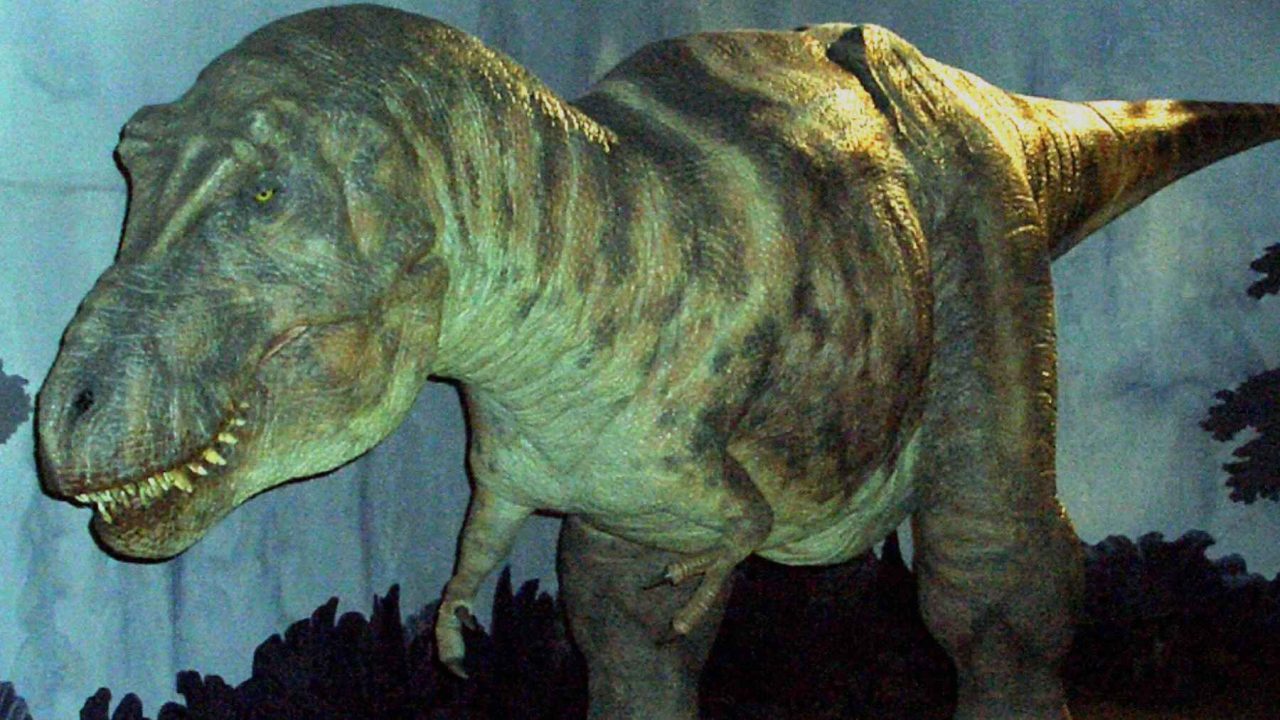
Everything you think you know about how T. rex moved might be wrong — and the culprit is Hollywood. Decades of blockbuster films have burned a specific image into our minds: a massive, flat-footed predator thundering across the landscape like a living tank. A new scientific study is now pushing back on that picture, and the revision is more surprising than most people would expect.
According to the research, Tyrannosaurus rex likely walked and moved on its toes — not flat-footed like a human plodding down a hallway. The gait researchers are now describing looks far less like a lumbering reptile and far more like a modern ostrich. That single shift in understanding changes quite a lot about how we imagine the most famous predator in prehistoric history.
It won’t make T. rex any less terrifying. But it does mean the version that chased a jeep through a rainstorm in 1993 was probably moving in a way that wasn’t quite right.
What “Toe Walking” Actually Means — and Why It Matters
The technical term researchers use is digitigrade locomotion. It sounds complicated, but the idea is straightforward: instead of placing the full foot flat on the ground with each step, the animal keeps its heel raised and loads its weight through the front of the foot and toes.
You can feel the difference yourself right now. Stand up and rock forward onto the balls of your feet. That forward-loaded position is roughly what researchers believe T. rex was doing with every stride.
Compare that to how humans normally walk. We are mostly plantigrade — our heel hits first, the rest of the foot follows, and the load is spread across the whole foot. It’s stable and efficient for long distances, but it’s not built for speed or agility in the same way toe-walking is.
If you’ve ever tried to run flat-footed, you already understand why the distinction matters. It feels slow, awkward, and hard to control. Running birds — ostriches, emus, cassowaries — do the opposite. They stay up on their toes, which allows for faster, more responsive movement and better energy transfer with each stride.
The study argues T. rex used the same basic mechanical approach. That would make its movement quicker and more stable than the stomping, heel-first gait pop culture has long assumed — even if the animal still wasn’t the kind of sprinter Hollywood tends to portray.
The T. rex Gait: Hollywood vs. What the Science Suggests
| Feature | Hollywood Version (e.g., Jurassic Park) | What the New Study Suggests |
|---|---|---|
| Foot contact with ground | Flat-footed, full foot on ground | Toe-first, heel raised (digitigrade) |
| Closest modern comparison | Large reptile or heavy mammal | Modern running birds like ostriches |
| Movement quality | Slow, stomping, wrecking-ball impact | Potentially quicker, more stable strides |
| Locomotion type | Plantigrade (heel-to-toe) | Digitigrade (toe-walking) |
| Sprint capability | Portrayed as fast pursuer | Still not a true sprinter, per researchers |
Why This Finding Connects T. Rex More to Birds Than Reptiles
This isn’t the first time science has drawn a line between T. rex and modern birds. Paleontologists have long understood that birds are, in a very real evolutionary sense, living dinosaurs — direct descendants of theropod dinosaurs, the same group that includes T. rex.
What makes this study notable is that it focuses on something as specific and mechanical as foot strike patterns. It’s one thing to say T. rex was related to birds in a broad evolutionary sense. It’s another to argue that the way it actually placed its foot on the ground mirrored how an ostrich moves today.
The implication is that the bird-like qualities of T. rex weren’t just about feathers or bone structure — they may have extended to the basic mechanics of how the animal got around. That’s a meaningful shift in how researchers think about dinosaur movement, and it has ripple effects for how we model the biomechanics of other large theropods as well.
What This Changes — and What It Doesn’t
To be clear, the study is not arguing that T. rex was nimble or quick in the way a cheetah is quick. Researchers are careful to note that even with a more bird-like foot strike, T. rex was still not the kind of animal that could sprint at high speeds.
What changes is the texture of how it moved. A toe-walking gait would make each stride more efficient, more controlled, and potentially less energy-draining than a flat-footed stomp. For an animal of that size, those mechanical advantages matter — especially over long distances or when pursuing prey.
It also changes the sound, at least in our imagination. The wrecking-ball impact of a heel slamming into the earth gives way to something lighter, more precise. Less earthquake, more purposeful stride.
For anyone who grew up watching that famous jeep chase scene, that’s a genuinely strange thing to sit with. The T. rex of popular culture may be one of the most recognizable images in cinema history — and the science is now suggesting its feet were doing something quite different from what the films showed.
Where Paleontology Goes From Here
Studies like this one are part of a broader shift in how paleontologists approach reconstructing dinosaur movement. Rather than relying purely on skeletal structure and size estimates, researchers are increasingly using comparisons to living animals — particularly birds — to model how extinct species actually functioned in motion.
The connection between T. rex and modern birds like ostriches gives scientists a living reference point. Ostriches are large, bipedal, and move on their toes at speed. Studying how they move, how their muscles fire, and how their feet absorb impact provides a working template that can be applied — carefully and with limitations — to animals that have been extinct for tens of millions of years.
The research adds another layer to an already complex picture of one of history’s most studied animals. T. rex remains the apex predator of the Late Cretaceous, but the science of exactly how it moved, hunted, and carried its enormous body continues to evolve.
Frequently Asked Questions
What does the new T. rex study actually claim?
The study argues that T. rex likely used digitigrade locomotion — walking and moving on its toes rather than flat-footed — making its gait more similar to modern running birds like ostriches than to the stomping reptile shown in films like Jurassic Park.
What is digitigrade locomotion?
Digitigrade locomotion means walking with the heel raised and weight loaded through the toes and front of the foot, which is how modern running birds move and is believed to allow for quicker, more stable strides.
Does this mean T. rex was actually fast?
Not necessarily — researchers note that even with a more bird-like foot strike, T. rex was still not a true sprinter, but the gait may have made its movement more efficient and controlled than previously depicted.
How is T. rex connected to modern birds?
Birds are evolutionary descendants of theropod dinosaurs, the same group that includes T. rex, meaning the connection between T. rex movement and bird movement has a real biological basis beyond simple comparison.
What is the difference between plantigrade and digitigrade movement?
Plantigrade animals, like humans, walk with the full foot including the heel in contact with the ground; digitigrade animals keep their heel raised and walk on their toes, which is associated with faster and more agile movement.
Was the T. rex in Jurassic Park shown moving incorrectly?
According to this study, the flat-footed, stomping gait depicted in the 1993 film likely did not reflect how T. rex actually moved, with the real animal probably striking the ground toe-first in a more bird-like fashion.



Leave a Reply