
When does spending time near someone with a dangerous virus actually put you at risk? That question is at the center of a growing public health debate triggered by the hantavirus outbreak aboard the cruise ship MV Hondius — and the honest answer is that nobody has a clean, universally agreed-upon definition.
In the aftermath of the outbreak, roughly 150 passengers are currently being monitored or placed under quarantine lasting up to six weeks, a timeline driven by the virus’s lengthy incubation period. Public health authorities have stressed that person-to-person transmission of Andes virus — the only hantavirus strain known to spread between humans — is rare. But the phrase they keep using, “close and prolonged contact,” turns out to mean very different things depending on which agency you ask.
That ambiguity matters. It shapes who gets quarantined, who gets monitored, and ultimately how well an outbreak gets contained.
What Is Andes Virus and Why Is This Outbreak Unusual?
Most hantavirus strains spread to humans through contact with infected rodents — their droppings, urine, or saliva. Andes virus is the rare exception. It is the only hantavirus known to transmit from person to person, making any cluster of human cases far more alarming than a typical rodent-exposure situation.
That said, public health officials and scientists agree that Andes virus is significantly less contagious than many other human-transmissible viruses. Transmission appears to require sustained, intimate exposure to a symptomatic person — not a brief hallway encounter or a shared meal. The outbreak on the MV Hondius brought this distinction into sharp focus, because a cruise ship is exactly the kind of enclosed, high-proximity environment where transmission definitions become critically important.
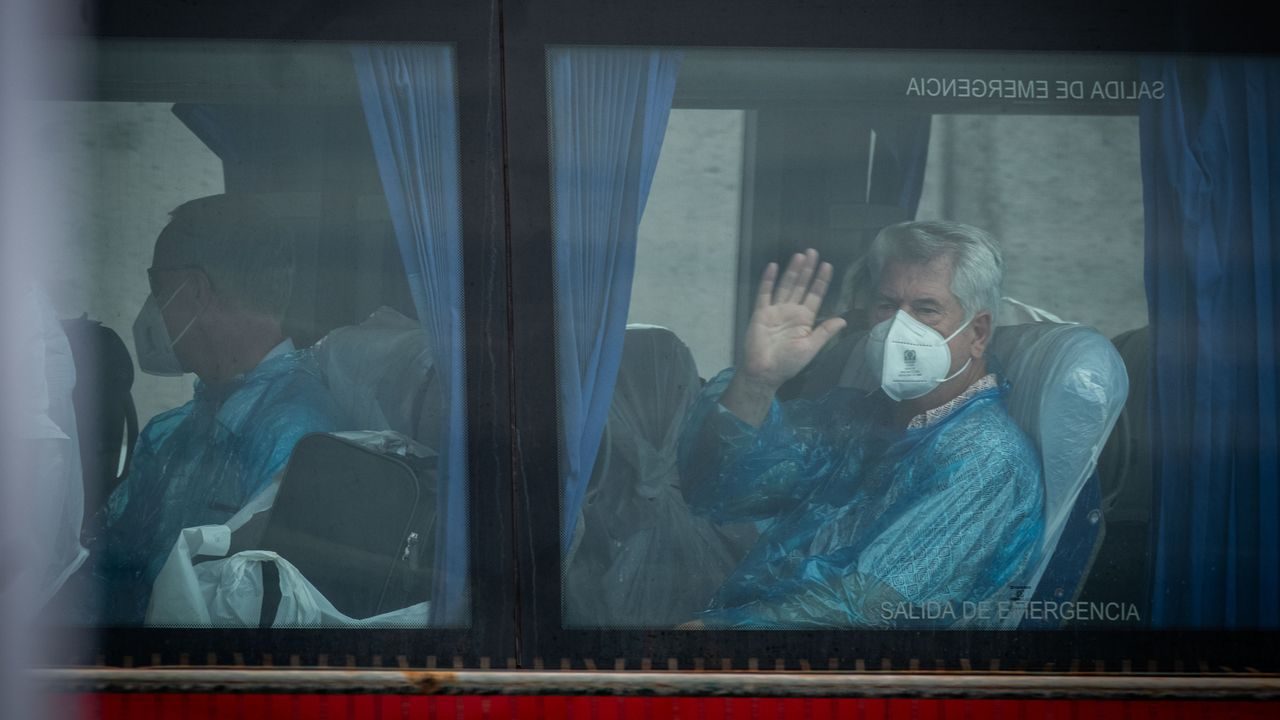
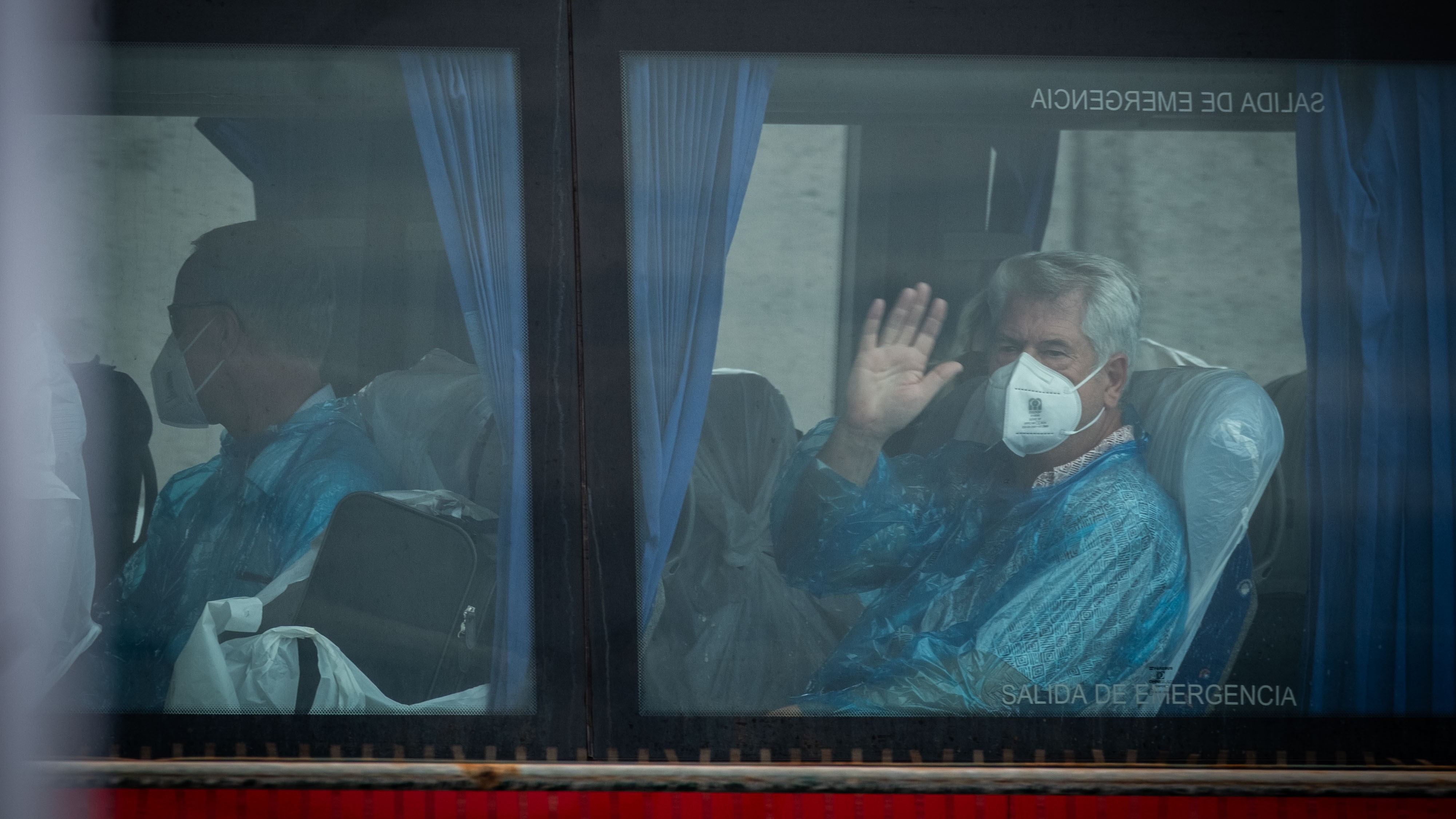
On May 10, 2026, British passengers from the vessel disembarked and traveled by coach to the airport at Granadilla Port in Tenerife, with precautions in place to minimize viral transmission risk during transit.
The Problem With “Close Contact” — No One Agrees on What It Means
Here is where the story gets complicated. Some health agencies responding to this outbreak have reached back to COVID-19 pandemic guidelines to define exposure risk. The U.S. Centers for Disease Control and Prevention (CDC) used a specific threshold during COVID-19: being within 6 feet (1.8 meters) of a symptomatic patient in an enclosed space for 15 minutes or more.
That definition was built around SARS-CoV-2, a highly contagious airborne virus. Scientists and public health officials broadly agree that Andes virus is considerably less contagious than SARS-CoV-2. Applying COVID-era thresholds to Andes virus may therefore cast a much wider net than the actual risk profile of the pathogen warrants — potentially pulling thousands of people into monitoring protocols based on exposure standards designed for a very different virus.
The World Health Organization (WHO) takes a different approach, identifying high-risk contacts as including intimate partners and others in similarly close, sustained contact with a confirmed case. That framing implies a much narrower risk group than the CDC’s distance-and-time formula would suggest.
How the Definitions Compare
| Agency / Framework | Definition of Close Contact | Originally Designed For |
|---|---|---|
| CDC (COVID-19 guidelines) | Within 6 feet of a symptomatic person in an enclosed space for 15+ minutes | SARS-CoV-2 (COVID-19) |
| World Health Organization | Intimate partners and those with similarly prolonged, close exposure | Andes virus / hantavirus |
| MV Hondius response | Up to 6 weeks quarantine based on incubation period; monitoring ongoing | Andes virus outbreak |
The gap between these frameworks is not trivial. On a cruise ship carrying hundreds of passengers who shared dining rooms, corridors, and common spaces, the CDC’s 6-foot, 15-minute rule could classify a large portion of the ship’s passengers as at-risk. The WHO’s more targeted definition would flag far fewer people — but might miss some genuine exposures.
Why This Gap Has Real Consequences for Passengers
For the roughly 150 people now navigating quarantine or monitoring protocols, the lack of a standardized definition is not an abstract policy problem — it is their daily reality. Some may face weeks of isolation based on proximity thresholds borrowed from a different pandemic, applied to a virus that behaves quite differently.
Officials have noted that the six-week quarantine window is tied directly to Andes virus’s incubation period, meaning authorities are erring on the side of caution given how serious hantavirus disease can be. Hantavirus pulmonary syndrome, the severe respiratory illness caused by Andes virus, carries a significant fatality rate, which explains why public health responses tend toward caution even when transmission risk is considered low.
The broader concern raised by scientists is that without a consistent, pathogen-specific definition of close contact for Andes virus, outbreak responses will remain inconsistent. Different countries, different agencies, and different outbreaks may apply wildly different standards — making it harder to compare data, assess true transmission rates, and build a clearer picture of how the virus actually spreads.
What Comes Next for the MV Hondius Passengers
The approximately 150 passengers currently under watch face monitoring periods of up to six weeks from the point of potential exposure. Health authorities continue to track the situation, with precautions having been taken during disembarkation in Tenerife to reduce any further transmission risk.
Whether this outbreak prompts health agencies to develop a standardized, Andes-virus-specific definition of close contact remains to be seen. Scientists and public health officials have flagged the inconsistency as a problem worth solving before the next outbreak — not during one.
Frequently Asked Questions
What is Andes virus and how is it different from other hantaviruses?
Andes virus is the only hantavirus strain known to spread directly from person to person, making it uniquely concerning among hantavirus types, most of which only spread through contact with infected rodents.
How long is the quarantine period for MV Hondius passengers?
Passengers are being monitored or quarantined for up to six weeks, based on the known incubation period of Andes virus.
What does the CDC consider “close contact” for this outbreak?
Some agencies have applied the CDC’s COVID-19 definition: being within 6 feet of a symptomatic person in an enclosed space for 15 minutes or more, though scientists note Andes virus is far less contagious than SARS-CoV-2.
What does the WHO say about high-risk contacts for Andes virus?
The WHO identifies high-risk contacts as including intimate partners and others with similarly close and sustained exposure to a confirmed case.
Is Andes virus as contagious as COVID-19?
No. Scientists and public health officials broadly agree that Andes virus is considerably less contagious than SARS-CoV-2, the virus that causes COVID-19.
Where did MV Hondius passengers disembark?
British passengers from the MV Hondius disembarked at Granadilla Port in Tenerife on May 10, 2026, and traveled by coach to the airport, with precautions in place to minimize transmission risk.



Leave a Reply