
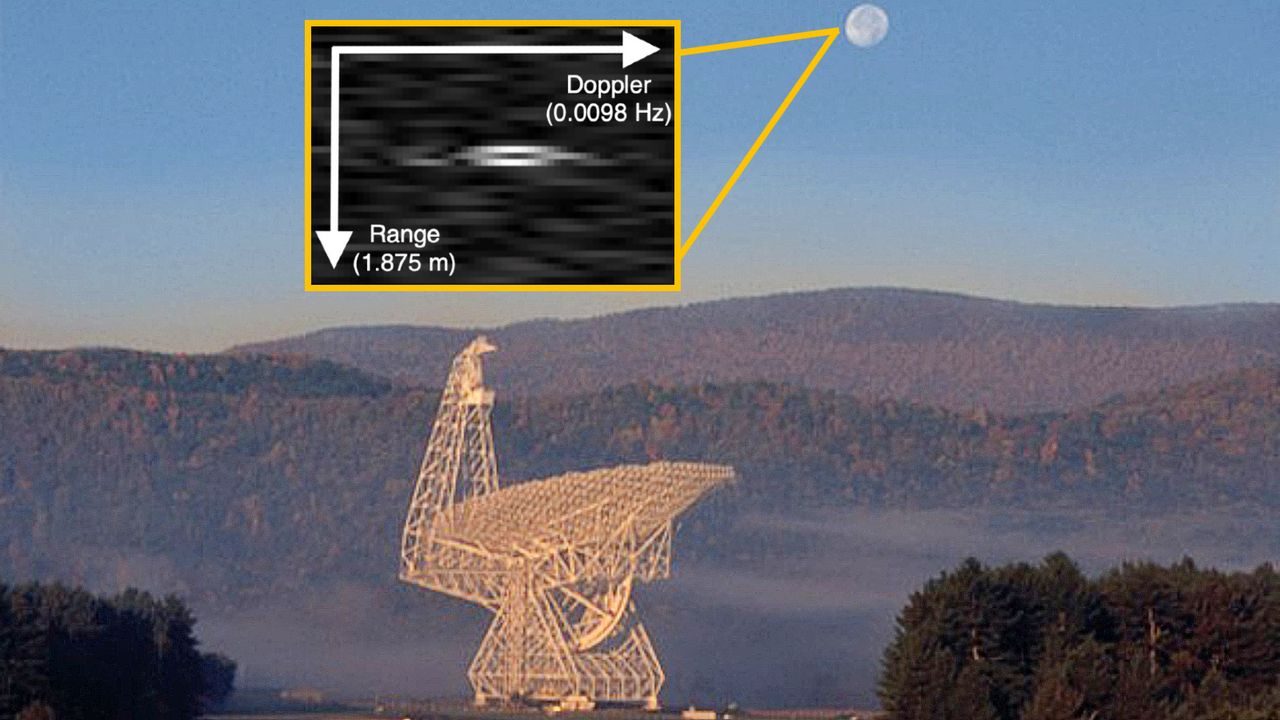
A handful of black and white pixels captured from more than 200,000 miles away may be one of the most extraordinary photographs ever taken from Earth — because inside those pixels are four human beings.
The image, shared on May 6 by the National Radio Astronomy Observatory (NRAO), shows NASA’s Orion capsule — nicknamed Integrity — carrying the Artemis II crew during their historic mission around the moon. It was captured by the Robert C. Byrd Green Bank Telescope in West Virginia from approximately 213,000 miles (343,000 kilometers) away, shortly before or after the crew completed their record-breaking slingshot maneuver around the moon.
It doesn’t look like much at first glance. But the moment you understand what you’re seeing, it stops you cold. As observers noted when the image was released: there are four people in those pixels.
Why This Blurry Photo Might Be the Most Remarkable Artemis II Image Yet
NASA’s Artemis II mission has already produced a stunning visual record. In recent weeks, the crew released a cache of 12,000 images taken during the mission, offering breathtaking views of the moon, deep space, and Earth from afar. By any standard, those images are spectacular.
But this new image — blurry, low-resolution, almost abstract — is competing seriously for the title of most impressive Artemis II photo. The reason is entirely about perspective. This was not taken by the crew. It was not taken from a spacecraft or satellite. It was taken from the surface of Earth, pointing outward across more than two hundred thousand miles of space, and it caught a capsule carrying four astronauts in the act of swinging around the moon.
That distance makes it a strong candidate for the longest-distance photograph of humans ever taken from Earth. Images like Carl Sagan’s famous “Pale Blue Dot” — captured from space by the Voyager 1 probe — don’t qualify under that distinction, since they weren’t shot from Earth’s surface. This one was.
The Telescope Behind the Image: What the Green Bank Observatory Can Do
The Robert C. Byrd Green Bank Telescope, located in Green Bank, West Virginia, is not your average piece of scientific equipment. It is the world’s largest fully steerable radio telescope — a 328-foot-wide (100-meter) radio dish mounted on a circular rail system that allows it to rotate and point at virtually any part of the sky.
That combination of massive scale and full steerability is what made it capable of tracking the Orion capsule throughout the Artemis II mission. The telescope played a key role in monitoring the spacecraft as it traveled to and around the moon, and the resulting image — however pixelated — is a direct product of that tracking work.
| Detail | Specification |
|---|---|
| Telescope name | Robert C. Byrd Green Bank Telescope (GBT) |
| Location | Green Bank, West Virginia |
| Dish diameter | 328 feet (100 meters) |
| Classification | World’s largest fully steerable radio telescope |
| Operated by | National Radio Astronomy Observatory (NRAO) |
| Image released | May 6 (shared by NRAO) |
| Distance to subject | Approximately 213,000 miles (343,000 km) |
| Subject captured | Orion capsule (Integrity), Artemis II crew |
What the Image Actually Shows — and Why the Pixels Matter
Radio telescopes don’t capture images the way a camera does. They detect radio waves — a form of electromagnetic radiation — and the data is then processed into a visual representation. What you get isn’t a crisp optical photograph. What you get, in this case, is a cluster of bright pixels against a dark background, representing the Orion capsule’s signal signature at an almost incomprehensible distance.
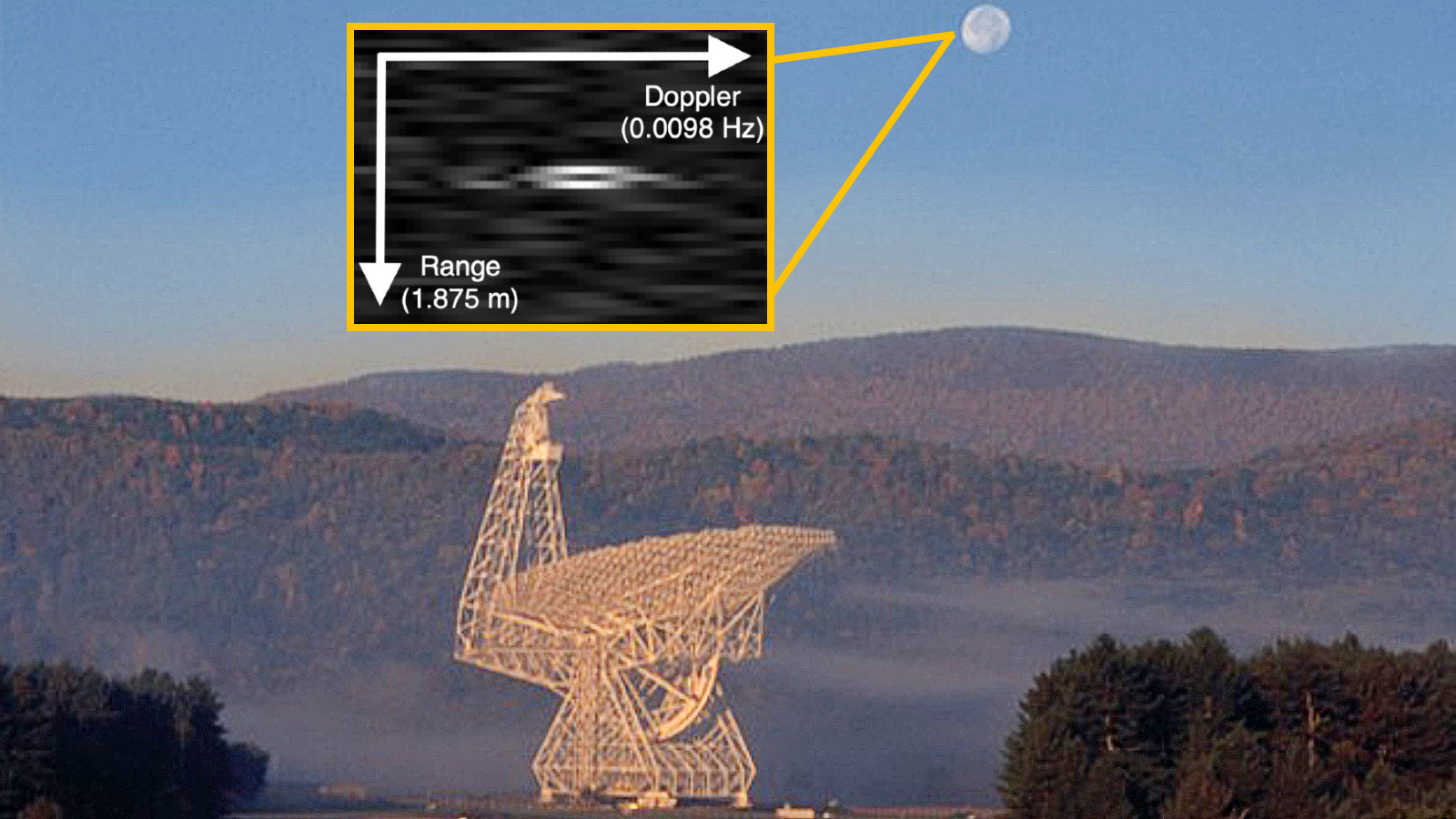
The capsule itself was captured shortly before or after completing its record-breaking slingshot maneuver around the moon — a gravitational assist that sent the crew on a sweeping arc around the lunar surface. That maneuver was one of the defining moments of the Artemis II mission, and the Green Bank Telescope was watching when it happened.
The blurriness isn’t a flaw. It’s physics. Resolving a human-occupied spacecraft at 213,000 miles using any Earth-based instrument is an achievement in itself. The fact that the image exists at all is the point.
What This Means for Space Observation From Earth
Beyond the emotional weight of the image, there’s a practical dimension worth appreciating. Ground-based observatories like the Green Bank Telescope have long been essential tools for tracking spacecraft — communicating with probes, monitoring trajectories, and supporting missions that extend far beyond Earth’s orbit.
The Artemis II tracking work demonstrates that Earth-based radio telescopes remain deeply relevant in an era of increasingly ambitious human spaceflight. As NASA moves forward with its Artemis program — aimed at returning humans to the lunar surface — ground infrastructure like the GBT will continue to serve as a critical link between mission controllers and crews operating in deep space.
The image also raises a quietly profound question about human presence in space: at what point does a photograph of people taken from Earth become impossible? The Artemis II crew was at the outer edge of what current Earth-based instruments can detect. Future missions to Mars will push that boundary far beyond reach.
What Comes Next for Artemis and Deep Space Photography
The Artemis II mission has already rewritten the record books in several ways, from the crew’s lunar flyby to the sheer volume of imagery they brought back. The Green Bank Telescope’s contribution adds another layer to that legacy — a ground-level witness to a moment that happened a fifth of the way to the moon.
As the Artemis program progresses toward crewed lunar landings, observatories like the GBT will likely continue playing supporting roles, tracking capsules, relaying data, and — occasionally — capturing images that remind the public just how far humans have traveled from home.
Sometimes the most powerful space photo isn’t the one with the highest resolution. Sometimes it’s the one where you have to be told what you’re looking at — and then you can’t stop thinking about it.
Frequently Asked Questions
What telescope took the image of the Artemis II crew near the moon?
The image was captured by the Robert C. Byrd Green Bank Telescope (GBT) in Green Bank, West Virginia, operated by the National Radio Astronomy Observatory (NRAO).
How far away was the telescope when it took the photo?
The Green Bank Telescope captured the Orion capsule from approximately 213,000 miles (343,000 kilometers) away.
Why does the image look so blurry and pixelated?
The GBT is a radio telescope, not an optical camera — it detects radio waves rather than visible light, producing a data-based visual representation rather than a traditional photograph. At that distance, resolving a spacecraft into anything more than pixels is a significant technical achievement.
Is this really the longest-distance photo of humans taken from Earth?
It is considered a strong candidate for that distinction. Images like the “Pale Blue Dot” do not qualify because they were taken from space, not from Earth’s surface.
What was the Orion capsule doing when the image was taken?
The capsule, nicknamed Integrity, was captured shortly before or after completing a record-breaking slingshot maneuver around the moon as part of the Artemis II mission.
How large is the Green Bank Telescope?
The GBT features a 328-foot-wide (100-meter) radio dish and is the world’s largest fully steerable radio telescope, mounted on a circular rail system that allows it to point at virtually any part of the sky.



Leave a Reply