
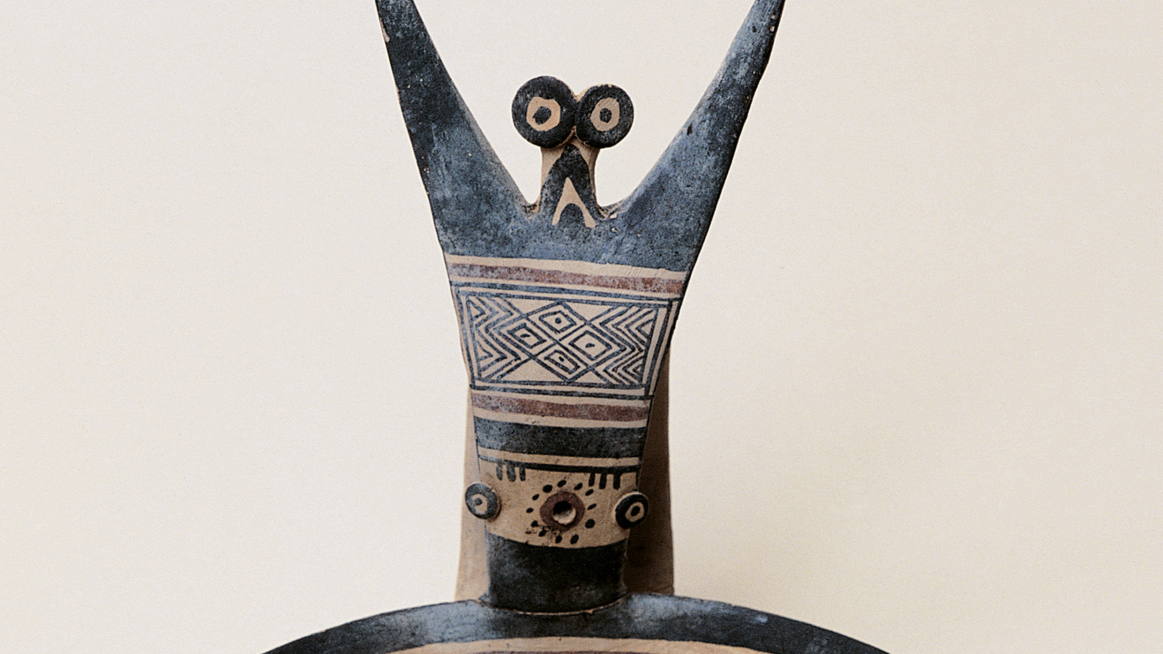
A small ceramic cup made roughly 2,700 years ago is offering one of the clearest windows we have into a civilization that left almost no written records behind. The object — a painted, one-handled vessel known as a Daunian kyathos — comes from the heel of southern Italy and features a wide-eyed, almost cartoonishly expressive face that has caught the attention of archaeologists and art historians alike. It is quirky, it is ancient, and it tells a surprisingly rich story.
The people who made it, the Daunians, farmed the land, traded across the Adriatic, and produced pottery so distinctive that experts describe it as ranking among the finest pre-Roman Italian craftsmanship. Yet most people have never heard of them. That is largely because the Daunians left no literature, no inscriptions in their own voice — only their objects, their grave markers, and their art.
This particular cup is one of those objects. And the more you look at it, the more questions it raises about who these people really were.
Who Were the Daunians — and Why Don’t We Know More?
The Daunians occupied the heel of the Italian peninsula — the region known today as the province of Foggia — for centuries before Rome absorbed them. They were first mentioned in ancient literature in the seventh century B.C., which gives us a rough outer boundary for when they were a recognized people. Their independence ended around 275 B.C., following the conclusion of the Pyrrhic War, when the Romans moved in and the Daunian culture as a distinct entity effectively ceased to exist.
That is a window of roughly 400 years during which the Daunians lived, traded, farmed, and made extraordinary things — and yet the historical record is almost silent about them. They did not leave literary records of any kind. What survives is almost entirely archaeological: pottery, grave markers, and the physical remains of their settlements.
What we do know is that they were primarily farmers and animal breeders. They also maintained active trade relationships with the Greeks and the Illyrians across the Adriatic Sea, in what is now modern-day Croatia. That cross-cultural contact almost certainly influenced their art, though the Daunian style remained distinctly their own.
What Makes the Daunian Kyathos So Unusual
The kyathos itself is a specific type of ceramic vessel — a one-handled cup that archaeologists believe may have functioned as a ladle used in the mixing of wine. The form is not unique to the Daunians; similar vessels appear across the ancient Mediterranean world. What sets Daunian examples apart is the painted decoration.
The piece in question features a figure described as exuberant-looking, with large, bug-eyed features that give it an almost animated quality. It is the kind of object that feels alive even at a distance of nearly three millennia. The painted style is bold, expressive, and immediately recognizable as Daunian — a visual language developed by potters working in and around the city of Herdonia, in the present-day province of Foggia.
Archaeologists excavated Herdonia over four decades and identified it as one of the primary production centers where Daunian potters created these vessels. The city appears to have been a hub of ceramic craft, and the quality of what came out of it has led researchers to describe the pieces as extraordinary — products that stand among the finest examples of pre-Roman Italian pottery.
Key Facts About the Daunian Kyathos at a Glance
| Detail | Information |
|---|---|
| Object name | Daunian kyathos |
| Type of object | Painted, one-handled ceramic cup or ladle |
| Origin | Foggia, southern Italy |
| Date of creation | Sixth century B.C. (approximately 2,700 years ago) |
| Likely function | Ladle for mixing wine |
| Produced by | Daunian potters, primarily at the city of Herdonia |
| Cultural period | Pre-Roman Italy; Daunian civilization ended c. 275 B.C. |
The Daunians’ known history can be summarized in a few key points:
- First referenced in ancient literature in the seventh century B.C.
- Primarily farmers and animal breeders based in what is now the Foggia region
- Active traders with the Greeks and Illyrians across the Adriatic Sea
- Absorbed into Rome around 275 B.C. after the Pyrrhic War
- Left no written records — known almost entirely through archaeology
- Their most recognizable cultural artifacts are painted pottery and grave markers
Why This Cup Still Matters Today
Objects like the Daunian kyathos matter because they fill gaps that written history simply cannot. For civilizations that left no texts, pottery becomes the primary language through which we understand daily life, trade networks, artistic values, and social customs. The painted decoration on these vessels is not just decoration — it is communication across time.
The bug-eyed figure on this particular cup may have held religious significance, may have been a stylistic convention, or may simply reflect the individual personality of the potter who made it. We cannot know for certain. But that ambiguity is part of what makes ancient artifacts compelling — they invite questions that may never be fully answered.
The four decades of excavation at Herdonia have produced a substantial body of Daunian material, and researchers continue to analyze it. Each piece adds another data point to a picture that is still, after all this time, only partially visible.
What Archaeology Still Hopes to Uncover
The Daunians remain one of the lesser-known pre-Roman Italian peoples, and significant gaps in our understanding persist. Because they left no written language, questions about their social structure, religious beliefs, and political organization rely entirely on physical evidence. Grave goods, settlement layouts, and pottery styles are the primary tools researchers have available.
Herdonia has been the most productive excavation site for Daunian material to date. But archaeologists note that the full scope of Daunian culture — including how widely their pottery was traded and what those trade relationships meant socially — is still being pieced together from sites across the region.
For now, the kyathos sits as one of the most tangible connections we have to a people who shaped southern Italy long before Rome did — a small, painted cup with very big eyes and a very long memory.
Frequently Asked Questions
What is a Daunian kyathos?
It is a painted, one-handled ceramic cup or ladle made by the Daunian people of southern Italy, likely used for mixing or serving wine.
How old is the Daunian kyathos?
The vessel dates to the sixth century B.C., making it approximately 2,700 years old.
Where was it made?
It originates from the Foggia region of southern Italy, with the city of Herdonia identified as a primary production center for Daunian pottery.
Who were the Daunians?
The Daunians were a pre-Roman people who lived in the heel of the Italian peninsula. They were farmers and animal breeders who traded with the Greeks and Illyrians, and were absorbed by Rome around 275 B.C.
Why don’t we know more about the Daunians?
The Daunians left no written records of any kind, so almost everything known about them comes from archaeological finds such as pottery and grave markers.
What does the decoration on the kyathos represent?
The specific meaning of the expressive, bug-eyed figure has not been definitively confirmed — its religious, cultural, or purely artistic significance remains a subject of ongoing study.


Leave a Reply