
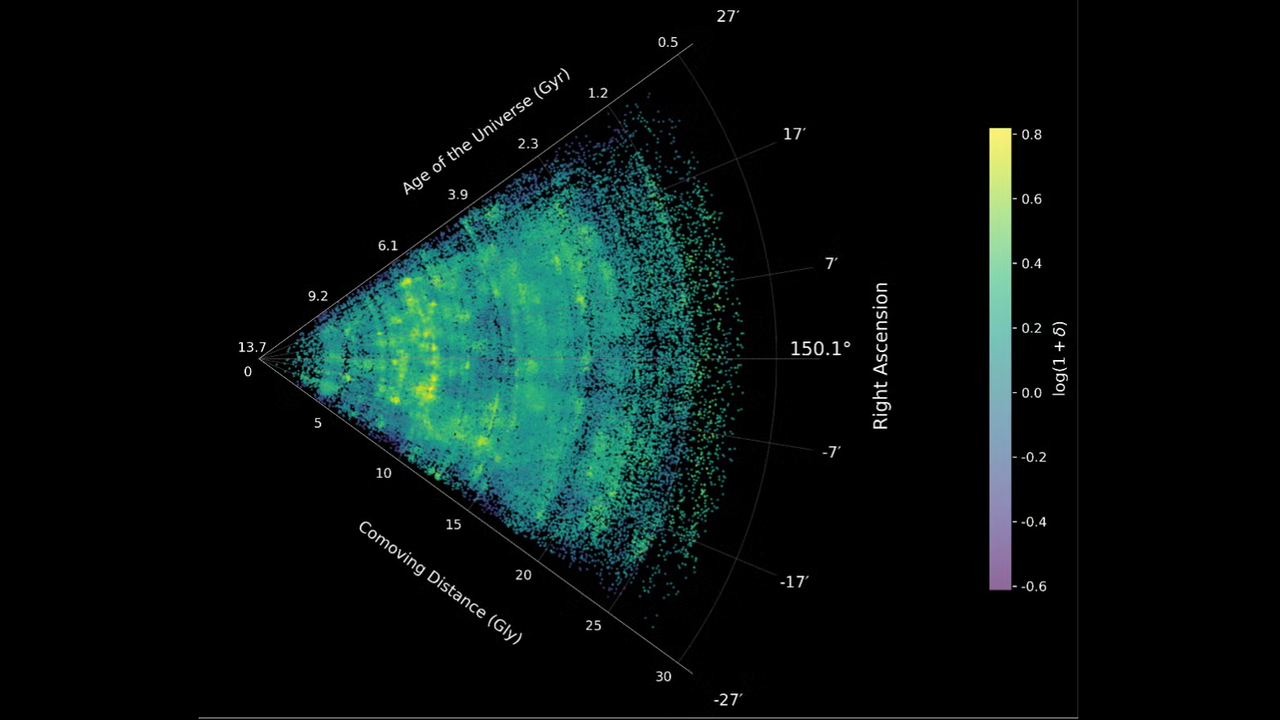
The universe has a skeleton — and for the first time, scientists have mapped more of it than ever before. Using data from the James Webb Space Telescope (JWST), an international team of astronomers has produced the largest-ever map of the cosmic web, the vast, invisible megastructure that forms the fundamental framework of everything that exists.
This isn’t just another pretty picture from a powerful telescope. The map reveals how galaxies have formed, clustered, and evolved across roughly 13 billion years of cosmic history — stretching back to when the universe was less than a billion years old. For anyone who has ever looked up at the night sky and wondered how all of this got here, this research offers the most detailed answer yet.
The findings were published on May 6 in The Astrophysical Journal, led by researchers from the University of California, Riverside (UCR), drawing on a sweeping dataset known as COSMOS-Web.
What the Cosmic Web Actually Is
The cosmic web is the largest known structure in the entire universe. Picture a vast three-dimensional net — one that stretches across billions of light-years — made up of gas filaments, stars, sheets of dark matter, and enormous empty regions called voids. Galaxy clusters and clusters of clusters sit at the densest intersections of this web, while the voids between them are some of the emptiest places in existence.
Scientists sometimes describe it as the “skeleton” of the cosmos. Just as a skeleton gives shape to a body, the cosmic web gives shape to the universe itself. It is the scaffolding on which everything — every galaxy, every star, every planet — is ultimately arranged.
Understanding this structure is not just an exercise in cosmic curiosity. The way the web forms and evolves tells astronomers about the nature of dark matter, the behavior of gravity on the largest scales, and the forces that have shaped the universe since the moments after the Big Bang.
What the James Webb Space Telescope Revealed
The JWST has been transforming astronomy since it began operations, but this latest achievement stands out even by its standards. The COSMOS-Web survey provided a treasure trove of data that allowed the UCR-led team to reconstruct the cosmic web in unprecedented detail.
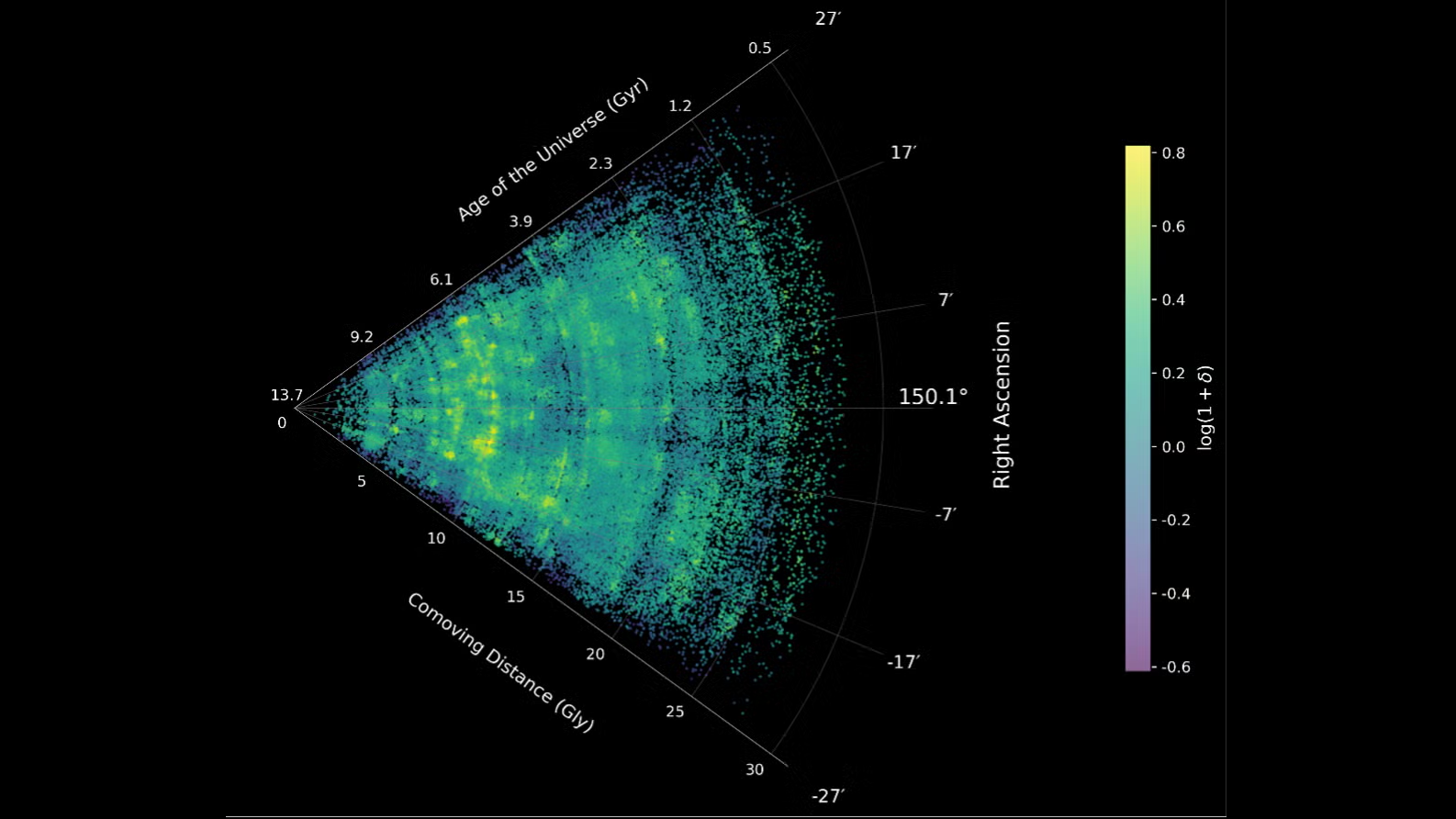
The resulting map is the largest of its kind ever produced from JWST observations. It captures a “slice” of the universe — a visual cross-section that spans from the present day all the way back to when the universe was less than one billion years old. In visualizations of this map, brighter and yellower regions represent dense areas packed with galaxies, while darker regions show the vast, empty voids in between.
What makes this particularly significant is the timeline it covers. By tracing how the cosmic web looked at different points in history, astronomers can now study how galaxies have fallen together and evolved within this giant structure over billions of years — something that was simply not possible to observe at this scale or resolution before.
Key Facts About This Discovery
- The map was produced using data from the COSMOS-Web survey, one of the largest JWST observing programs.
- The research was led by scientists at the University of California, Riverside (UCR).
- Results were published on May 6 in The Astrophysical Journal.
- The map traces cosmic evolution back to when the universe was less than 1 billion years old — out of its current age of roughly 13.8 billion years.
- The cosmic web is composed of gas filaments, stars, dark matter sheets, galaxy clusters, and vast empty voids.
- It is the largest known structure in the universe.
| Feature | Detail |
|---|---|
| Survey Name | COSMOS-Web |
| Lead Institution | University of California, Riverside (UCR) |
| Published | May 6, The Astrophysical Journal |
| Time Span Covered | Present day back to less than 1 billion years after the Big Bang |
| Structure Mapped | The cosmic web — the largest known structure in the universe |
| Components of Cosmic Web | Gas filaments, stars, dark matter sheets, galaxy clusters, voids |
Why This Map Matters Beyond the Science
Maps like this one do something that raw data cannot — they make the invisible visible. The cosmic web cannot be seen directly. Dark matter, which forms much of its structure, does not emit light. The gas filaments connecting galaxy clusters are extraordinarily faint. What JWST has done is give astronomers enough observational data to reconstruct where all of this hidden material must be, based on where the galaxies are.
Think of it like inferring the shape of a spider’s web by watching where the dew drops collect. You can’t see the web itself in the dark, but the pattern of droplets tells you everything about its structure.
This matters because the cosmic web is not static. It has been growing and changing since the earliest moments of the universe, and how it changes is directly tied to fundamental questions about dark matter and dark energy — the two mysterious components that together make up roughly 95 percent of everything that exists. The more precisely scientists can map the web’s evolution, the better their chance of understanding what those invisible forces actually are.
What Comes Next for Cosmic Web Research
The COSMOS-Web dataset represents one of the most ambitious JWST observing programs undertaken so far, and researchers are still working through its full scientific potential. This map is described as the largest of its kind from JWST data, but as the telescope continues operating and more survey data accumulates, even larger and more detailed reconstructions of the cosmic web are expected to follow.
The UCR-led team’s work sets a new benchmark for how astronomers study large-scale structure in the universe. Future research building on this foundation could sharpen our understanding of how the first galaxies formed, how dark matter shaped the web’s earliest filaments, and what the ultimate fate of this vast cosmic skeleton might be.
For now, the map stands as a remarkable achievement — a portrait of the universe’s hidden architecture, drawn across 13 billion years of time.
Frequently Asked Questions
What is the cosmic web?
The cosmic web is the largest known structure in the universe, made up of gas filaments, stars, dark matter sheets, galaxy clusters, and vast empty regions called voids. It forms the fundamental large-scale framework of the cosmos.
What telescope was used to create this map?
The map was created using data from the James Webb Space Telescope (JWST), specifically from a survey program called COSMOS-Web.
Who led this research?
The study was led by an international team of astronomers based at the University of California, Riverside (UCR).
When was the research published?
The findings were published on May 6 in The Astrophysical Journal.
How far back in time does this map reach?
The map traces the cosmic web back to when the universe was less than one billion years old, out of its current estimated age of around 13.8 billion years.
Why can’t we see the cosmic web directly?
Much of the cosmic web is made up of dark matter and faint gas filaments that do not emit visible light, making it invisible to direct observation. Scientists reconstruct its shape by mapping where galaxies cluster and fall together.

Leave a Reply