
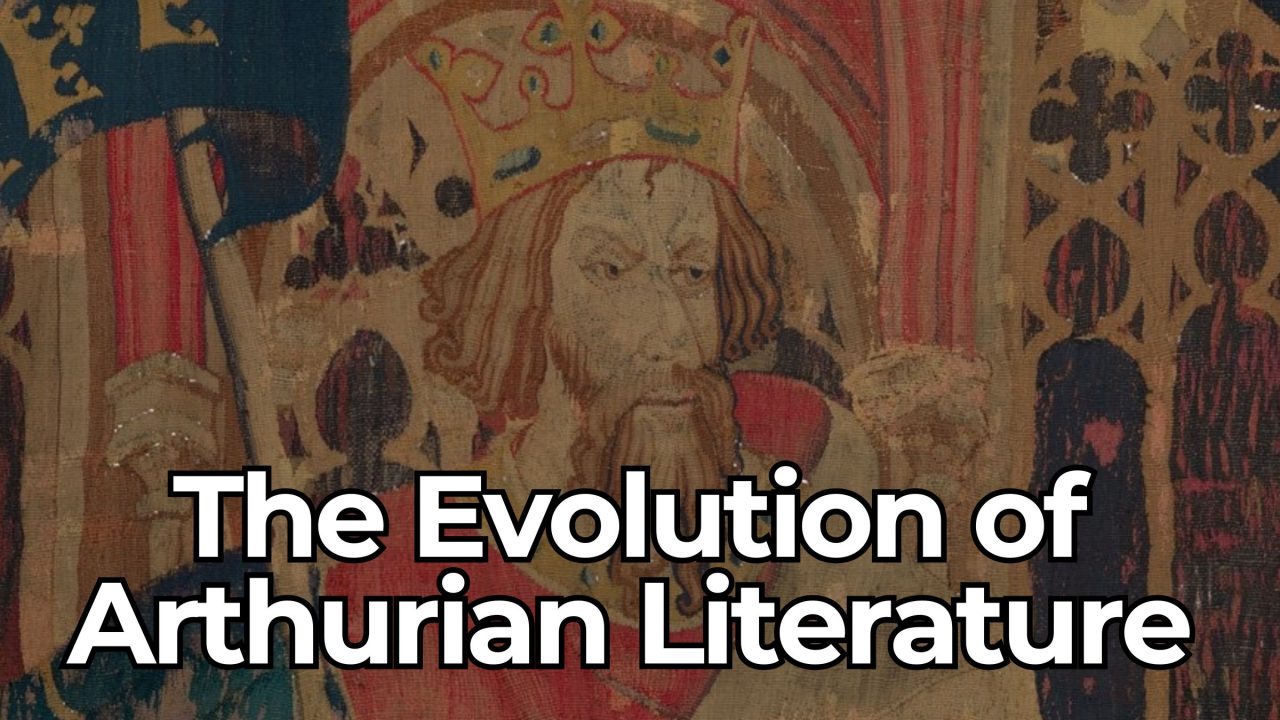
King Arthur may be one of the most recognizable figures in all of Western literature — but the legend most people know today was not created by a single author, a single country, or even a single century. It was built piece by piece, across hundreds of years of medieval storytelling, by writers working in Welsh, Latin, French, and English who each added their own layer to a story that never quite stood still.
What makes the Arthurian tradition genuinely fascinating is how far it traveled from its origins. The earliest versions of Arthur bear almost no resemblance to the noble king of Camelot surrounded by knights in shining armor. That transformation — from shadowy warrior to the center of an entire literary universe — is one of the most remarkable stories in the history of literature.
Understanding how medieval writers built the Arthurian legend means tracing a long chain of texts, each one borrowing from what came before and adding something new. Here is what that chain actually looks like.
Arthur Before the Romances: The Warrior in the Early Texts
Long before the great medieval romances gave the world Lancelot, Guinevere, and the Round Table, Arthur existed in a much simpler form. Early references to him appear in Welsh poetry and chronicles, where he is portrayed not as a king presiding over a glittering court, but as a battle leader — a fighter against the Saxons.
Two of the most important early sources are the Historia Brittonum, written around the ninth century and attributed to a writer known as Nennius, and the Annales Cambriae. The Historia Brittonum describes Arthur fighting against the Saxons, while the Annales Cambriae records specific battles connected to him — including the Battle of Camlann, the conflict that would later become central to the legend of Arthur’s fall.
These were not romantic stories. They were closer to historical records — or at least texts that presented themselves that way. Arthur in these pages is a military figure, not a mythological one. But they laid the foundations for everything that came after.
How the Arthurian Legend Grew Through Medieval Literature
The leap from chronicle to full-blown literary tradition happened gradually, as writers across Britain and Europe picked up the Arthur story and reshaped it to suit their own audiences and purposes. Welsh manuscripts played a crucial role in this process.
The Mabinogion — compiled in medieval Welsh manuscripts from the thirteenth and fourteenth centuries, though drawing on much older oral traditions — contains some of the earliest surviving Arthurian narratives in a literary form. These tales offered a version of Arthur rooted in Welsh mythology and storytelling conventions, quite different from the continental romances that would later dominate the tradition.
What the medieval writers who followed were doing was not simply retelling the same story. They were actively constructing a legend — adding characters, themes, and moral frameworks that reflected the values and concerns of their own time and place. Knights, quests, courtly romance, betrayal, and magic all became part of the mix as the tradition spread across Europe.
Key Texts That Shaped the Arthurian Tradition
The Arthurian legend was not built by one book. It was assembled from a long succession of texts, each contributing something distinct. The earliest known sources break down like this:
| Text | Approximate Date | Language | Key Contribution |
|---|---|---|---|
| Historia Brittonum (attr. Nennius) | c. 9th century | Latin | Earliest extended account of Arthur as a battle leader against the Saxons |
| Annales Cambriae | c. 10th century | Latin | Records specific battles linked to Arthur, including Camlann |
| The Mabinogion | Compiled 13th–14th century (older oral origins) | Welsh | Some of the earliest surviving Arthurian narratives in literary form |
| Historia Regum Britanniae (Geoffrey of Monmouth) | 12th century | Latin | Transformed Arthur into a major king; widely circulated across Europe |
Geoffrey of Monmouth’s Historia Regum Britanniae — the History of the Kings of Britain — deserves particular attention. A 15th-century Welsh-language version of this text survives as Peniarth MS 23, held at the National Library of Wales, and its illustrations give a vivid sense of how Arthur was imagined by later medieval audiences. Geoffrey’s work was enormously influential in spreading the Arthurian legend beyond Wales and Britain into the wider European literary world.
Why the Legend Kept Changing — and Why That Matters
One of the most telling things about the Arthurian tradition is that it was never fixed. Every generation of medieval writers felt free to reshape Arthur to suit their own needs. The Welsh chroniclers gave the world a warrior. Later writers gave him a court, a queen, a code of chivalry, and a tragic destiny.
This flexibility is actually part of what made the legend so durable. Arthur could carry the themes that mattered most to each new audience — national identity, moral virtue, the cost of betrayal, the nature of leadership. The story survived because it was always being rewritten.
The spread of the legend across Britain and Europe also meant that different literary traditions left their marks on it. The result was not one coherent story but a vast, overlapping tradition filled with contradictions, variations, and competing versions — all of which we now think of collectively as the Arthurian legend.
What the Medieval Texts Still Tell Us Today
For modern readers, the medieval sources behind the Arthurian legend offer something that later retellings often lose: a sense of how the story actually grew. Reading the Historia Brittonum alongside The Mabinogion and Geoffrey of Monmouth’s chronicle makes it possible to watch the legend being constructed in real time — to see which elements were added when, and by whom.
These texts are not just historical curiosities. They are the raw material from which one of the most enduring stories in Western culture was made. The knights, the quests, the magic, the betrayal — none of it arrived fully formed. It was built, slowly and deliberately, by medieval writers who understood exactly what they were doing.
The legend of King Arthur is, in that sense, a monument to the power of literary tradition. And it began not with a single great author, but with a ninth-century chronicle describing a warrior fighting the Saxons in the dark centuries after Rome.
Frequently Asked Questions
What is the earliest known text that mentions King Arthur?
The Historia Brittonum, written around the ninth century and attributed to Nennius, is one of the earliest texts to describe Arthur — portraying him as a battle leader fighting against the Saxons.
What is the Battle of Camlann?
Camlann is a battle recorded in the Annales Cambriae that is linked to Arthur. It later became central to the legend of Arthur’s downfall in medieval literary tradition.
What is The Mabinogion and why does it matter for the Arthurian legend?
The Mabinogion is a collection compiled in medieval Welsh manuscripts from the thirteenth and fourteenth centuries, drawing on older traditions. It contains some of the earliest surviving Arthurian narratives in literary form.
Who was Geoffrey of Monmouth and what did he contribute?
Geoffrey of Monmouth wrote the Historia Regum Britanniae (History of the Kings of Britain) in the twelfth century, a work that transformed Arthur into a major king and helped spread the legend across Europe.
Was King Arthur a real historical person?
The early texts present him in chronicle form, but historians continue to debate whether a real person underlies the legend.
Where can I read the earliest Arthurian texts?
The foundational texts include the Historia Brittonum attributed to Nennius, the Annales Cambriae, and The Mabinogion, all of which are available in modern English translations.


Leave a Reply