
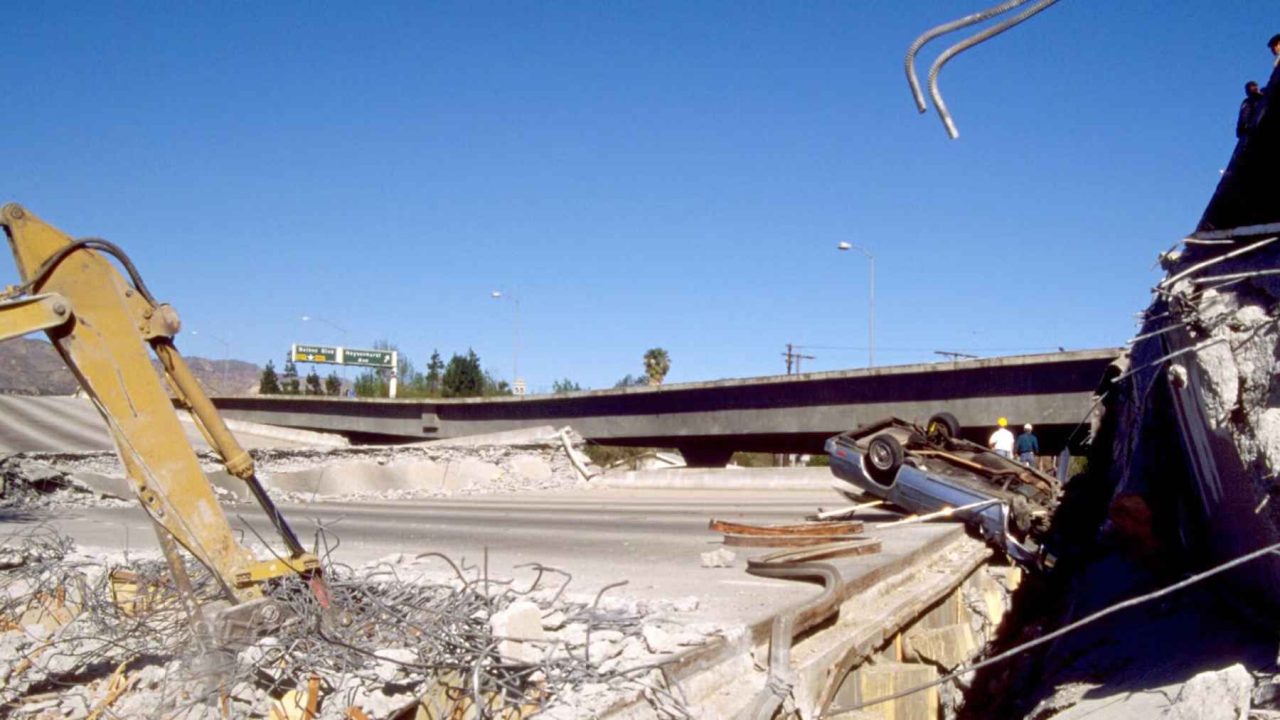
Four of the last six magnitude 7 and above strike-slip earthquakes on record were supershear events — a type of rupture so fast it outruns its own destructive waves. That statistic, highlighted in a 2025 opinion piece by a team of earthquake researchers, suggests California and other seismically active regions may be significantly underestimating a specific category of seismic risk.
Most people think about earthquakes in terms of magnitude. A bigger number means more shaking, more damage, more danger. But a growing body of scientific thinking points to a different variable that rarely gets attention in public preparedness campaigns: the speed at which a fault ruptures.
The researchers behind this analysis — including scientists connected to the University of Illinois Urbana-Champaign and the California Institute of Technology — argue that this speed factor could be reshaping what we know about earthquake destruction, and that current risk models may not be accounting for it properly.
What a Supershear Earthquake Actually Is
To understand supershear earthquakes, it helps to know how a regular earthquake works. When stress builds up along a fault until it finally breaks, that breaking point — called the rupture — races along the fault line like a crack spreading across a windshield. As it travels, it generates seismic waves that radiate outward through the rock and soil.
There are different types of seismic waves, and they travel at different speeds. The ones most associated with structural damage are shear waves — side-to-side waves that cause the lateral shaking that knocks buildings off foundations and collapses infrastructure.
In a typical earthquake, the rupture travels slower than those shear waves. But in a supershear earthquake, the rupture itself moves faster than the shear waves it generates. The result is a phenomenon researchers compare to a sonic boom — energy piling up and concentrating in ways that standard earthquake models don’t fully anticipate.
Strike-slip faults, where the ground slides sideways rather than one side diving under the other, are particularly associated with supershear behavior. This matters enormously for California, where some of the most densely populated urban corridors sit directly adjacent to strike-slip fault systems.
The Research Behind the Warning
The 2025 opinion piece was authored by Ahmed Elbanna, Mohamed Abdelmeguid, Domniki Asimaki, Napat Tainpakdipat, Grigorios Lavrentadis, Ares Rosakis, and Yehuda Ben-Zion — a team spanning multiple institutions with deep expertise in seismology, engineering, and fault mechanics.
Their central concern is that supershear ruptures are not rare anomalies. They are, based on recent earthquake history, a recurring feature of large strike-slip events.
| Key Finding | Detail |
|---|---|
| Supershear frequency | 4 of the last 6 magnitude 7+ strike-slip earthquakes were supershear events |
| Fault type of concern | Strike-slip faults, where ground slides sideways |
| Key mechanism | Rupture outpaces shear waves, concentrating destructive energy |
| Institutional affiliations | University of Illinois Urbana-Champaign; California Institute of Technology |
| Publication type | Opinion piece, published 2025 |
The researchers note that dense urban regions are particularly vulnerable because many of them are built along or near strike-slip fault corridors — exactly the fault type most prone to supershear behavior.
Why California’s Risk Picture May Be Incomplete
California’s earthquake preparedness infrastructure is among the most developed in the world. The state has building codes, early warning systems, and decades of public education campaigns. But those systems are largely calibrated around what seismologists call “subshear” ruptures — the more common type where the fault crack moves slower than the shear waves.
If supershear events are more common than previously assumed — and the researchers argue that recent earthquake history suggests they are — then the damage models used to design buildings, assess insurance risk, and plan emergency response could be systematically underestimating what a major strike-slip earthquake would actually do.
The side-to-side shaking from shear waves is already the primary driver of structural collapse. When a rupture outruns those waves, the energy doesn’t spread out the same way. It concentrates. Structures that might survive a conventional magnitude 7 earthquake could face dramatically different forces in a supershear event of equivalent magnitude.
This isn’t an argument that California is unprepared for earthquakes generally. It’s a more targeted concern: that one specific and increasingly well-documented type of rupture behavior isn’t getting the attention it deserves in risk planning.
Who Needs to Pay Attention to This
The practical implications extend well beyond academic seismology. Engineers designing buildings near strike-slip faults, city planners evaluating where to site critical infrastructure, and emergency managers modeling post-disaster response scenarios all rely on ground-motion predictions. If those predictions don’t adequately account for supershear ruptures, the margin of safety built into those plans may be smaller than it appears on paper.
Homeowners and renters near California’s major fault systems — including the densely populated corridors the researchers specifically reference — have limited ability to act on highly technical seismic research. But the policy implications are significant. Building codes, retrofit requirements, and land-use decisions made by state and local governments are all downstream of the scientific consensus on what a major earthquake will actually do.
The researchers’ argument, at its core, is that the scientific consensus needs updating — and that the update has real consequences for how California and similar regions prepare for the earthquakes that are, by any measure, inevitable.
What Comes Next in This Research
The 2025 piece is framed as an opinion and call to attention rather than a final empirical study. The researchers are raising a flag about a gap between observed earthquake behavior and standard risk models, not presenting a completed solution.
The next steps in this line of research would likely involve updating ground-motion prediction models to better incorporate supershear rupture scenarios, testing how existing building stock and new construction designs perform under supershear-type shaking, and pushing for greater recognition of supershear risk in state and federal seismic hazard assessments.
Whether those updates happen quickly enough — and whether policymakers treat this as an urgent revision or a long-term research agenda — remains an open question. What the data already shows is harder to dismiss: when it comes to the most powerful strike-slip earthquakes in recent history, supershear behavior has been the rule, not the exception.
Frequently Asked Questions
What is a supershear earthquake?
A supershear earthquake is one where the fault rupture travels faster than the shear waves it generates, concentrating destructive energy in ways that standard earthquake models may not fully capture.
How common are supershear earthquakes?
According to the 2025 research opinion piece, four of the last six magnitude 7 and above strike-slip earthquakes were identified as supershear events, suggesting they are more common than previously assumed.
Why are strike-slip faults specifically mentioned?
Strike-slip faults, where the ground slides sideways, are particularly associated with supershear rupture behavior, and many densely populated urban corridors in California sit near these fault types.
Who authored the research raising these concerns?
The 2025 opinion piece was written by Ahmed Elbanna, Mohamed Abdelmeguid, Domniki Asimaki, Napat Tainpakdipat, Grigorios Lavrentadis, Ares Rosakis, and Yehuda Ben-Zion, with researchers connected to the University of Illinois Urbana-Champaign and the California Institute of Technology.
Does this mean California’s earthquake preparedness is inadequate?
The researchers are not arguing that California is broadly unprepared, but that current risk models may not adequately account for supershear rupture behavior, which could affect building codes, damage estimates, and emergency planning.
Has this research led to any policy changes yet?



Leave a Reply