
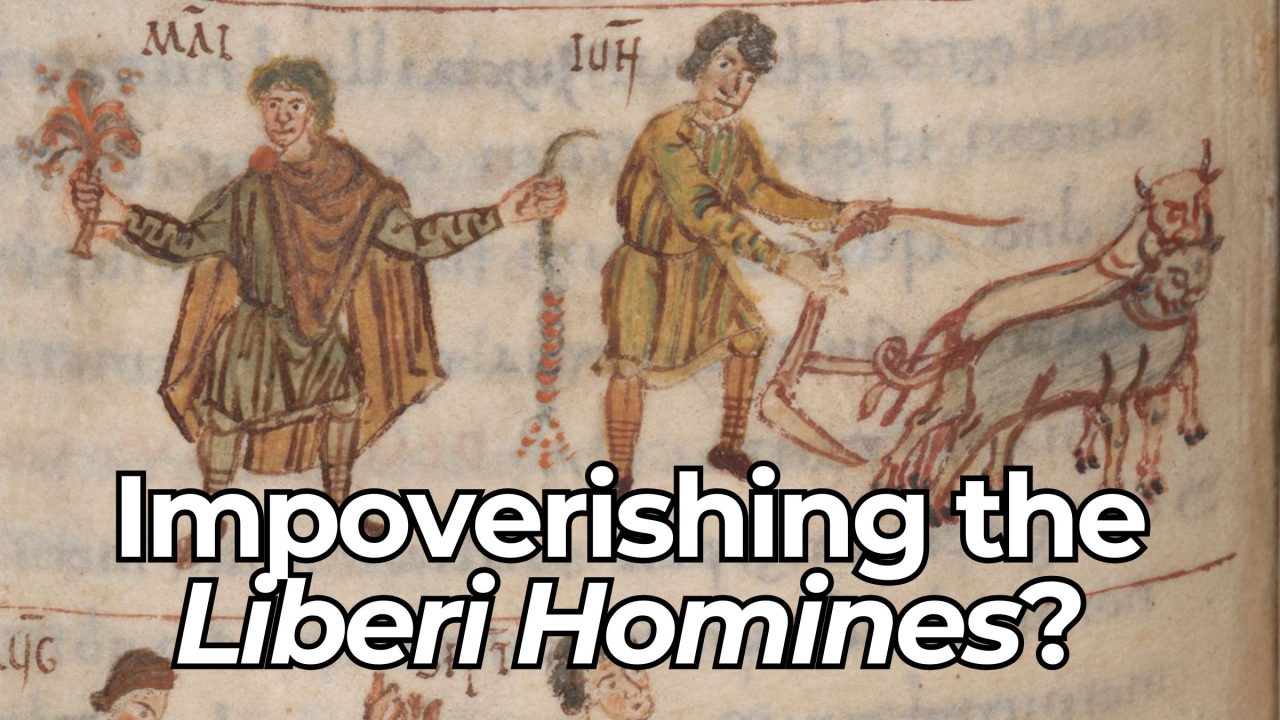
For generations, historians have built an entire theory of medieval social collapse around a single, compelling idea: that powerful Frankish landowners systematically crushed their smaller neighbors, stripping free men of their land and transforming the military foundations of the Carolingian world. But what if the evidence doesn’t actually hold up?
That’s the question historian David Bachrach is pressing in new research examining whether Carolingian free landowners were truly being impoverished — or whether scholars have been repeating an assumption that was never rigorously tested against the surviving sources.
The debate matters more than it might first appear. How historians understand the fate of free farmers in the Frankish world shapes everything we think we know about medieval armies, social mobility, and the long transition from Rome to feudal Europe.
The Theory That Has Dominated Medieval Scholarship
The argument goes something like this: during the Carolingian period — roughly the eighth through tenth centuries — wealthy magnates used economic pressure and legal manipulation to force smaller landowners off their properties. These once-free farmers became tenants or dependents, losing both their land and their social standing. The result was a hollowing out of the free peasant class that had formed the backbone of Frankish military power.
Scholars who support this view have often drawn comparisons to two well-documented historical parallels. The first is ancient Rome, where moralists and government officials repeatedly complained that powerful landowners were absorbing the small farms of the middling classes — the same men who filled the legions. The second parallel is the ninth and tenth century East Roman, or Byzantine, Empire, where similar complaints arose about great landowners squeezing out smaller farmers who contributed to the imperial armies.
In both of those cases, Bachrach notes, the story had a clear ending: the militia-based armies of the state were gradually replaced by paid professional forces maintained directly by the government. The implication for Carolingian history is obvious — if the same process happened in Francia, it would explain major shifts in how Frankish armies were organized and funded.
The problem, according to Bachrach’s analysis, is that drawing this parallel requires the evidence to actually support it. And that’s where things get complicated.
What the Carolingian Evidence Actually Shows
Surviving documents — charters, capitularies, ecclesiastical records — are fragmentary, unevenly distributed across regions, and often written by authors with their own rhetorical agendas. Moralists complaining about the plight of the poor are not the same thing as economic data showing land transfers at scale.
Bachrach’s examination focuses on whether the surviving evidence actually demonstrates a systematic pattern of impoverishment, or whether historians have been importing a narrative framework from Rome and Byzantium and applying it to Frankish sources that tell a more ambiguous story.
This kind of source criticism is exactly what medieval history needs more of. The Carolingian period is one where large theories have sometimes outpaced the documentary record, and where the temptation to build sweeping narratives from limited evidence is real.
Why the Roman and Byzantine Comparisons Only Go So Far
The parallel with Rome and Byzantium is intellectually attractive, but historical analogies can mislead as easily as they illuminate. Both Rome and the Byzantine Empire left behind far richer documentary records than the Carolingian world, including legal complaints, imperial legislation targeting large landowners, and enough surviving evidence to trace actual patterns of land consolidation over time.
More importantly, in both the Roman and Byzantine cases, the outcome — a shift toward professional armies — is itself well-documented. Historians can trace the change in military organization and work backward to understand its social causes.
The Carolingian situation is less clear on both ends of that equation. Whether free landowners were systematically losing ground to magnates, and whether Frankish military organization changed in the ways the theory predicts, are both questions that depend heavily on how scholars interpret limited and sometimes ambiguous sources.
| Historical Case | Alleged Agent of Impoverishment | Military Consequence | Documentary Evidence |
|---|---|---|---|
| Roman Republic | Great landowners using economic and legal pressure | Militia armies replaced by paid professionals | Extensive — legal, literary, and administrative records |
| Byzantine Empire (9th–10th c.) | Great landowners absorbing smaller farms | Shift toward government-maintained professional forces | Substantial — imperial legislation and complaints survive |
| Carolingian Francia | Magnates pressuring free landowners | Disputed — theory predicts similar military shift | Fragmentary — charters and capitularies, heavily debated |
Why This Debate Still Matters Today
Questions about land, power, and economic inequality in the early medieval world are not purely academic. How historians characterize the Carolingian period — whether it was an era of growing freedom and royal authority, or one of creeping aristocratic domination — shapes broader narratives about the origins of feudalism, the nature of medieval states, and the long-term social consequences of concentrated wealth.
If Bachrach’s skepticism is well-founded, it suggests that some of the most widely taught models of Carolingian social change may rest on shakier foundations than previously assumed. That doesn’t mean the theory is wrong — it means it needs to be tested more rigorously against what the sources actually say, rather than what historians expect them to say based on analogies with other societies.
Scholars in the field have long acknowledged that the Carolingian documentary record is challenging. What Bachrach’s work pushes for is a higher standard of proof before accepting narratives of decline and impoverishment that have become almost conventional wisdom in medieval studies.
Where the Research Goes From Here
Bachrach’s examination of the surviving evidence is part of a broader conversation in medieval history about how much weight to give to structural theories versus close reading of primary sources. The question of whether Carolingian free men were getting poorer is unlikely to be settled quickly — it depends on painstaking work with documents that are often incomplete, locally specific, and open to multiple interpretations.
What’s clear is that the long-standing theory deserves renewed scrutiny. If the evidence holds up under pressure, the narrative survives. If it doesn’t, historians may need to rethink some foundational assumptions about how the Frankish world actually changed — and why.
Frequently Asked Questions
Who is David Bachrach and what is he arguing?
David Bachrach is a historian examining whether the surviving evidence actually supports the long-standing theory that Carolingian free landowners were systematically impoverished by powerful magnates during the medieval period.
What is the Carolingian period?
The Carolingian period refers broadly to the era of Frankish history associated with the Carolingian dynasty, roughly spanning the eighth through tenth centuries, during which figures like Charlemagne shaped much of Western Europe.
How does the Roman comparison factor into this debate?
Scholars have drawn parallels between Carolingian free farmers and small Roman landowners who were allegedly absorbed by powerful estates — a process that in Rome’s case was linked to the transformation of citizen militias into professional armies.
What happened in the Byzantine Empire that is relevant here?
In the ninth and tenth century East Roman Empire, government authorities and moralists complained that great landowners were using economic and legal pressure to force smaller farmers off their land, with consequences for how Byzantine armies were organized and maintained.
Why is the Carolingian evidence considered difficult to work with?
Surviving Carolingian sources — including charters and capitularies — are fragmentary, unevenly preserved, and often written with rhetorical purposes that make it hard to use them as straightforward economic or social data.
Does Bachrach’s research definitively prove the theory is wrong?
Based on the available source material, Bachrach is examining and questioning the evidence rather than offering a definitive refutation — the research calls for higher standards of proof before the theory is accepted as established fact.



Leave a Reply