
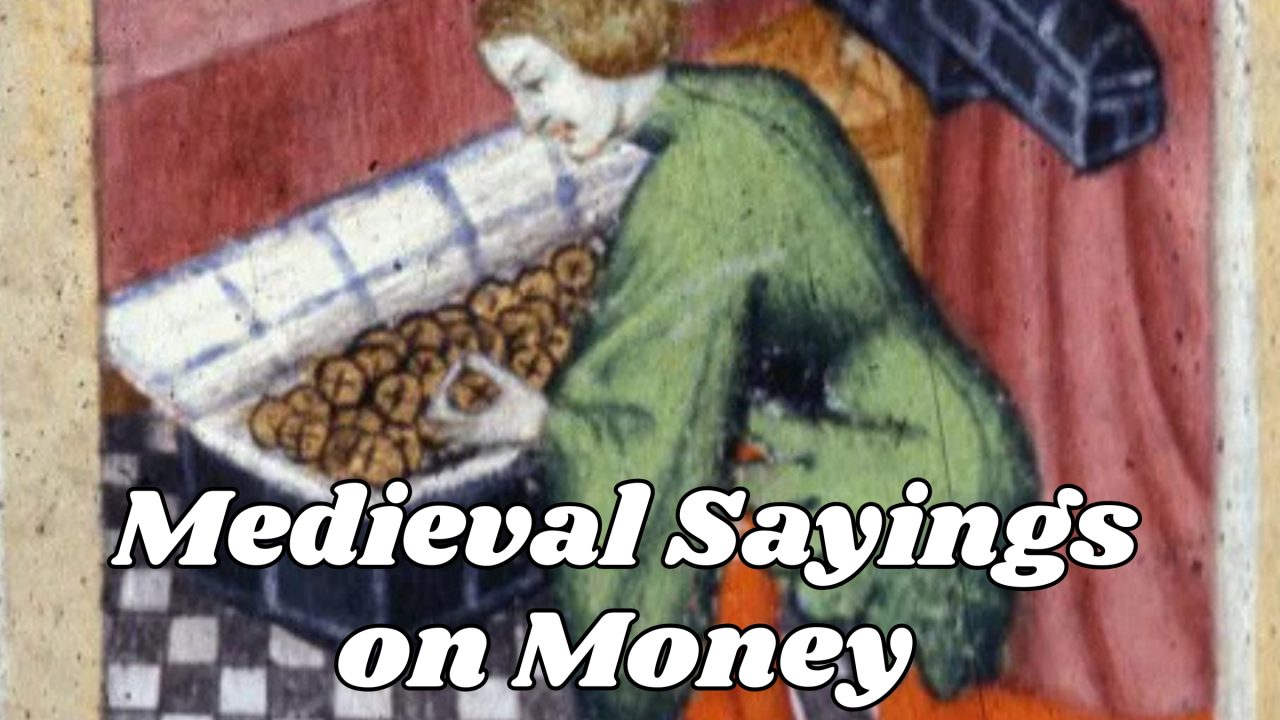
What if the wisest financial advice you ever received was written in Latin more than five hundred years ago? Medieval scholars and moralists spent considerable energy thinking about money — not as economists, but as philosophers and theologians trying to make sense of human weakness. The short Latin maxims they left behind cut straight to the heart of greed, desire, and the stories we tell ourselves about wealth.
These weren’t abstract musings. They were moral warnings, passed down through manuscripts, sermons, and schoolrooms, designed to shape how ordinary people thought about gold, ambition, and character. And reading them now, the honesty is striking. They don’t condemn wealth outright. They condemn what wealth does to people who aren’t ready for it.
Scholars studying medieval literature have identified a consistent thread running through these sayings: wealth itself is neither good nor evil. What matters, medieval writers argued, is the person holding it.
What Medieval Latin Sayings About Money Actually Reveal
The medieval world was deeply preoccupied with the moral dangers of material desire. Church teachings warned constantly about avarice — considered one of the seven deadly sins — and writers responded by distilling those warnings into short, memorable Latin phrases that could be quoted, memorized, and repeated.
These maxims weren’t written for kings alone. They circulated widely, appearing in educational texts and religious writings aimed at shaping public moral thinking. The fact that so many of them survive tells us something important: people found them useful. They were practical tools for thinking about real situations — inheritance, trade, temptation, and the corrupting pull of easy money.
What makes them remarkable today is how little the underlying psychology has changed. The same anxieties that drove a medieval scribe to carve a warning about gold into a manuscript are the same ones that drive modern readers to search for advice about wealth and character online.
The Four Medieval Latin Sayings and What They Mean
net, written by Lorris Chevalier, identifies several of these sayings along with their translations and moral context. Here are the four covered in the available material, along with what they actually argued:
| Latin Saying | Translation | Core Moral Lesson |
|---|---|---|
| Nescit naturam mutare pecunia puram. | Money does not know how to change a pure nature. | True virtue is deeper than any material influence. |
| Qui mala diligit et bona negligit, intrat abyssum; nulla pecunia, nulla scientia liberat ipsum. | He who loves evil and neglects good, falls into the abyss; no money, no knowledge can free him. | Salvation depends on moral action, not resources or intellect. |
| Es, quodcumque rubet, non credas protinus aurum. | Whatever glitters, do not immediately believe it is gold. | Appearances deceive — not everything shining has real value. |
| Aurum, quod reperit stultus, discretus habebit. | The gold that a fool finds will belong to the wise. | Wealth is unstable in foolish hands and tends to pass to the prudent. |
Each of these sayings carries a distinct angle. The first defends the genuinely virtuous person against the corrupting power of money — suggesting that if your character is solid, wealth cannot bend it. The second goes darker, arguing that for someone already choosing vice, no amount of money or education can rescue them from the consequences of their own moral failures.
The third — essentially a medieval version of “all that glitters is not gold” — warns against being dazzled by surface appearances. And the fourth makes a blunter economic argument: fools don’t keep wealth. It flows, eventually, toward those with the judgment to hold it.
Why the Medieval View of Greed Still Lands Hard
The most striking thing about these sayings is what they don’t do. They don’t tell you money is evil. They don’t romanticize poverty. They make a more uncomfortable argument: that money is a mirror. It reflects and amplifies what’s already there.
The saying about the abyss is particularly unsparing. According to medieval moral thinking reflected in that maxim, neither wealth nor knowledge — two things people typically trust to solve problems — can rescue someone from the consequences of consistently choosing wrong. That’s a hard line. It leaves no room for the idea that becoming rich enough or educated enough will automatically make a person good.
The warning against false gold carries its own quiet relevance. Medieval audiences understood it literally — fraud and counterfeit metals were genuine economic concerns. But the moral application was broader: don’t mistake the appearance of value for the real thing, whether in people, promises, or investments.
What These Sayings Tell Us About Medieval Society
The fact that these maxims existed at all — and survived — suggests medieval writers were grappling with a society where money was increasingly visible and its moral implications increasingly contested. Trade was expanding. Wealth was moving. The old certainties about who deserved prosperity were under pressure.
These Latin sayings were, in part, a way of asserting that moral order persisted regardless of who held gold at any given moment. The fool’s gold passes to the wise. The corrupt person falls into the abyss no matter how much they accumulate. Virtue cannot be bought or sold.
Whether or not you find that comforting probably depends on how you feel about the current distribution of wealth — which suggests these sayings have lost none of their edge.
Frequently Asked Questions
Who wrote these medieval Latin sayings about money?
The sayings were identified and analyzed by Lorris Chevalier for Medievalists.net. The original authors of the Latin maxims themselves are not individually named in the available source material.
What was the main medieval belief about wealth expressed in these sayings?
Medieval writers consistently argued that wealth itself is neither good nor evil — human character determines whether money becomes a source of wisdom or destruction.
Is the phrase “all that glitters is not gold” actually medieval in origin?
The Latin saying Es, quodcumque rubet, non credas protinus aurum — meaning whatever glitters should not immediately be believed to be gold — reflects the same idea and circulated in medieval moral writing, though the exact origins of various versions of the phrase remain a matter of literary history.
What did medieval thinkers believe about wealth and education combined?
According to one of the sayings, neither money nor knowledge can free a person who has chosen vice — suggesting medieval moralists saw both wealth and learning as powerless against a fundamentally corrupt moral will.
Why did medieval writers focus so much on money and greed?
Avarice was considered one of the seven deadly sins in medieval Christian teaching, making the moral dangers of wealth a central concern for writers, clergy, and educators throughout the period.
What happens to a fool’s gold according to medieval Latin wisdom?
The saying Aurum, quod reperit stultus, discretus habebit argues that gold found by a fool will ultimately belong to the wise — reflecting a belief that wealth naturally migrates toward those with the prudence to manage it.




Leave a Reply