
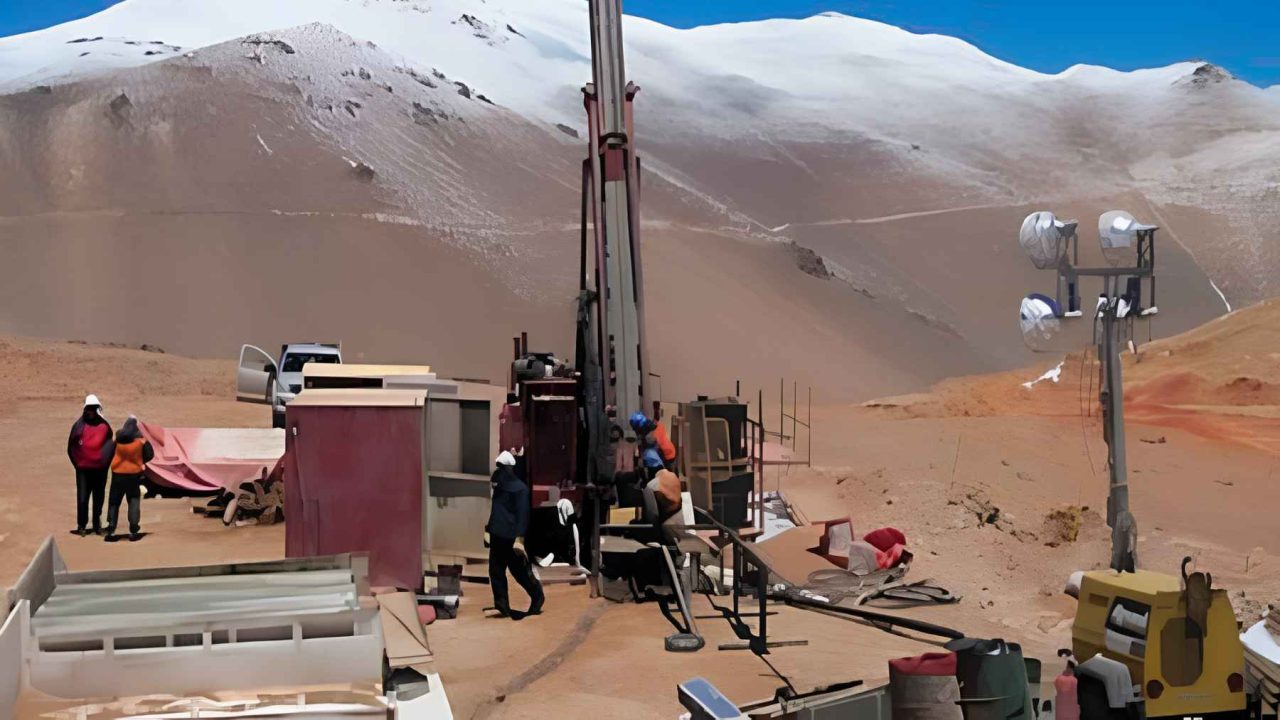
Somewhere beneath the high Andes, straddling the border between Argentina and Chile, sits one of the most significant mineral discoveries in recent memory — and it raises a question that the clean energy transition has been quietly avoiding: how much environmental and logistical risk is the world willing to accept to secure the metals it says it needs?
The site is called Filo del Sol — Spanish for “Thread of the Sun” — and a 2025 resource estimate turned it into one of the most closely watched mining projects on the planet. The numbers are extraordinary. The complications are just as large.
This is the kind of story that sounds like a treasure hunt. And in many ways it is. But the ending, as the headline warns, isn’t quite what you’d expect.
What Filo del Sol Actually Is — and Why the Numbers Matter
Filo del Sol is part of a wider mining district sitting on the Argentina-Chile border, high in the Andes mountains. The site gained serious global attention after a 2025 resource estimate confirmed the scale of what lies beneath the surface.
According to that estimate, the higher-confidence category — what geologists call measured and indicated resources — contains approximately 14.3 million U.S. tons of copper, along with 32 million troy ounces of gold and 659 million troy ounces of silver.
There is also a lower-confidence figure worth noting: roughly 27.6 million U.S. tons of copper sit in the inferred resource category. That means geologists believe it’s there, but the drilling and testing needed to confirm it with higher certainty hasn’t been fully completed yet.
Those are not small numbers by any measure. Copper, in particular, is a metal the global economy increasingly cannot function without — it’s essential for electric vehicles, power transmission lines, wind turbines, and virtually every piece of infrastructure tied to the energy transition.
The Difference Between a Discovery and a Mine
Here’s where the story takes its first unexpected turn. A mineral resource estimate, however impressive, is not the same as an operating mine. This distinction matters enormously, and it’s one that tends to get lost in the excitement around big discovery announcements.
A resource estimate is a serious geological accounting exercise, built on drilling campaigns, surface mapping, and 3D modeling. It tells you what’s likely in the ground and how confident scientists are about it. What it does not tell you is whether extracting that material is economically viable, environmentally permissible, or technically feasible at the scale required.
The tiered language geologists use — measured, indicated, and inferred — reflects exactly that spectrum of certainty. Measured and indicated resources are the better-tested portions. Inferred resources are promising, but still carry meaningful uncertainty.
So while Filo del Sol is genuinely significant in geological terms, the gap between “remarkable discovery” and “working copper mine” is wide, and crossing it involves years of additional study, permitting, infrastructure investment, and risk assessment.
The Numbers Behind the Discovery
| Resource Category | Copper (U.S. tons) | Gold (troy oz) | Silver (troy oz) |
|---|---|---|---|
| Measured & Indicated (higher confidence) | ~14.3 million | ~32 million | ~659 million |
| Inferred (lower confidence) | ~27.6 million | Not specified in source | Not specified in source |
The copper figures alone place Filo del Sol among the more significant undeveloped deposits currently known. Gold and silver at those volumes add considerable economic weight to the project’s profile — though again, resource estimates and actual recoverable production are different things.
The Mountain Setting That Makes This So Complicated
Filo del Sol isn’t just geologically remarkable because of what’s in the ground. It’s notable because of where it sits. High-altitude Andean terrain presents serious logistical and environmental challenges that lower-elevation deposits don’t face in the same way.
The same dramatic mountain setting that concentrated these minerals over millions of years also means extreme weather, thin air, difficult access, and proximity to glacial and water systems that communities and ecosystems downstream depend on. Mining at altitude in the Andes isn’t new, but it carries a weight of scrutiny that projects in more accessible locations don’t always face.
This is the tension at the heart of the Filo del Sol story. The world’s push toward electric vehicles and renewable energy has created surging demand for copper. Supply is not keeping pace. Large, high-quality deposits like this one are genuinely rare. And yet the conditions required to access them often sit in conflict with environmental protections, water rights, and the interests of communities who live in the affected regions.
Why This Story Is About More Than One Mine
The broader question Filo del Sol forces into focus isn’t really about Argentina or Chile specifically. It’s about a tension that every country investing in clean energy will eventually have to confront directly.
Copper is not optional for the energy transition. Electric cars need it. Solar installations need it. Grid upgrades need it. The International Energy Agency and others have repeatedly flagged that current copper supply pipelines are insufficient to meet projected demand over the next two decades.
At the same time, large-scale mining — especially in sensitive high-altitude or ecologically significant areas — carries real costs. Water usage, tailings management, community displacement, and long-term land impact are not abstract concerns. They are documented outcomes of large mining operations around the world.
Filo del Sol doesn’t resolve that tension. It crystallizes it. The deposit is real, the scale is significant, and the path from geological estimate to operating mine is long, contested, and uncertain. That’s not a reason to dismiss the discovery — but it is the full story.
Frequently Asked Questions
Where is Filo del Sol located?
Filo del Sol is situated on the border between Argentina and Chile, in the high Andes mountains, as part of a wider mining district in the region.
How much copper has been identified at Filo del Sol?
The 2025 resource estimate identified approximately 14.3 million U.S. tons of copper in the higher-confidence measured and indicated category, and roughly 27.6 million U.S. tons in the lower-confidence inferred category.
Does the resource estimate mean mining will definitely happen there?
No. A mineral resource estimate confirms what is geologically present, but it is not the same as an approved or operating mine. Significant additional steps — including feasibility studies, permitting, and environmental review — would be required.
What other metals were found at the site?
In addition to copper, the higher-confidence estimate includes approximately 32 million troy ounces of gold and 659 million troy ounces of silver.
Why does the mountain location make this project complicated?
High-altitude Andean terrain presents serious logistical challenges and heightened environmental sensitivity, including proximity to glacial and water systems that surrounding communities and ecosystems rely on.
Why does copper matter so much right now?
Copper is a critical material for electric vehicles, renewable energy infrastructure, and power grid upgrades — all central to the global shift away from fossil fuels. Large, high-quality deposits are increasingly rare relative to projected demand.



Leave a Reply