
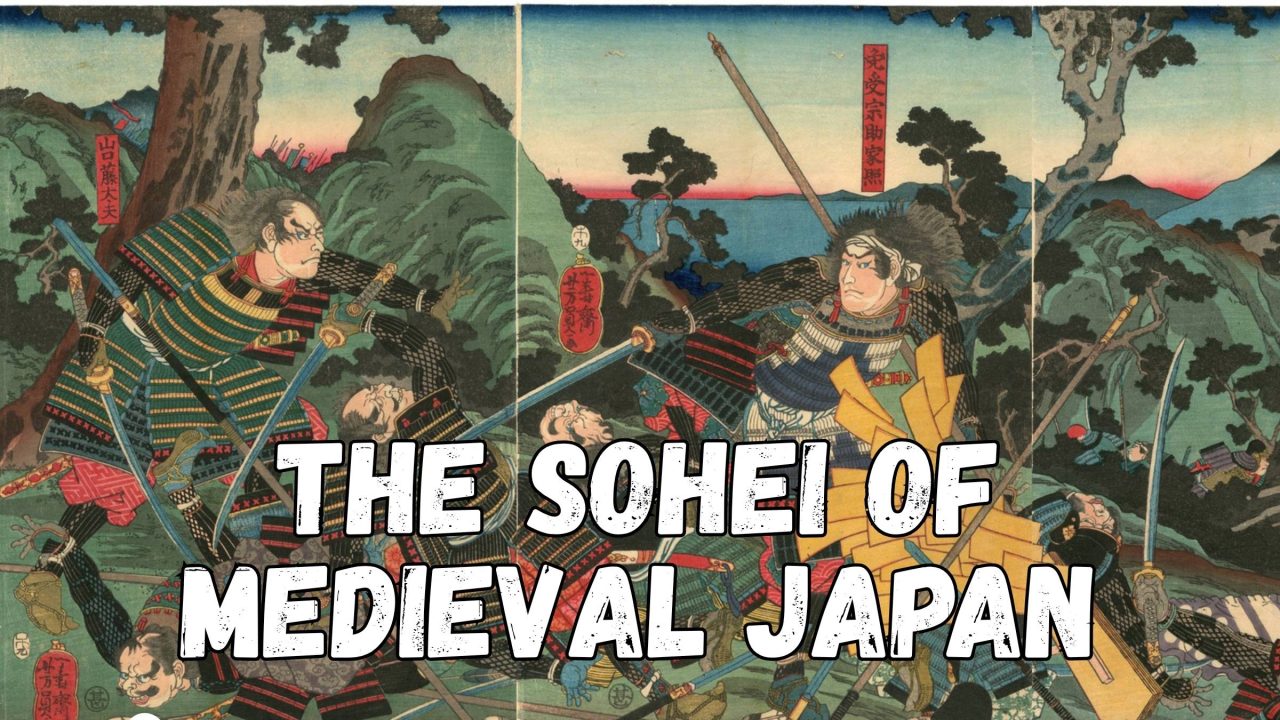
Buddhist monks are supposed to be peaceful — devoted to meditation, compassion, and spiritual discipline. So it comes as a genuine surprise to learn that in medieval Japan, some monks put down their prayer beads and picked up weapons, fielding private armies that shaped the country’s political destiny for centuries.
These were the Sohei — warrior monks who became some of the most formidable and feared military forces in Japanese history. Far from being a minor footnote, they were central players in the power struggles that defined medieval Japan, fighting not just rival warlords but each other, in conflicts rooted in land, wealth, and influence.
Their story begins over a thousand years ago, and it’s far stranger — and more human — than most history books let on.
How Buddhist Temples Became Military Powers
To understand the Sohei, you have to understand what Buddhist temples in medieval Japan actually were. They weren’t simply places of worship. Over time, they accumulated vast tracts of land, becoming major landowners with serious economic and political weight.
Once temples had land, they had interests to protect. And once they had interests to protect, they needed fighters. The warrior monks — the Sohei — emerged directly from that logic. They were created to defend temple assets, advance the temple’s position in political disputes, and confront rival institutions that threatened their standing.
According to research by Gabriel Garcia published on Medievalists.net, the origins of the Sohei trace back to the 700s, when the first major Sohei temples were established. From that point forward, these religious institutions were never purely spiritual — they were also power centers, engaged in the same kinds of rivalry and maneuvering as any secular lord.
The Three Temples at the Heart of It All
Three temples dominated the Sohei world, and their rivalries defined the era. Each maintained its own armed forces and pursued its own political agenda, often violently.
| Temple | Location / Notes | Role in Sohei History |
|---|---|---|
| Enryaku-ji | Mount Hiei; founded before the imperial court moved to Kyoto in 794 | Most privileged and distinguished temple of the late 700s; run by Abbot Saicho |
| Kofuku-ji | One of the three major Sohei temples | Central player in centuries of inter-temple conflict over appointments and positions |
| Mii-dera | One of the three major Sohei temples | Engaged in ongoing struggles with Enryaku-ji and Kofuku-ji for power and influence |
These three institutions fought each other for centuries — not over theology, but over imperial appointments and temple positions. The disputes were deeply political, and the armies they raised were the instrument through which those disputes were settled.
The Enryaku-ji held a particularly powerful position in the late 700s. Built on Mount Hiei under Abbot Saicho, it was established six years before the Japanese monarchy relocated to Kyoto in 794 — giving it a kind of founding prestige that the other temples couldn’t easily match.
What the Sohei Actually Fought For
It would be easy to frame the Sohei as a contradiction — warriors who broke their vows of peace. But that misreads the situation. These monks existed within a system where religious institutions were political institutions, and where failing to defend your temple’s interests meant losing land, status, and survival.
The Sohei were not rogue elements acting against the wishes of their temples. They were created by those temples, maintained by them, and deployed deliberately. The monasteries used these private armies to:
- Protect their landholdings from rivals and encroachment
- Advance the temple’s position in disputes over imperial appointments
- Contest temple positions and religious authority against competing institutions
- Promote the temple’s broader political and social interests
The violence was institutional, not rogue. And it persisted for centuries precisely because it worked.
Why This Chapter of Japanese History Still Matters
The Sohei are more than a curiosity from a distant era. Their existence reveals something important about how power actually operates — that religious authority and military force have never been as separate as we might assume, and that institutions of any kind will defend their interests when threatened.
Medieval Japan was a society in which the boundaries between spiritual life and political life were porous at best. The great temples weren’t operating outside the system — they were part of it, competing by the same rules as everyone else, just with the added legitimacy that came from religious prestige.
The fact that three major Buddhist institutions maintained standing armies and fought each other over appointments for centuries tells you a great deal about how power was organized in that world. It also explains why figures like Oda Nobunaga, the 16th-century warlord who eventually destroyed Enryaku-ji, saw the warrior monks as a genuine military and political threat — not a symbolic one.
What Came Next for the Warrior Monks
The full arc of the Sohei spans several more centuries, running through the Heian period and deep into the medieval era, before the consolidation of secular military power gradually curtailed their influence. Their story is one of the longer-running examples of religious institutions wielding direct military force in world history.
For anyone interested in how medieval societies actually functioned — where power came from, who held it, and how it was defended — the Sohei offer a window that is both surprising and remarkably revealing.
Frequently Asked Questions
What does “Sohei” mean?
Sohei is the Japanese term for warrior monks — Buddhist religious figures who also trained and fought as soldiers, primarily to defend their temples’ political and economic interests.
When did the Sohei first appear?
According to
Which were the three most powerful Sohei temples?
The three major Sohei temples were Enryaku-ji, Kofuku-ji, and Mii-dera, all of which maintained private armies and fought each other for centuries over imperial appointments and temple positions.
Why did Buddhist temples need armies?
The temples had accumulated significant landholdings and political influence, and they used warrior monks to protect those assets and advance their interests against rival institutions.
Who founded Enryaku-ji, the most prominent early Sohei temple?
Enryaku-ji on Mount Hiei was run by Abbot Saicho and was built six years before the Japanese monarchy moved to Kyoto in 794, giving it considerable prestige in the late 700s.</p



Leave a Reply