
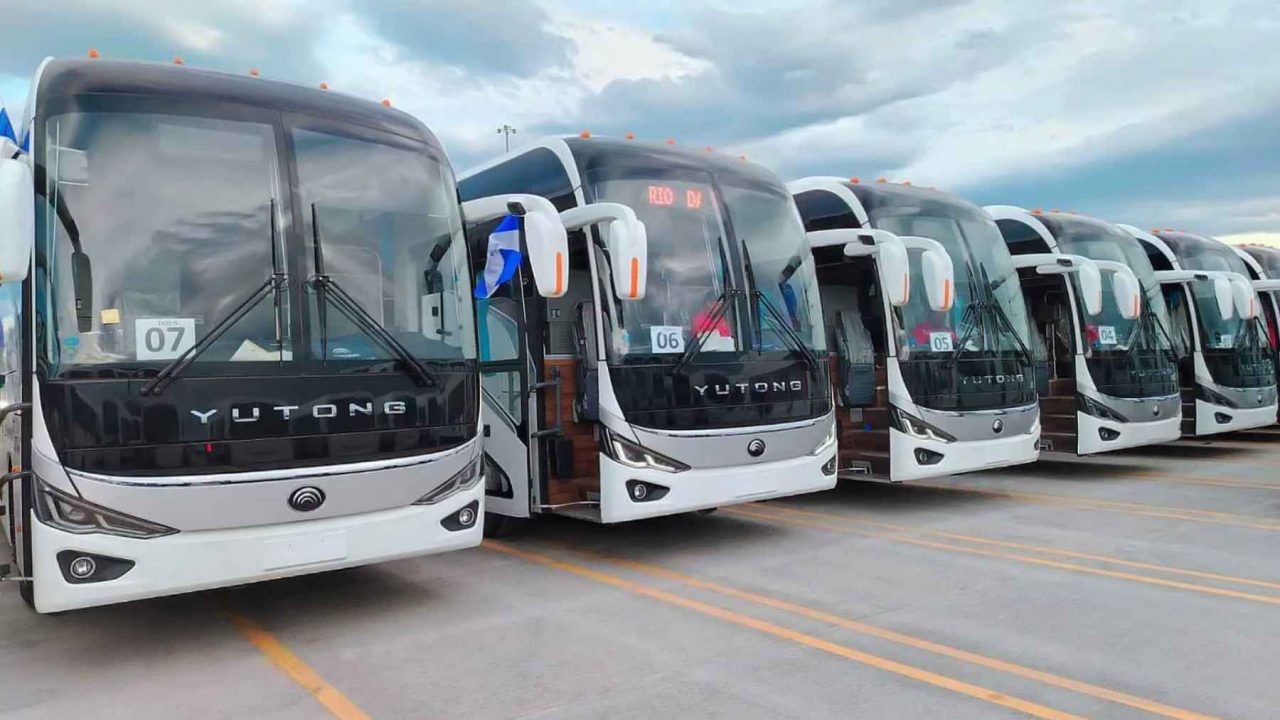
Six hundred new buses are headed to Nicaragua from China — and the first 180 have already arrived. It sounds like a logistics update, but for the millions of Nicaraguans who depend on public transit every single day, it could mean the difference between a bus that shows up and one that doesn’t.
The delivery, which moved from the Port of Corinto toward Managua as a visible convoy in early February 2026, marked the first concrete step in a broader deal that officials say will bring the full fleet of 600 vehicles over the course of the next year. That’s a significant injection of new capacity into a country where aging buses have long been a source of frustration for daily commuters.
And beyond Nicaragua’s borders, this shipment is drawing attention as a sign of how deeply China’s infrastructure partnerships are now reaching into Latin America — not through highways or ports, but through something far more ordinary: the bus stop.
How the China-Nicaragua Bus Deal Came Together
The deal became public on January 30, 2026, when Nicaraguan co-president Rosario Murillo announced that the first 180 units were due to arrive on Monday, February 2, 2026. In the same announcement, she confirmed the country was expecting a total of 600 vehicles over the following year.
What made this more than just a press release was what happened next. Within days, follow-up reporting described the buses physically moving in convoy formation from the Port of Corinto toward the capital, Managua. The plan had gone from announcement to delivery in a matter of days — a pace that signaled this wasn’t a vague future commitment but an active, coordinated operation.
Officials indicated the vehicles were to be distributed to transport operators across multiple municipalities, meaning the benefits wouldn’t be concentrated in one city but spread across different parts of the country.
What We Know About the Shipment So Far
The confirmed details are still limited, but here’s what the source reporting establishes:
- The first shipment of 180 buses arrived in Nicaragua around February 2, 2026
- The full delivery is expected to total 600 buses over approximately one year
- The buses entered Nicaragua through the Port of Corinto and were transported to Managua
- Distribution is planned for transport operators from multiple municipalities
- The announcement came from co-president Rosario Murillo on January 30, 2026
| Detail | Confirmed Information |
|---|---|
| First shipment size | 180 buses |
| Total expected delivery | 600 buses |
| Delivery timeline | Over approximately one year |
| Entry port | Port of Corinto |
| Announcement date | January 30, 2026 |
| First arrival date | Around February 2, 2026 |
| Recipient | Transport operators across multiple municipalities |
The financial terms of the deal, the specific bus models involved, and whether this is a purchase, loan, or grant arrangement have not yet been confirmed in available reporting.
Why This Matters for Everyday Riders
Public transportation in many parts of Central America runs on aging fleets that were already old when they were acquired. Breakdowns are common. Schedules are unpredictable. For someone trying to get to work at a fixed hour, or a parent trying to get a child to school on time, an unreliable bus isn’t just an inconvenience — it’s a daily source of stress with real economic consequences.
Officials have noted that newer vehicles tend to mean more reliable service. Fewer mechanical failures translate into more consistent routes, shorter wait times, and the kind of trust in public transit that encourages people to use it rather than seek out more expensive alternatives.
The fact that buses are being distributed to operators across multiple municipalities — rather than concentrated in Managua alone — suggests an intent to improve connectivity in communities outside the capital, where transit options are often even more limited.
Whether the new fleet will deliver on that promise depends on factors that go beyond the delivery itself: maintenance infrastructure, route planning, operator training, and long-term funding. Those questions remain open, but the arrival of the buses at least puts the physical hardware on the ground.
A Deeper Signal About China’s Role in Latin America
Nicaragua and China established formal diplomatic relations in 2021, when Nicaragua switched its recognition from Taiwan to Beijing. Since then, the relationship has developed across a range of sectors, and this bus deal is one of the most visible expressions of that partnership for ordinary citizens.
China has pursued similar infrastructure and transportation partnerships across Latin America and other developing regions, often supplying vehicles, equipment, or financing as part of broader bilateral agreements. The Nicaragua bus delivery fits that broader pattern — using everyday infrastructure like public transit as a tangible demonstration of partnership.
Supporters of such arrangements argue they bring real, practical benefits to populations that need them. Critics often raise questions about long-term dependency, debt terms, and whether local maintenance capacity can sustain foreign-supplied equipment over time. Both perspectives are part of the wider conversation around China’s expanding role in the region.
What Comes Next for the Remaining 420 Buses
With 180 of the 600 buses now confirmed as delivered, the remaining 420 vehicles are expected to arrive over the course of the year following the initial February 2026 shipment. No specific schedule for subsequent deliveries has been publicly confirmed in available reporting.
The more pressing question may be what happens after all 600 buses are in service. Maintaining a large fleet of new vehicles requires parts, trained mechanics, and consistent funding — infrastructure that takes time to build. Officials and observers will likely be watching whether the operational improvements match the scale of the delivery.
For now, the convoy rolling from the Port of Corinto to Managua represents something concrete: a promise that became a shipment, and a shipment that became a fleet. Whether it becomes a lasting improvement to daily life for Nicaraguan commuters is the story still being written.
Frequently Asked Questions
How many buses is China sending to Nicaragua in total?
China is sending a total of 600 buses to Nicaragua, according to an announcement made by co-president Rosario Murillo on January 30, 2026.
How many buses have already arrived?
The first shipment of 180 buses arrived around February 2, 2026, entering Nicaragua through the Port of Corinto before being transported to Managua.
Who will receive the new buses?
According to available reporting, the buses are intended to be distributed to transport operators from multiple municipalities across Nicaragua.
What is the timeline for the remaining deliveries?
Officials indicated the full 600 buses are expected to arrive over approximately one year from the initial February 2026 delivery, but a specific schedule for subsequent shipments has not been publicly confirmed.
What are the financial terms of the deal?
This has not yet been confirmed in available reporting. The cost, financing structure, and whether this is a purchase, loan, or grant arrangement have not been publicly disclosed.
Why is Nicaragua receiving buses from China specifically?
Nicaragua and China established formal diplomatic relations in 2021, and this bus delivery reflects the growing bilateral partnership between the two countries that has developed since then.




Leave a Reply