
Empty space, it turns out, is not actually empty. That single idea — long debated in theoretical physics — has now moved one significant step closer to experimental proof, and the implications reach all the way down to why matter exists at all.
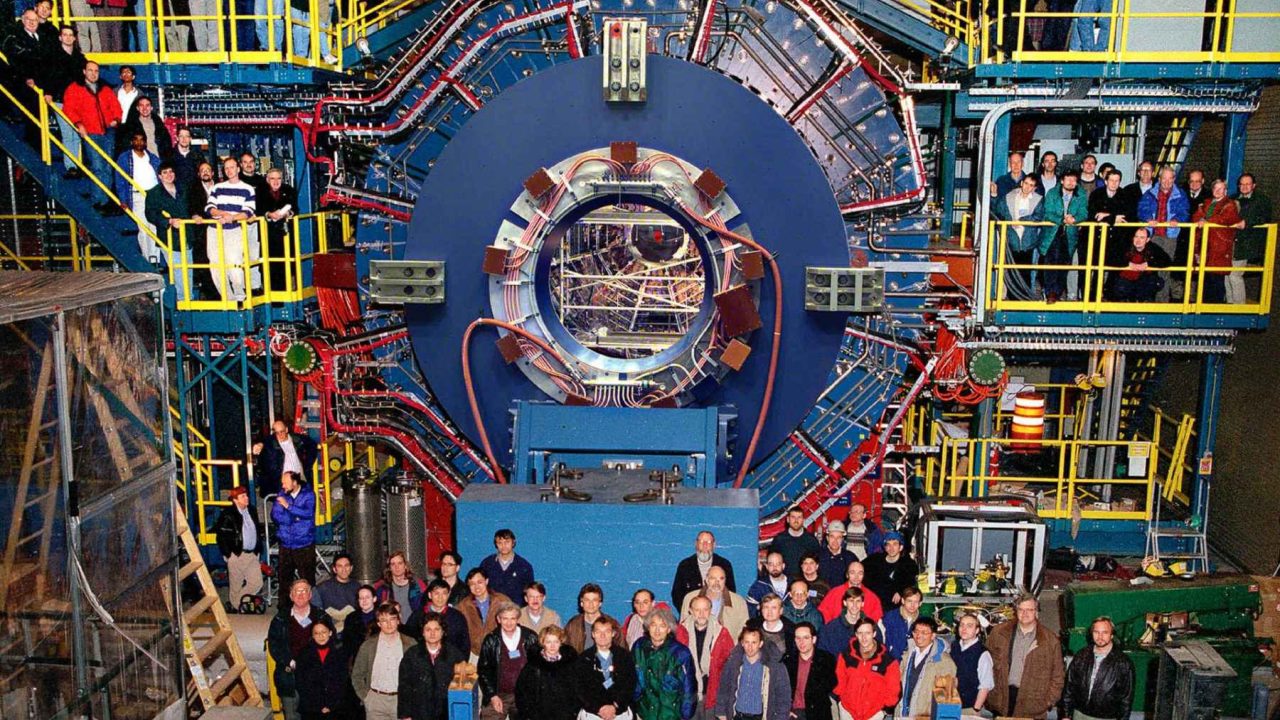
A research team working with the STAR detector at Brookhaven National Laboratory has published findings in Nature reporting direct experimental evidence that particles produced in high-energy proton collisions can inherit a distinct spin pattern from virtual quark pairs lurking inside the quantum vacuum. In plain terms: the “nothing” between particles is doing something measurable, and scientists finally caught it in the act.
The result challenges one of the most stubborn assumptions in everyday thinking about the physical world — that a vacuum is simply a blank, a void, an absence of anything. Quantum physics has long insisted otherwise. Now there is hard data to back that up.
What the Quantum Vacuum Actually Is
Classical physics treats a vacuum as exactly what the word sounds like: nothing. No particles, no energy, no activity. Quantum physics tells a completely different story.
According to quantum theory, empty space is more like a constantly churning background. Particle and antiparticle pairs flicker in and out of existence continuously, permitted by the Heisenberg uncertainty principle, which allows energy to be “borrowed” for extraordinarily short periods of time. These are called virtual particles — they appear, interact, and vanish before they can be directly detected in the conventional sense.
Physicist Dmitri Kharzeev described it directly:
“The vacuum in quantum theory is not empty space.”
The specific framework underpinning the new research is quantum chromodynamics (QCD) — the theory that governs the strong nuclear force, which holds quarks together inside protons and neutrons. According to QCD, the vacuum contains virtual quark and antiquark pairs, including strange quark pairs, constantly forming and dissolving. The new experiment found a way to make those ghostly pairs leave a detectable fingerprint.
What Scientists Actually Detected — and How
The experiment focused on two specific particles: lambda hyperons and their antimatter counterparts, antilambda hyperons. These are subatomic particles that contain strange quarks, making them useful probes of the strange-quark content predicted to exist inside the quantum vacuum.
When high-energy protons collide inside the STAR detector, lambda and antilambda pairs are produced. The researchers measured how the spin orientations of these pairs were correlated — essentially asking whether the two particles “remembered” anything about the virtual quark pairs they may have originated from inside the vacuum.
The answer was yes, with a statistically meaningful margin.
| Measurement | Result |
|---|---|
| Spin correlation between close lambda and antilambda pairs | ~18% |
| Statistical significance of the result | 4.4 standard deviations |
| Particles studied | Lambda hyperons and antilambda hyperons |
| Detector used | STAR detector, Brookhaven National Laboratory |
| Published in | Nature |
A 4.4 standard deviation result is considered strong evidence in physics — it sits just below the conventional 5-sigma threshold used to claim a formal discovery, but well above the level that physicists treat as highly significant and worthy of serious attention.
Why This Finding Matters Beyond the Lab
The spin correlation detected is not just a technical curiosity. Researchers say it opens a direct experimental window onto two of the deepest unsolved problems in physics.
- Quark confinement: Quarks are never found alone in nature — they are always bound together inside particles like protons and neutrons. Nobody fully understands why. The behavior of virtual quark pairs in the vacuum is believed to be connected to this confinement mechanism, and a measurable signal from those pairs gives physicists a new tool to study it.
- The origin of mass: Most of the mass of everyday matter — the atoms in your body, in every object you can touch — does not come from the Higgs field alone. It comes largely from the energy of the strong force interactions inside protons and neutrons. The quantum vacuum plays a role in generating that energy, and understanding it better means understanding where mass itself comes from.
These are not abstract academic questions. They sit at the foundation of why the physical world is structured the way it is.
The Part of This Story Most Reports Are Missing
Much of the coverage of quantum vacuum research focuses on the philosophical strangeness — the idea that “nothing” is actually “something.” That framing is accurate, but it can obscure what makes this particular result different from previous work.
Prior evidence for quantum vacuum fluctuations has been largely indirect, inferred from effects like the Casimir force or the Lamb shift in atomic spectra. What the STAR collaboration is claiming is something more direct: a measurable spin correlation that carries the statistical imprint of virtual quark pairs, observed in the debris of real particle collisions.
That moves the quantum vacuum from a theoretical construct into something experimentally accessible in a new way. The researchers describe it as offering a fresh method to probe quark confinement and the emergence of mass — language that suggests this is a beginning of a new line of investigation, not the end of one.
What Comes Next for This Research
The Nature publication marks an important milestone, but the work is far from finished. A 4.4 standard deviation result invites replication and further scrutiny. The physics community will want to see whether the signal holds up under different collision conditions, whether alternative explanations can be ruled out more completely, and whether the correlation strength matches theoretical predictions from QCD with greater precision.
The STAR detector at Brookhaven remains one of the most capable instruments for this kind of measurement, and the research team’s approach — using lambda and antilambda spin correlations as a probe — provides a replicable method that other experiments could potentially apply.
For now, the result stands as one of the most direct experimental contacts ever made with the quantum vacuum, turning a cornerstone of theoretical physics into something that leaves a measurable mark on a detector.
Frequently Asked Questions
What did scientists detect in the quantum vacuum?
Researchers detected a spin correlation of about 18% between lambda hyperon and antilambda hyperon pairs, which they say carries the imprint of virtual quark pairs existing inside the quantum vacuum.
Where was this research conducted?
The experiment was carried out using the STAR detector at Brookhaven National Laboratory, and the findings were published in the journal Nature.
How statistically significant is this result?
The result has a statistical significance of 4.4 standard deviations, which is considered strong evidence in physics, though it falls just below the conventional 5-sigma discovery threshold.
Who is Dmitri Kharzeev and what did he say?
Dmitri Kharzeev is a physicist quoted in connection with the research who stated plainly that “the vacuum in quantum theory is not empty space.”
Why does the quantum vacuum matter to everyday life?
The quantum vacuum is connected to quark confinement and the origin of most of the mass in everyday matter — the atoms that make up everything around us — making it fundamental to understanding why physical reality exists as it does.
Does this result confirm a new discovery?
The researchers describe it as direct experimental evidence rather than a formal discovery claim; further replication and analysis will be needed to fully establish the result within the physics community.


Leave a Reply