
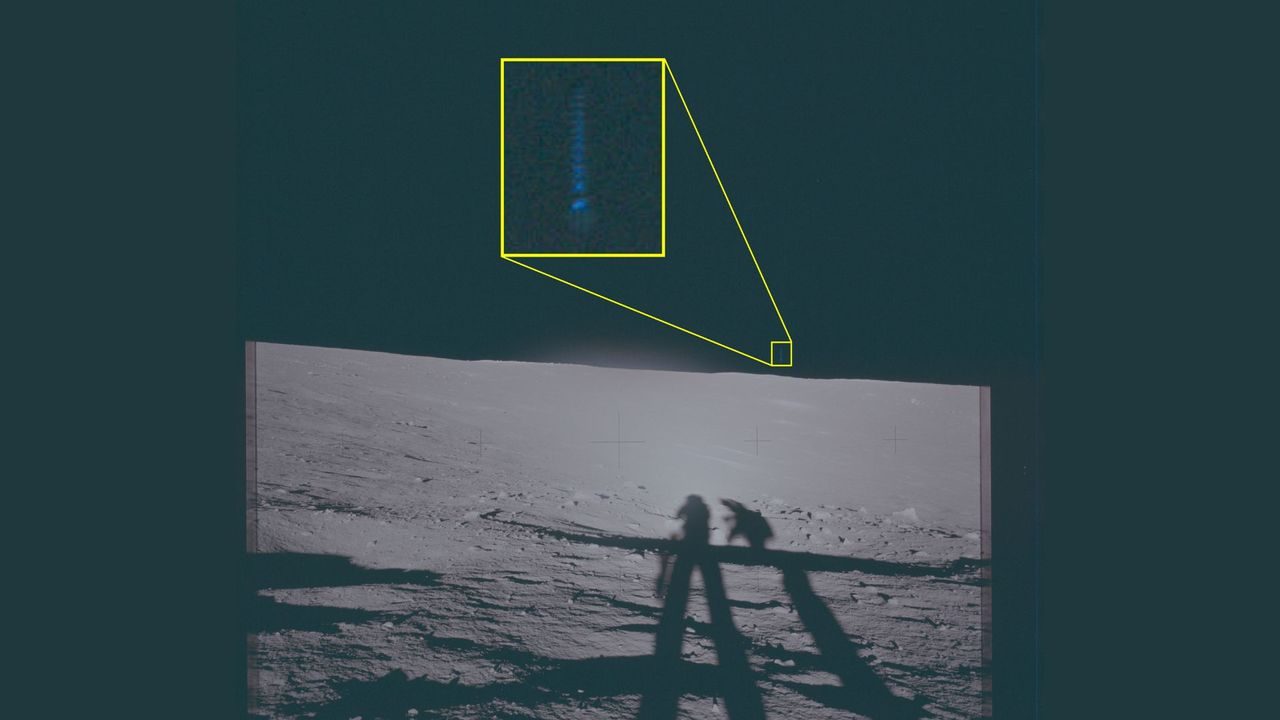
More than 55 years after two NASA astronauts stood on the surface of the moon, newly surfaced declassified images from the Apollo 12 mission are drawing fresh attention — not for the moonwalks themselves, but for a strange light one astronaut spotted hovering above the lunar horizon.
The sighting happened on November 19, 1969, when lunar module pilot Alan L. Bean looked through the lander’s alignment optical telescope and saw something he couldn’t explain: particles of light, seemingly floating above the moon’s surface. The images documenting what he saw have now resurfaced, and they’re sparking renewed curiosity about what exactly was out there.
It’s one of those stories that sounds almost too strange to be real — except it comes straight from NASA’s own records, and the man who saw it was a trained astronaut on one of the most closely monitored missions in human history.
What the Apollo 12 Astronauts Actually Saw
The Apollo 12 mission launched in mid-November 1969, sending a three-person crew to the moon as part of NASA’s second crewed lunar landing. Mission commander Charles “Pete” Conrad Jr. and lunar module pilot Alan L. Bean descended to the lunar surface aboard the landing craft Intrepid on November 19. The third crew member, Richard F. Gordon, remained in lunar orbit — alone — for 31 hours piloting the command module while his colleagues were on the surface below.
It was during this surface phase that Bean made the unusual observation. While looking through the lander’s alignment optical telescope — described as a small, periscope-like device that provided a narrow, unmagnified view of the outside environment — he spotted what he described as lights, or particles of light, visible above the lunar horizon.
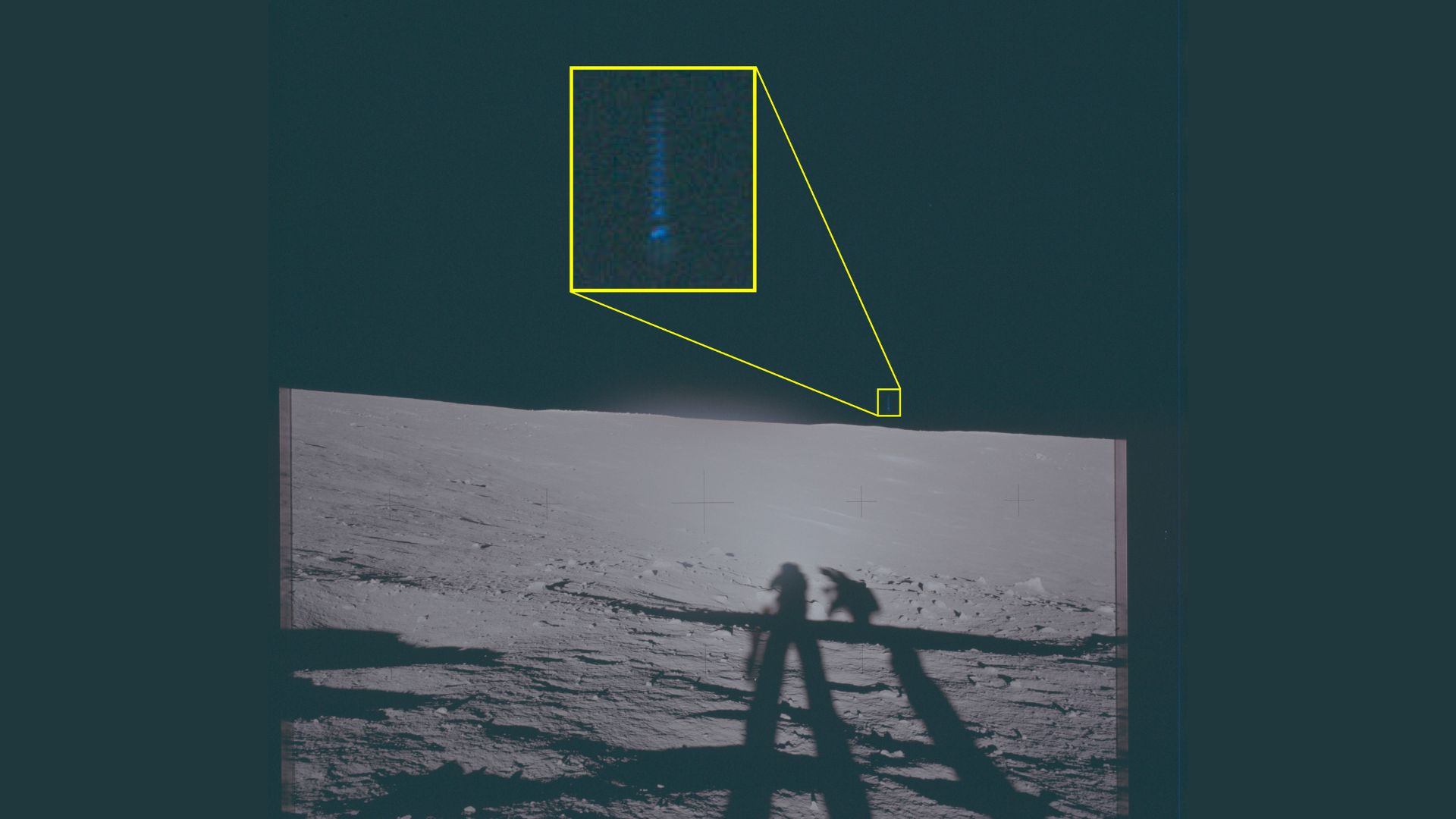
The sighting was documented, and archival photographs from the mission show the lunar surface as viewed from the Apollo 12 landing site, with the area above the horizon — where the unidentified light source was reported — marked for reference.
What makes this particularly compelling is the instrument Bean was using. The alignment optical telescope was not designed for stargazing or wide-field observation. It offered a narrow, unmagnified view. Whatever Bean saw was visible through a limited window — and he still flagged it as something worth noting.
Key Facts About the Apollo 12 Mission and the Sighting
| Detail | Information |
|---|---|
| Mission | Apollo 12 |
| Date of sighting | November 19–20, 1969 |
| Location | Above the horizon on the lunar near side |
| Who reported it | Alan L. Bean, lunar module pilot |
| Instrument used | Alignment optical telescope (narrow, unmagnified view) |
| Mission commander | Charles “Pete” Conrad Jr. |
| Third crew member | Richard F. Gordon (remained in lunar orbit) |
| Landing craft name | Intrepid |
- Apollo 12 was the second crewed lunar landing in history
- Gordon spent 31 hours alone in the command module during the surface phase
- Bean described the anomaly as “particles of light” visible above the lunar horizon
- The images are sourced from NASA’s own archival records
- The sighting occurred while Bean used a periscope-like optical device — not a camera or telescope
Why This Story Is Getting Attention Again Now
Declassified and archival NASA materials have attracted growing public and media interest in recent years, particularly as the U.S. government has taken a more open posture toward discussing unidentified aerial phenomena. In that context, a documented report from a NASA astronaut — recorded during an active moon landing more than five decades ago — carries real weight.
Bean wasn’t an amateur observer making an offhand comment. He was a trained naval aviator and NASA-selected astronaut, operating in one of the most controlled and scrutinized environments imaginable. His observation was logged, photographed, and is now part of the historical record.
The resurfacing of these images matters because it adds a human, first-person dimension to what is often an abstract debate. This wasn’t a blurry photograph taken by a civilian. It was a direct report from someone standing — or rather, floating — just miles above the lunar surface, looking out through a precision optical instrument.
Whether the lights had a mundane explanation, such as reflected sunlight, lens artifacts, or orbital debris, or something harder to account for, has not been definitively established based on the available source material.
What This Means for the Broader UFO Conversation
Reports of unidentified lights and objects near spacecraft are not unique to Apollo 12. Astronauts across multiple programs have reported visual anomalies that were later explained — or, in some cases, were not fully explained at all. What sets the Apollo 12 sighting apart is the combination of the observer’s credibility, the precision of the instrument involved, and the fact that the event was documented with photographs that have now been made publicly available.
For those tracking the broader conversation around UAPs (unidentified aerial phenomena), this kind of archival material is significant. It demonstrates that unusual observations near spacecraft are not a modern invention — they have been part of spaceflight history since the earliest missions.
For the general public, it’s a reminder that even in the most carefully planned and monitored human endeavors, there are still moments that resist easy explanation.
What We Still Don’t Know
What it does not confirm is any official explanation for what the lights were, or whether a formal investigation was ever conducted into the specific observation.
NASA has not issued any recent statement specifically addressing this sighting based on currently available information. The images are described as archival and declassified, but the full context of how and when they were released has not been detailed in the available source reporting.
What remains clear is that a credentialed NASA astronaut, using a precision optical instrument, reported seeing something above the lunar surface in November 1969 — and more than half a century later, that observation is still generating questions.
Frequently Asked Questions
Who reported the unidentified lights during Apollo 12?
Lunar module pilot Alan L. Bean reported seeing particles of light above the lunar horizon while looking through the lander’s alignment optical telescope.
When did the Apollo 12 sighting occur?
The sighting took place during the Apollo 12 lunar surface phase on November 19–20, 1969.
What instrument was Bean using when he saw the lights?
He was using the alignment optical telescope, described as a small, periscope-like device offering a narrow, unmagnified view outside the spacecraft.
Was Apollo 12 the first moon landing?
No. Apollo 12 was the second crewed lunar landing in history. Conrad and Bean became the second group of humans to set foot on the lunar surface.
Has NASA officially explained what the lights were?
Based on currently available source material, no official explanation for the specific lights Bean observed has been confirmed.
What was Richard Gordon doing during the sighting?
Gordon spent 31 hours alone piloting the command module in lunar orbit while Conrad and Bean were on the surface below.



Leave a Reply