
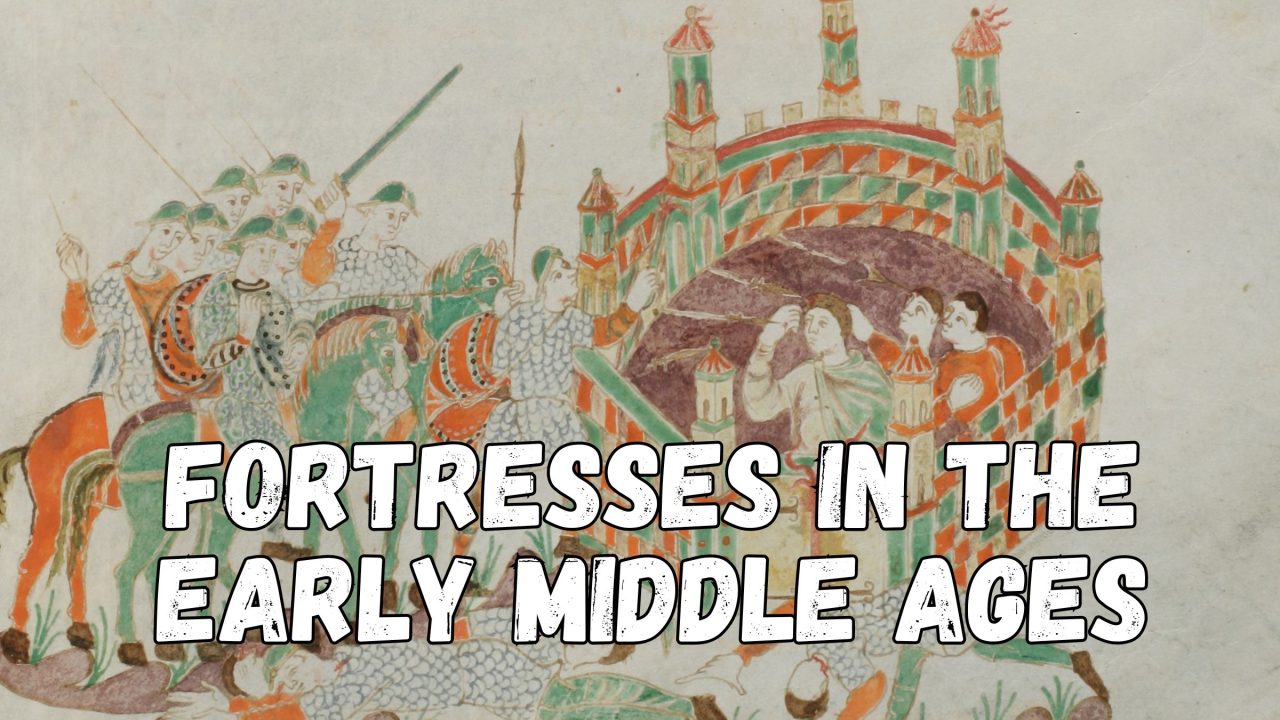
Who actually controlled the construction of fortresses in early medieval Europe? It’s a question that sounds simple — but the answer has been hotly debated among historians for decades, and the stakes are higher than they might seem. How scholars answer it shapes our entire understanding of royal power, state authority, and political order in the centuries following Rome’s collapse.
A new analysis by historian David Bachrach, published by Medievalists.net, takes direct aim at two long-standing scholarly traditions that, he argues, have produced false narratives about the nature of power in the Carolingian Empire and early medieval Germany. His core argument: rulers were far more in control of fortress-building than many historians have assumed.
The debate matters because fortifications weren’t just walls and towers. They were symbols and instruments of power — and who got to build them, license them, or tear them down tells us a great deal about who was really in charge.
Why Fortress-Building Was Always a Political Statement
In medieval Europe, the right to license fortifications has long been understood as a key element of royal or princely authority. Scholars have generally agreed on the basic principle: a strong ruler controlled who built strongholds and where. A weak ruler couldn’t stop ambitious nobles from throwing up fortifications without permission.
That framework seems straightforward. But applying it to the early medieval period — roughly the era of the Carolingian Empire and its successors, including the Ottonian rulers of early Germany — turns out to be far more complicated than it first appears.
The main problem is evidence. For this period, historians rely largely on material evidence rather than written records. Archaeology can tell you a fortress existed. It struggles to tell you who ordered it built, who paid for it, and whether the ruler approved it. That evidentiary gap has allowed competing interpretations to flourish — and, according to Bachrach, has allowed some seriously flawed conclusions to take root.
The Two Scholarly Traditions Getting It Wrong
Bachrach identifies two distinct scholarly camps, and argues that both have led historians astray.
The first tradition holds that early medieval governments — including the Carolingian rulers — tried to control every type of fortification, from fortified private homes all the way up to massive military strongholds. Under this view, any sign that individuals were building without royal permission becomes evidence of royal weakness or state failure.
The second tradition takes the opposite approach and essentially concludes that royal control over fortifications had largely collapsed after the fall of Rome, leaving early medieval rulers unable to meaningfully regulate who built what and where.
Both positions, Bachrach argues, produce the same problematic result: a narrative of absent or failed royal power in the Carolingian Empire, particularly in its eastern territories, and in early medieval Germany. And both, he contends, are built on methodological foundations that don’t hold up under scrutiny.
| Scholarly Tradition | Core Claim | Resulting Narrative |
|---|---|---|
| Tradition One | Rulers tried to control all fortifications, large and small | Any unlicensed building proves royal weakness |
| Tradition Two | Royal control collapsed after Rome’s fall | Early medieval rulers lacked meaningful authority over fortifications |
| Bachrach’s Position | Rulers maintained authority over major militarily significant fortresses | Carolingian and Ottonian rulers were stronger than assumed |
What Bachrach Actually Argues About Carolingian and Ottonian Power
Rather than accepting either extreme, Bachrach makes a more precise and, he argues, more defensible claim. Rulers in the Carolingian and Ottonian worlds maintained genuine authority over major fortifications — the militarily significant ones that required large labour forces and substantial resources to construct.
This is a meaningful distinction. A king who couldn’t stop every local lord from reinforcing a manor house was not necessarily a weak king. But a king who controlled the construction of strategically important fortresses — and who could mobilize the vast labour forces needed to build them — was exercising real, substantive power.
The ability to command those labour forces is particularly significant. Large-scale fortress construction in the early medieval period wasn’t just an engineering challenge. It was a logistical and political one. Assembling the workers, feeding them, organizing the supply chains — all of that required authority that extended well beyond a single lord’s personal estate.
Bachrach’s argument is that the evidence, properly interpreted, shows Carolingian and Ottonian rulers doing exactly that: exercising coordinated control over major building projects in ways that demonstrate functioning royal authority, not its absence.
Why This Debate Still Resonates Today
It might be tempting to dismiss this as a niche academic argument. But the question of whether early medieval states were functional or failed has real implications for how we understand the transition from the ancient world to the medieval one — and ultimately to the political structures of modern Europe.
If scholars have systematically underestimated the strength of Carolingian and Ottonian rulers, then the standard story of post-Roman political collapse may need significant revision. The idea that Europe spent several centuries in a kind of governmental vacuum, with kings too weak to enforce basic rights like controlling who built fortresses, shapes how we think about everything from feudalism to the origins of the nation-state.
Bachrach’s work suggests that vacuum may be more myth than reality — at least when it comes to the control of militarily significant fortifications. The kings of this era, he argues, were builders and commanders in a very literal sense, and the evidence has been misread by scholars working from flawed methodological assumptions.
What Comes Next for This Research
Bachrach’s analysis is part of a broader scholarly effort to reassess the nature of early medieval governance using more rigorous methodological approaches. As archaeological techniques improve and more material evidence is systematically analyzed, the picture of Carolingian and Ottonian authority is likely to become clearer — and potentially more favorable to the view that these rulers were more capable administrators than the traditional narrative suggests.
For now, the debate remains open. But Bachrach’s intervention puts the burden of proof squarely back on those who would argue that royal power over fortress-building had effectively disappeared in early medieval Europe.
Frequently Asked Questions
Who is David Bachrach?
David Bachrach is a historian whose work, as presented on Medievalists.net, focuses on military and political authority in early medieval Europe, including the Carolingian and Ottonian periods.
What is the Carolingian Empire?
The Carolingian Empire was a major early medieval political entity in Western and Central Europe, associated with rulers such as Charlemagne, and is a central focus of Bachrach’s analysis of fortress-building authority.
Why is control over fortress-building significant?
According to
What two scholarly traditions does Bachrach critique?
He critiques one tradition that claims rulers tried to control all fortifications of any size, and another that argues royal control over fortifications had largely collapsed after the fall of Rome.
What does Bachrach say rulers actually controlled?
Bachrach argues that Carolingian and Ottonian rulers maintained authority specifically over major, militarily significant fortifications and the large labour forces required to construct them.</p


Leave a Reply