
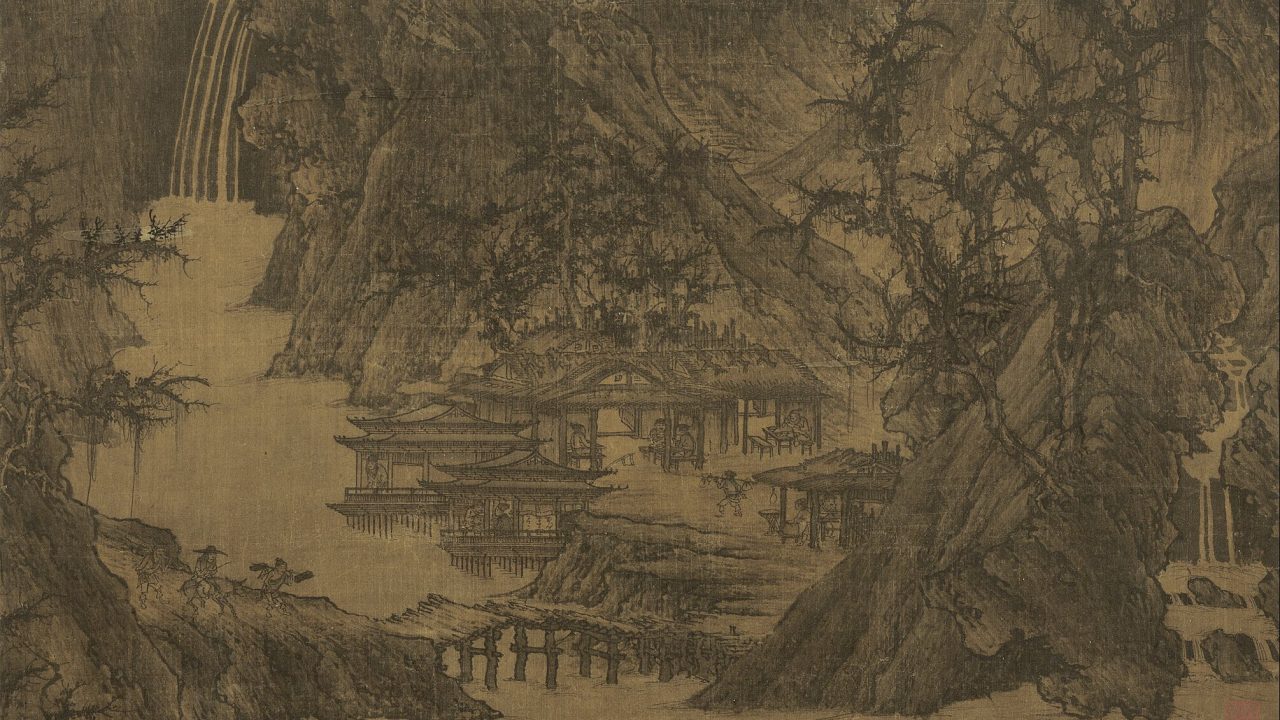
One of the most powerful empires in Chinese history — a dynasty that presided over centuries of cultural brilliance, trade, and prosperity — may have been brought to its knees not just by war or political corruption, but by the weather. New research suggests that a punishing cycle of droughts and floods played a significant role in the collapse of the Tang dynasty, which fell in 907 CE after nearly three centuries of rule.
The findings, published in Nature Communications Earth and Environment, come from an international research team that includes scholars from the University of Basel. Their study focused on the final century of Tang rule — roughly 800 to 907 CE — and examined how climate extremes may have destabilized northern China’s agricultural systems, supply networks, and ultimately its political order.
What makes this research striking is how familiar the dynamics feel. Climate stress, resource scarcity, mass displacement — these are conversations happening right now, in the 21st century. But this study argues those same forces were already reshaping civilizations more than a thousand years ago.
How Researchers Read a Thousand-Year-Old Climate
The team didn’t have weather stations or satellite data to work with. Instead, they turned to one of nature’s most reliable record-keepers: trees. By analyzing tree ring data — a method that allows scientists to reconstruct past weather patterns based on how wide or narrow each annual ring grew — researchers were able to piece together a detailed picture of climate conditions across the Tang period.
These tree ring archives act as a kind of natural diary. A wide ring typically signals a good growing year with ample rainfall. A narrow ring points to drought, cold, or stress. Over long timescales, these records can reveal patterns that no human document could preserve with the same consistency.
The researchers combined this climate proxy data with historical sources and modeling of supply networks — an interdisciplinary approach that allowed them to connect environmental conditions on the ground to broader social and political outcomes across the Yellow River region.
Why the Yellow River Region Was the Heart of the Empire
The Tang dynasty was founded in 618 CE and quickly became one of the most prosperous and culturally influential periods in Chinese history. At its height, it was a cosmopolitan empire with thriving trade routes, celebrated poetry, and sophisticated governance. But its agricultural and political core was concentrated around the Yellow River — one of the most fertile and strategically important regions in all of China.
That same region, the study suggests, became a pressure point when the climate turned hostile. The Yellow River basin was highly sensitive to rainfall variability. Too little rain meant crop failures and famine. Too much meant catastrophic flooding. Either extreme could ripple outward through supply chains, tax revenues, and the ability of the central government to maintain control over distant provinces.
By the ninth century, the empire was already showing signs of serious strain — internal rebellions, weakening central authority, and growing regional power struggles. The climate research suggests environmental stress was layered on top of these existing vulnerabilities, accelerating the dynasty’s decline rather than acting as a single cause in isolation.
Key Facts From the Study at a Glance
| Detail | Information |
|---|---|
| Dynasty studied | Tang dynasty, China |
| Founded | 618 CE |
| Collapsed | 907 CE |
| Period examined | 800–907 CE (final century) |
| Region of focus | Yellow River region, northern China |
| Published in | Nature Communications Earth and Environment |
| Key institution involved | University of Basel (among others) |
| Primary climate data source | Tree ring proxy records |
| Climate events identified | Repeated droughts and floods |
- The study used an interdisciplinary approach combining climate data, historical documents, and supply network modeling
- Researchers were drawn from an international team of scholars
- The Tang dynasty is widely regarded as one of China’s most culturally and economically prosperous periods
- Climate extremes are argued to have weakened — not solely destroyed — the empire, working alongside existing political instability
The Part of This Story That Resonates Today
It would be easy to read this as a purely historical curiosity — a story about an ancient empire and its misfortunes. But the researchers frame it differently, and with good reason.
The study explicitly connects its findings to contemporary debates about climate change and human migration. The argument being made is that the relationship between environmental stress and societal collapse is not a modern invention. It is a recurring pattern in human history, one that has played out across different cultures, geographies, and centuries.
When droughts and floods strike agricultural heartlands repeatedly, the consequences don’t stay in the fields. They move into markets, into politics, into the movement of people seeking food and stability elsewhere. The Tang dynasty, the researchers suggest, experienced exactly this kind of cascading breakdown — and the parallels to present-day climate vulnerability are hard to ignore.
For historians and climate scientists alike, the study represents a meaningful step forward in understanding how environmental conditions interact with political systems over time. It also serves as a reminder that civilizations which appear stable and powerful can be more fragile than they look when the climate shifts against them.
What Comes Next in This Research
This study adds to a growing body of work connecting climate variability to historical societal change — a field sometimes called historical climatology. Researchers are increasingly able to combine proxy climate data with archaeological records and written histories to build more complete pictures of how past societies functioned and failed.
Further research into the Tang dynasty’s collapse is likely to refine these findings, particularly as tree ring databases expand and modeling techniques improve. The University of Basel and its international collaborators have not announced specific follow-up studies based on
Frequently Asked Questions
When did the Tang dynasty collapse?
The Tang dynasty fell in 907 CE, after being founded in 618 CE — a reign of nearly three centuries.
What climate events does the study link to the dynasty’s decline?
The research points to repeated droughts and floods affecting the Yellow River region of northern China between 800 and 907 CE.
How did researchers reconstruct climate conditions from over a thousand years ago?
The team used tree ring proxy data, which allows scientists to estimate past weather patterns based on the annual growth rings preserved in long-lived trees.
Where was the study published?
The findings were published in Nature Communications Earth and Environment, an international peer-reviewed journal.
Did climate change alone cause the Tang dynasty to collapse?
The study argues that climate extremes contributed to and accelerated the collapse, but they worked alongside existing political instability — not as a single isolated cause.
Which institution was involved in the research?
The University of Basel was among the institutions contributing to the international research team, though the study involved scholars from multiple organizations.




Leave a Reply