
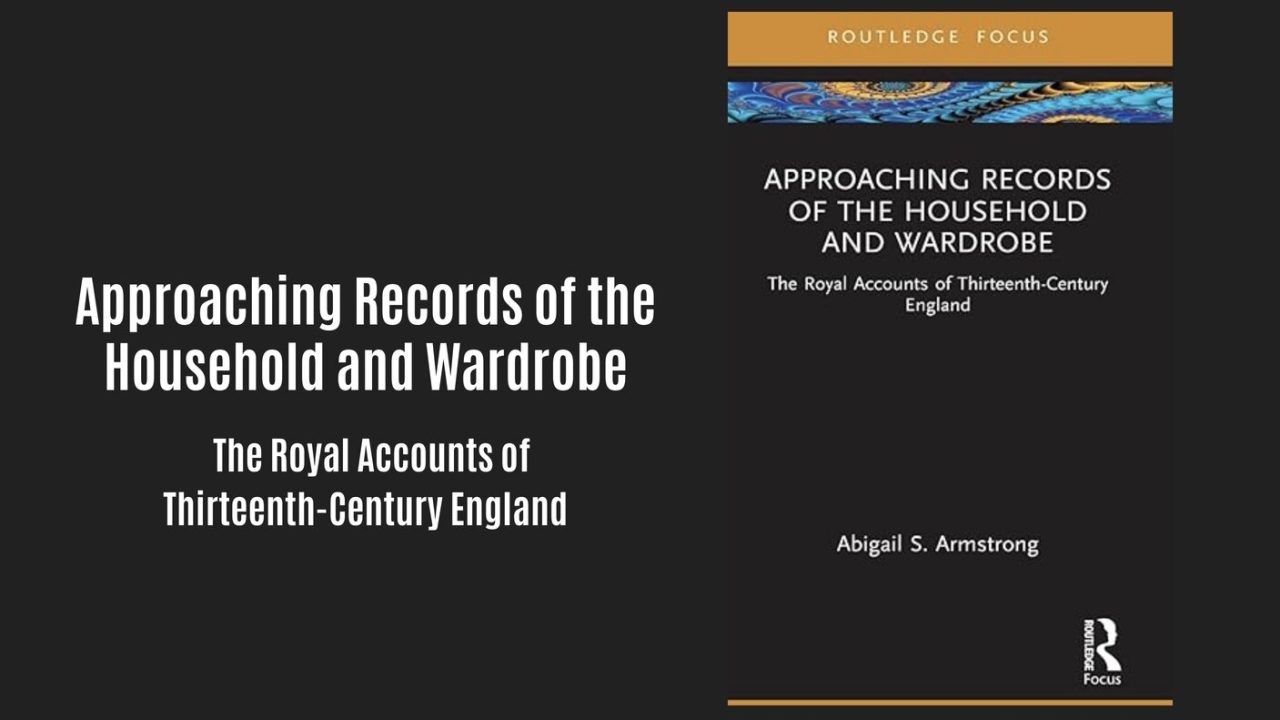
What did a medieval king eat for breakfast? How much did it cost to run a royal household in the thirteenth century? And what do those answers tell us about how England was actually governed? A new academic book is making it easier than ever to find out — by guiding historians through one of the most overlooked sets of royal records from the Middle Ages.
Approaching Records of the Household and Wardrobe: The Royal Accounts of Thirteenth-Century England, written by postdoctoral researcher Abigail S. Armstrong and published by Routledge, offers a focused guide to the Household and Wardrobe Accounts — documents that tracked the daily needs of the English king and his family during a pivotal century of royal administration.
For anyone studying medieval English government, these records are a goldmine. But they can be difficult to navigate without context. Armstrong’s book addresses that gap directly, making these sources accessible to researchers who might otherwise not know where to start.
What the Household and Wardrobe Accounts Actually Are
The Household and Wardrobe Accounts are English administrative records that document, in considerable detail, the day-to-day expenses and operations of the royal household. Think of them as the financial ledgers of the medieval monarchy — not grand political proclamations, but granular records of what the crown spent, needed, and consumed.
The “Wardrobe” in this context doesn’t refer to a closet. In medieval government, the Wardrobe was a department that evolved alongside the royal household, handling finances and administration in ways that were often more flexible and responsive than older, more formal institutions. Understanding how these departments functioned — and changed — is central to understanding how royal power actually operated on a practical level.
Armstrong’s book focuses specifically on what she calls “the long thirteenth century,” spanning from the reign of King John, which began in 1199, through to the death of Edward I in 1307. This isn’t an arbitrary window. As the book’s excerpt explains, this period was chosen because of the significant changes in practices, departments, and roles that took place across those roughly 110 years. Looking at the medieval corpus as a whole would blur distinctions that matter enormously to historians trying to understand how royal administration evolved.
Key Details: What the Book Covers
The book is structured to serve as both an introduction and a practical tool. Here’s what readers can expect from it:
- An explanation of what the Household and Wardrobe Accounts are and how historians can use them
- A focus on the long thirteenth century, from King John (1199–1216) to the death of Edward I (1307)
- Two case studies drawn from records connected to real historical queens
- Practical guidance on navigating these sources for research purposes
The two case studies are particularly notable. Armstrong draws on records connected to Queen Eleanor of Provence and Queen Margaret of France, using their household accounts to demonstrate what these documents can reveal when examined carefully. These are real women whose lives and roles at the English court can be illuminated through administrative paperwork — a reminder that dry-looking financial records often contain deeply human stories.
| Detail | Information |
|---|---|
| Title | Approaching Records of the Household and Wardrobe: The Royal Accounts of Thirteenth-Century England |
| Author | Abigail S. Armstrong |
| Publisher | Routledge |
| ISBN | 978-1-032-26755-5 |
| Period Covered | Reign of King John (1199–1216) to death of Edward I (1307) |
| Case Studies | Queens Eleanor of Provence and Margaret of France |
| Author Affiliation | Postdoctoral researcher, University of Hamburg |
Why These Records Matter Beyond the Archive
It’s easy to think of medieval administrative records as niche material — relevant only to specialists working in dusty archives. But the Household and Wardrobe Accounts offer something broader: a window into how power was organized, maintained, and exercised in a period that shaped the foundations of English governance.
The thirteenth century was not a quiet one. It saw Magna Carta, baronial conflicts, crusades, and the gradual formalization of institutions that would eventually evolve into recognizable government departments. The royal household sat at the center of all of it. Tracking what the king spent — on food, staff, travel, gifts, and administration — reveals the machinery behind the politics.
For researchers focusing on queens and royal women specifically, the case studies in Armstrong’s book signal that these accounts are not just records of male power. The lives, expenses, and administrative footprints of queens like Eleanor of Provence and Margaret of France are embedded in these documents, waiting to be read carefully.
The book is also noted as pairing well with Approaching Pipe Rolls: The Thirteenth Century, suggesting it fits into a broader effort to make medieval English administrative sources more accessible to modern scholars.
Who Should Read This Book
Armstrong’s work is described as an excellent introduction to an important set of royal records. It’s aimed squarely at those studying English administration in the thirteenth and early fourteenth centuries, whether at the graduate level or beyond.
That said, the book’s approach — starting with what the sources are before showing how to use them — makes it accessible to readers who are coming to these records for the first time. Historians working on medieval queenship, royal finance, government departments, or the daily life of the court would all find relevant material here.
Armstrong is currently a postdoctoral researcher at the University of Hamburg, and this book reflects the kind of specialized, source-focused scholarship that helps move an entire field forward by lowering the barrier to entry for new researchers.
Frequently Asked Questions
What are the Household and Wardrobe Accounts?
They are English records that document the daily needs and expenses of the king and his family during the medieval period.
What time period does Armstrong’s book cover?
The book focuses on the long thirteenth century, from the reign of King John (1199–1216) through the death of Edward I in 1307.
Why does the book focus only on the thirteenth century rather than the entire medieval period?
According to the author, this period was chosen because of the significant changes in practices, departments, and roles that took place during those years, which make it a distinct and coherent subject of study.
Who are the queens featured in the case studies?
The two case studies are based on records connected to Queen Eleanor of Provence and Queen Margaret of France.
Who is the author and where is she based?
Abigail S. Armstrong is a postdoctoral researcher at the University of Hamburg.
Is this book suitable for readers new to medieval administrative history?
Yes — it is described as an excellent introduction that begins by explaining what the accounts are and how historians can use them, making it accessible to those new to these sources.

Leave a Reply