
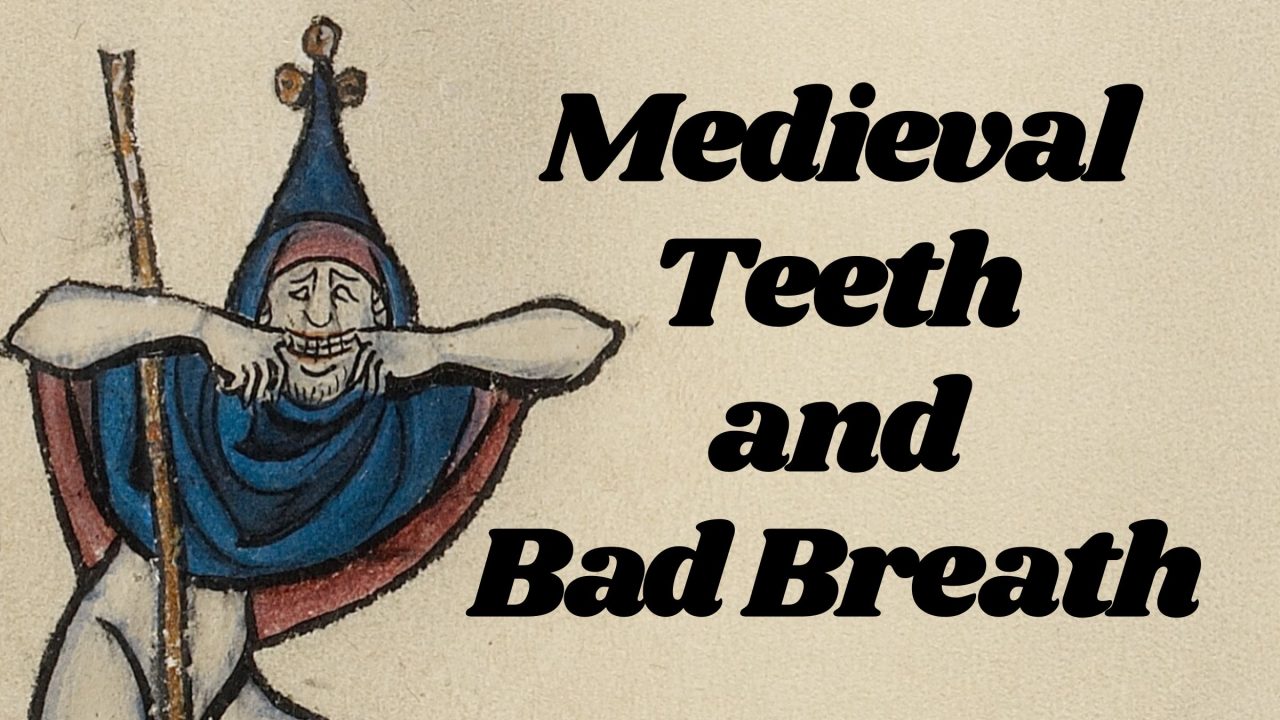
The idea that medieval people wandered around with rotting teeth and breath that could clear a room is one of history’s most persistent myths. But what do the actual historical sources say? Quite a lot — and most of it contradicts the stereotype entirely.
A closer look at medieval medical texts, literary works, and archaeological evidence reveals that people living in the Middle Ages were not only aware of dental problems, but actively concerned about the appearance of their teeth and the smell of their breath. Far from being indifferent to oral health, they developed practices and written traditions around it that challenge everything the modern imagination tends to assume.
Research drawing on a wide range of primary sources — from literary narratives to medical treatises — makes the case that medieval society recognised the importance of oral hygiene in ways that have largely been forgotten or dismissed.
What the Historical Sources Actually Show About Medieval Dental Health
The sources examined in this area span both literature and medicine, and together they paint a picture of a society that took teeth and breath seriously. On the literary side, works such as Ci nous dit, Aucassin et Nicolette, and Yvain ou le Chevalier au lion contain references that reflect real social attitudes toward oral health and physical appearance.
On the medical side, texts including De curis mulierum, Catholica magistri Salerni, and the writings of Hildegard of Bingen and Henri de Mondeville all address dental conditions and hygiene. These were serious scholarly and medical works, not casual observations — which tells us that oral health was considered a legitimate and important area of medical concern.
The fact that these sources come from such different traditions — religious literature, courtly romance, practical medicine, and natural philosophy — suggests that awareness of dental health cut across different parts of medieval society, not just among physicians or the elite.
The Medieval Texts That Challenged the Rotten-Teeth Myth
What makes this research particularly compelling is the diversity of the evidence. It is not just one obscure medical manual — it is a pattern that emerges across multiple genres and centuries.
- Literary works like Aucassin et Nicolette and Yvain ou le Chevalier au lion reflect social norms around physical appearance, including the condition of teeth, suggesting these were matters of personal and social concern.
- Medical treatises such as De curis mulierum and Catholica magistri Salerni addressed dental conditions in practical terms, indicating that treatment and prevention were active areas of medical thought.
- Hildegard of Bingen, the 12th-century abbess and polymath, contributed writings that touched on health and the body, including aspects of oral care.
- Henri de Mondeville, a medieval surgeon, also addressed dental and oral health in his medical writings.
- Archaeological evidence complements the textual record, offering physical confirmation that medieval people experienced dental conditions and, by implication, sought ways to address them.
| Source Type | Examples | What They Reveal |
|---|---|---|
| Literary narratives | Ci nous dit, Aucassin et Nicolette, Yvain ou le Chevalier au lion | Social attitudes toward teeth and oral appearance |
| Medical treatises | De curis mulierum, Catholica magistri Salerni | Practical dental knowledge and treatment approaches |
| Natural philosophy / medicine | Writings of Hildegard of Bingen, Henri de Mondeville | Formal medical engagement with oral health |
| Archaeological evidence | Physical remains | Real-world confirmation of dental conditions and care |
Why This Matters Beyond Medieval History
This might seem like a niche academic question, but it touches on something much broader: how we construct the past, and why we so often construct it as worse than it was.
The “bad teeth, bad breath” stereotype of the Middle Ages serves a psychological function. It makes the present feel more advanced, more civilised, more hygienic by comparison. But when the actual evidence is examined — the texts people wrote, the medical knowledge they developed, the social norms they held — the gap between then and now looks considerably smaller.
Medieval people were concerned about tooth loss. They were attentive to the appearance of their teeth. They cared about the smell of their breath. These are not modern preoccupations projected backward — they are documented in the sources those people left behind.
The patron saint of dentists, toothache sufferers, and people with dental diseases was St. Apollonia of Alexandria, and depictions of her appear in medieval art as early as the 15th century — a reminder that dental suffering was real, recognised, and significant enough to warrant its own saintly intercessor.
Tooth Loss, Dental Pain, and the Reality of Medieval Mouths
None of this means medieval dental health was equivalent to modern standards. Without contemporary dentistry, fluoride, or the understanding of bacterial causes of decay, tooth loss and dental pain were genuine and widespread problems. The sources acknowledge this directly.
What the evidence does not support is the idea that medieval people were indifferent to these problems, or that they lacked the intellectual framework to understand and address them. Quite the opposite — they developed medical traditions, literary reflections, and practical remedies around oral health that deserve to be taken seriously.
Even fictional stories from the period, such as the tale of “The Matron of Ephesus” found in Ci nous dit, are noted by researchers as likely reflecting real social realities of the time — not pure invention, but literature grounded in lived experience.
Frequently Asked Questions
Did medieval people really have bad teeth?
Historical sources suggest medieval people experienced dental problems including tooth loss and decay, but they were also aware of oral health and actively concerned about it — contradicting the idea that they were simply indifferent to dental hygiene.
What medical texts addressed dental health in the Middle Ages?
Several texts are documented as addressing oral health, including De curis mulierum, Catholica magistri Salerni, and the writings of Hildegard of Bingen and Henri de Mondeville.
Who was the patron saint of dentists in the Middle Ages?
St. Apollonia of Alexandria was the patron saint of dentists, toothache sufferers, and people with dental diseases, and was depicted in medieval art as early as the 15th century.
Did medieval literature reflect concerns about oral health?
Yes — works such as Aucassin et Nicolette, Yvain ou le Chevalier au lion, and Ci nous dit all contain references that reflect medieval social attitudes toward teeth and oral appearance.
Is there archaeological evidence for medieval dental care?
Yes, archaeological evidence is cited alongside textual sources as part of the broader picture of medieval awareness of and response to dental conditions.
Why do people assume medieval people had poor oral health?
The stereotype likely persists because it reinforces a sense of modern progress, but when primary historical sources are examined, the picture is considerably more nuanced than the popular image suggests.


Leave a Reply