
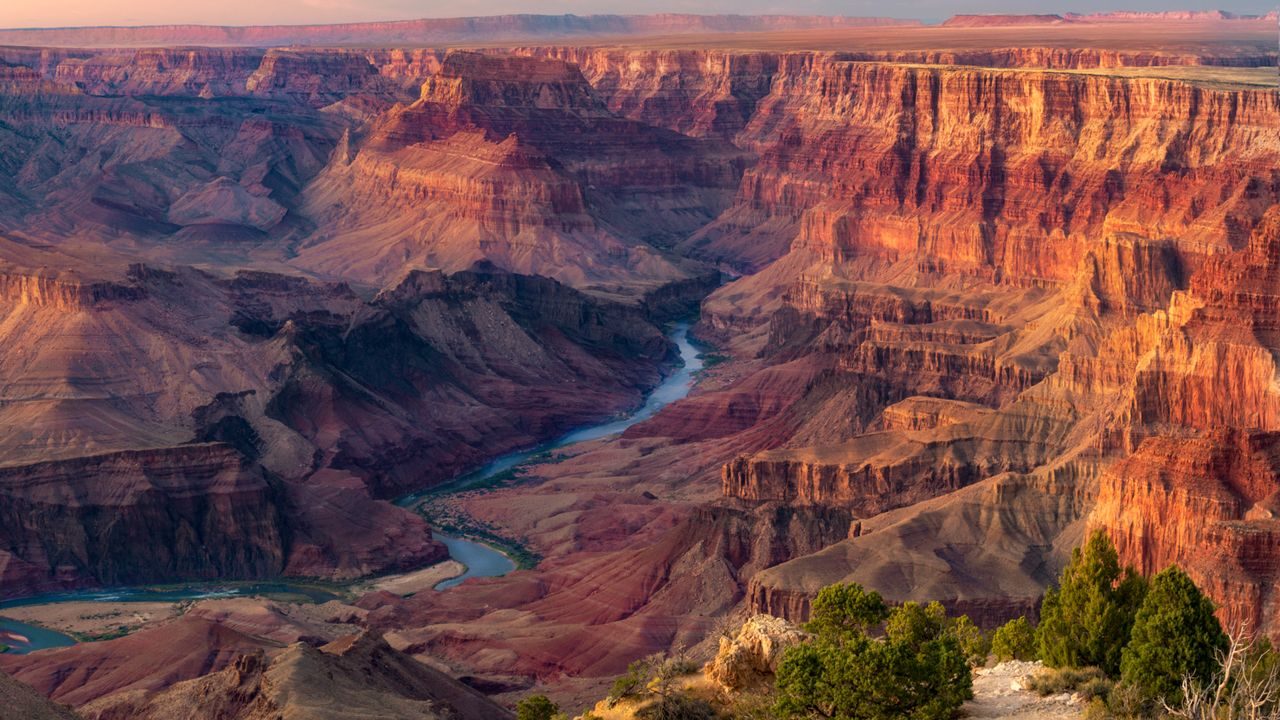
One of the most visited natural wonders on Earth has kept geologists arguing for decades — and a new study may have just offered the most compelling answer yet to a question that has puzzled scientists for generations: how exactly did the Colorado River carve the Grand Canyon?
The answer, according to new research, may involve something far more dramatic than a river simply cutting downward over millions of years. Scientists now believe the Colorado River may have first pooled into an enormous ancient lake before eventually spilling over and unleashing the erosive force that formed one of the world’s most recognizable landscapes.
Not everyone is convinced. But the evidence researchers point to is hard to ignore — and it pushes the timeline of the canyon’s formation into sharper focus than ever before.
The “Lake Spill” Theory Behind the Grand Canyon’s Formation
The new study centers on a geological formation in northern Arizona known as the Bidahochi Basin, which sits upstream of the Grand Canyon. Researchers found tiny sediment grains in this basin that were carried there from the upper Colorado River watershed. Crucially, those grains were already present by 6.6 million years ago.
That single data point matters enormously. It suggests the Colorado River was already connected to the region upstream of the canyon by that point — far earlier than some competing theories have proposed. The implication is that the river pooled in this basin, forming a vast inland lake, before eventually breaching its natural barrier and spilling downstream with enough force to begin carving the canyon we see today.
Think of it like a bathtub overflowing. Water accumulates, pressure builds, and when it finally finds a way out, the result is catastrophic erosion on a geological scale. That overflow event, researchers suggest, is what set the Grand Canyon’s formation in motion.
What the Sediment Evidence Actually Shows
The key to this research lies in those sediment grains — specifically, their origin. Sediment acts like a fingerprint. Grains carried by water from one region carry the geological signature of where they came from, allowing scientists to trace ancient river pathways even millions of years after the fact.
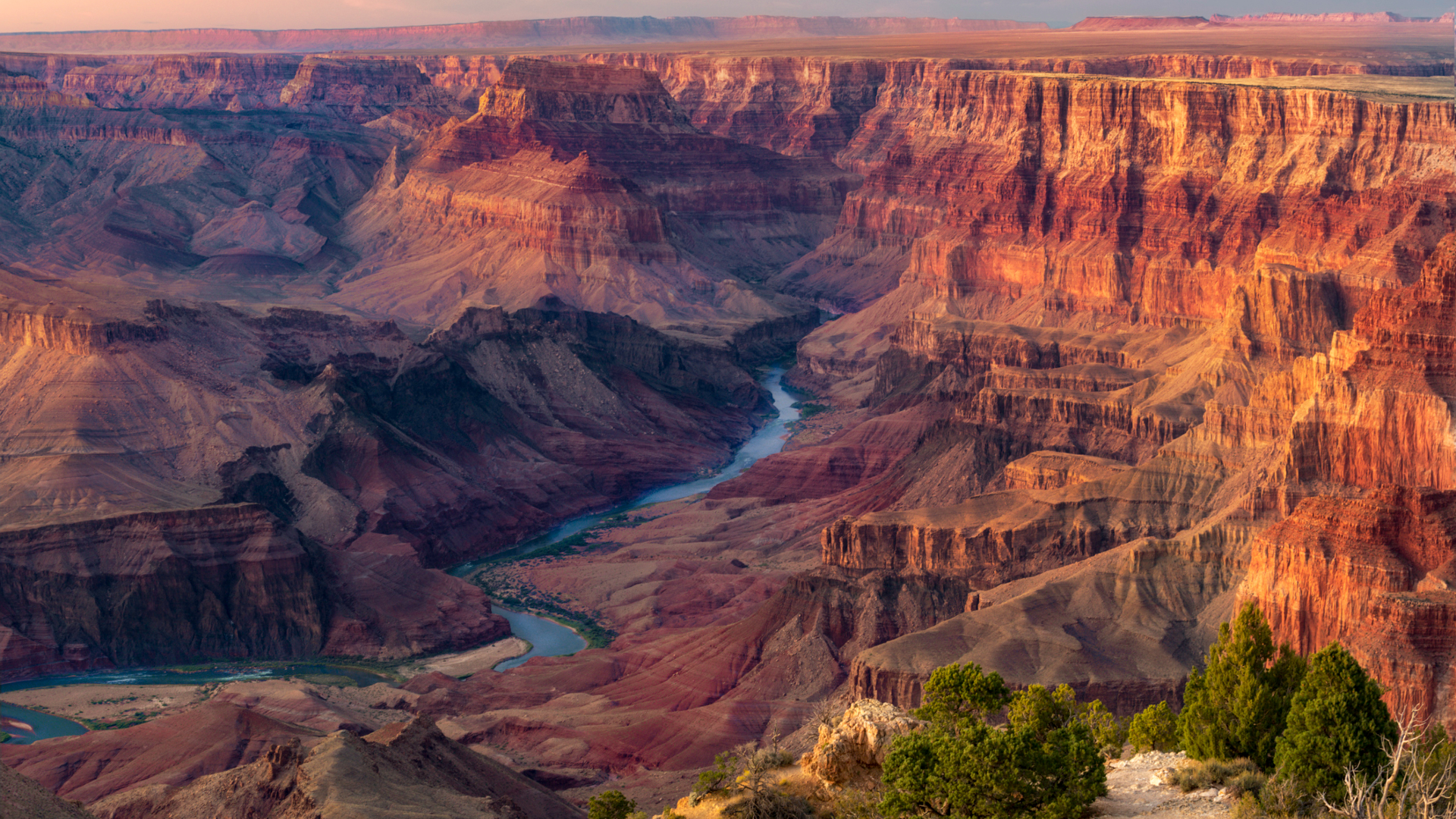
By identifying grains in the Bidahochi Basin that matched material from the upper Colorado River watershed, researchers were able to establish that water from the upper river system was reaching this basin well before the canyon itself fully formed. That connection is the foundation of the lake-spill hypothesis.
The findings help fill in what has been described as a significant gap in understanding how the Colorado River system developed and ultimately produced the Grand Canyon — a structure roughly 277 miles long, up to 18 miles wide, and more than a mile deep in places.
| Key Detail | What the Research Found |
|---|---|
| Location studied | Bidahochi Basin, upstream of the Grand Canyon in northern Arizona |
| Evidence type | Tiny sediment grains traced to the upper Colorado River watershed |
| Key date established | Sediment grains present by 6.6 million years ago |
| Proposed mechanism | Colorado River pooled as a giant lake, then spilled downstream to carve the canyon |
| Scientific consensus | Disputed — not all researchers agree with the interpretation |
Why This Has Been Such a Hard Mystery to Solve
The age and origin of the Grand Canyon has been one of geology’s most persistent debates. Competing theories have proposed wildly different timelines — some arguing the canyon is relatively young at around 5 to 6 million years old, others suggesting portions of it are much older, potentially 70 million years or more.
The challenge is that the geological record is incomplete. Rock layers erode, ancient river channels disappear, and dating techniques each come with their own margins of uncertainty. Pinpointing exactly when, how, and in what sequence the canyon formed has required researchers to piece together evidence from dozens of locations across the Colorado Plateau.
The lake-spill model offers an attractive explanation because it accounts for how a river system might have connected across a large, relatively flat basin before finding a downhill path. Supporters of the theory argue it explains sediment patterns that other models struggle to reconcile.
Critics, however, contend that the sediment evidence can be interpreted in other ways, and that the presence of upstream grains in the Bidahochi Basin doesn’t necessarily confirm a pooling lake as the trigger for canyon formation. The debate, in other words, is very much alive.
Why It Matters Beyond the Science
For most people, the Grand Canyon is simply one of the most breathtaking places on the planet — visited by roughly six million people each year. But understanding how it formed has real implications beyond satisfying scientific curiosity.
The Colorado River today is the primary water source for roughly 40 million people across seven U.S. states and parts of Mexico. Understanding the long-term behavior of the river system — how it has historically moved, pooled, and carved its way through rock — informs how scientists model its future behavior in an era of drought and climate change.
Research into the canyon’s geological past also helps scientists better understand how large river systems respond to tectonic changes, sea level shifts, and climate variation over millions of years. Those patterns carry lessons that extend well beyond the American Southwest.
What Researchers Will Be Watching Next
The new findings are framed as a significant step forward, but researchers acknowledge the study fills in only part of the picture. The sediment data establishes a timeline for when the upper Colorado River was connected to the Bidahochi Basin region — but the precise mechanics of how and when the lake eventually spilled and triggered canyon carving still require further investigation.
Future research is likely to focus on additional sediment sampling across the region, refined dating techniques, and closer examination of rock formations both upstream and downstream of the canyon. Each new data point either strengthens or complicates the lake-spill model, and the scientific community will be watching closely as more evidence comes in.
For now, the Grand Canyon holds onto at least part of its mystery — which, for a landmark that has inspired wonder for centuries, feels entirely appropriate.
Frequently Asked Questions
What is the new theory about how the Grand Canyon formed?
Researchers suggest the Colorado River pooled into a giant lake in the Bidahochi Basin in northern Arizona before eventually spilling over and carving the Grand Canyon through erosion.
What evidence supports the lake-spill theory?
Scientists found tiny sediment grains in the Bidahochi Basin that were carried from the upper Colorado River watershed and were present there by 6.6 million years ago, suggesting an early upstream connection.
Is this theory universally accepted by scientists?
No — the study notes that not all researchers agree with the interpretation, and the theory remains a subject of active scientific debate.
How old is the Grand Canyon according to current research?
The age of the Grand Canyon is itself contested among geologists, with estimates ranging widely depending on which evidence and dating methods researchers rely on.
Why does the formation of the Grand Canyon matter today?
Understanding the Colorado River’s long-term geological behavior has practical relevance for water resource management, as the river supplies water to approximately 40 million people across the American Southwest.
Where is the Bidahochi Basin?
The Bidahochi Basin is located in northern Arizona, upstream of the Grand Canyon, and is the primary location where the new sediment evidence was studied.

Leave a Reply