
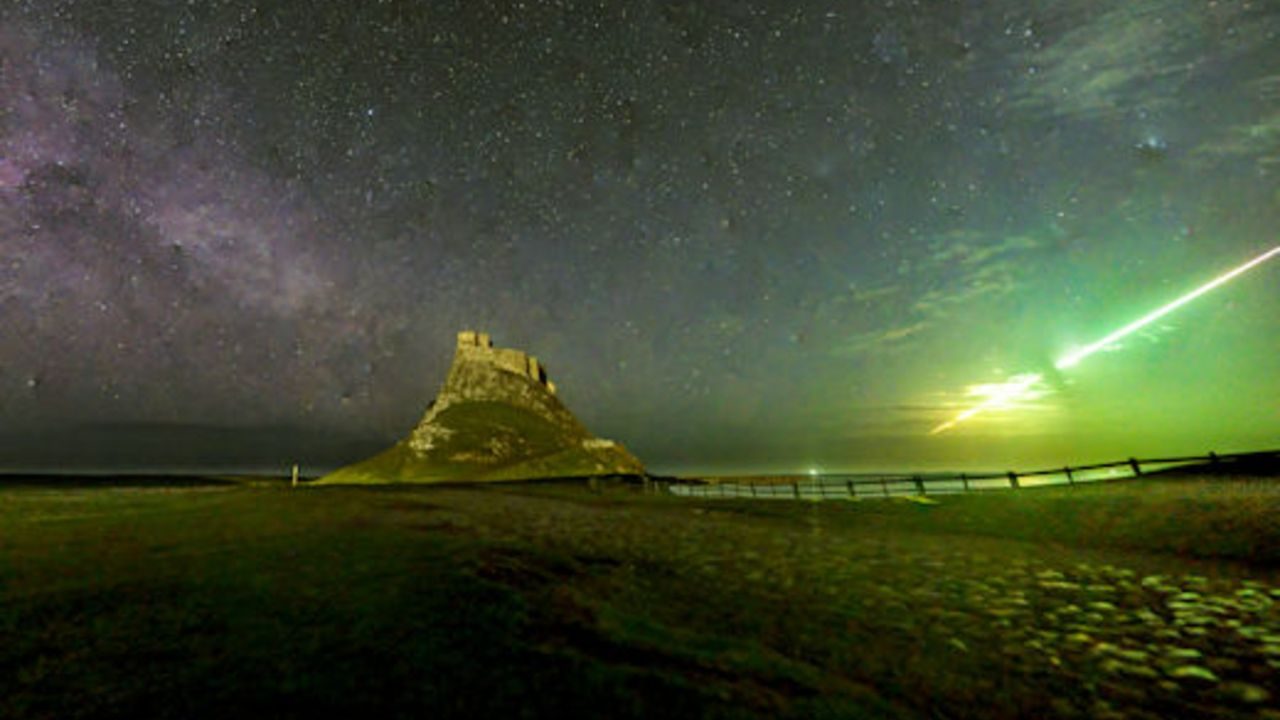
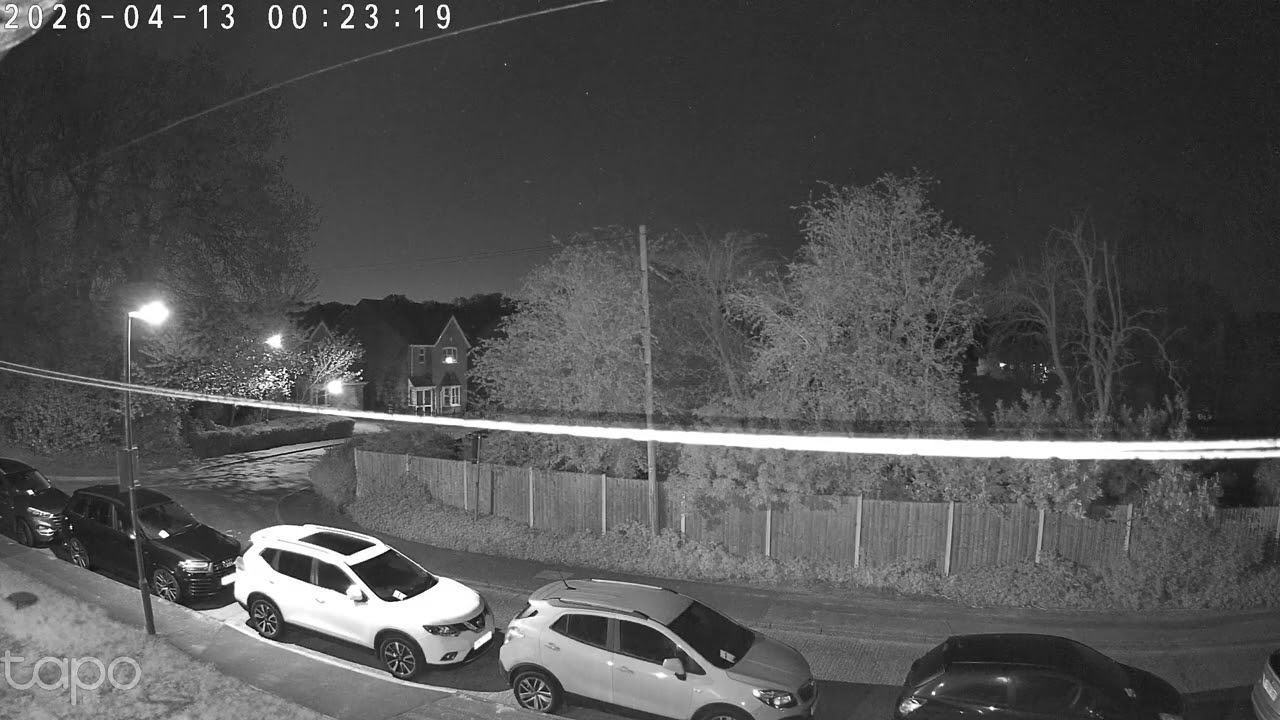
Just after midnight on a Monday in northeast England, the sky above one of the most historically charged stretches of coastline in the British Isles suddenly lit up — not with lightning, but with a blazing streak of bright green fire.
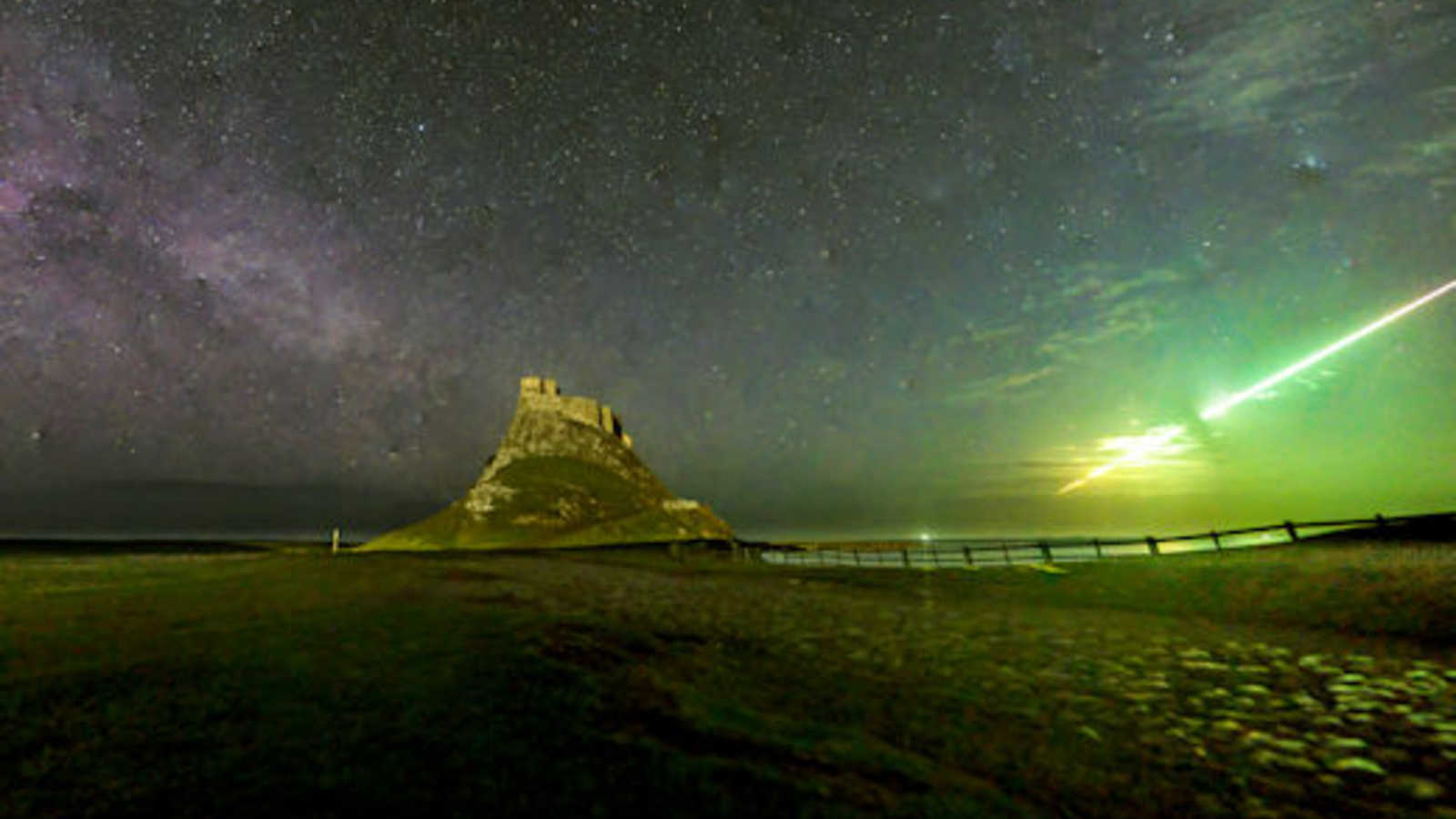
A meteor exploded above the North Sea on April 13, breaking apart as it tore through Earth’s atmosphere and producing a vivid green fireball that was captured on camera above Lindisfarne Castle — the iconic fortress on Holy Island, the very site of the Viking raid in 793 AD that historians mark as the beginning of the Viking Age in Britain.
March is lighting up ☄️ This month has seen the most fireball sightings since 2012, with multiple bright meteors streaking across skies in the U.S. and Europe. https://t.co/U7KheegzaL pic.twitter.com/P5PPpZUMK1
— AccuWeather (@accuweather) March 26, 2026
The photographer who caught the moment, Ian Sproat (who shoots under the handle @mje_photography_ne), was out with others shooting the Milky Way when the fireball tore across the frame. The result is one of the most striking accidental captures in recent UK astrophotography — a space rock exploding directly over a place that has witnessed more than a thousand years of dramatic history.
What Actually Happened in the Sky That Night
Meteors become visible when space rocks — ranging from pebbles to boulders — enter Earth’s atmosphere at high speed and begin to burn up due to friction with air molecules. When a meteor is bright enough to be seen from the ground and produces a dramatic flash or explosion, it earns the classification of a fireball.
The green color is particularly striking and scientifically telling. That distinctive hue is typically associated with the presence of magnesium in the meteor’s composition. As the rock burns, different elements emit different colors of light — magnesium produces green, sodium produces orange-yellow, and ionized oxygen and nitrogen in the surrounding atmosphere can contribute blues and purples. A bright green fireball like the one over Lindisfarne is a strong visual indicator of a magnesium-rich space rock.
The meteor exploded — meaning it fragmented or produced a terminal burst — above the North Sea, off England’s east coast. Events like this, while dramatic, are not especially rare on a global scale. What made this one remarkable was the timing, the location, and the fact that a camera was already pointed at the sky.
Why Lindisfarne Makes This Moment Unforgettable
Lindisfarne, also called Holy Island, sits just off the Northumberland coast in northeast England. It’s accessible by a tidal causeway and is home to the ruins of a priory and the castle that features so prominently in Sproat’s photograph.
The site holds enormous historical weight. In 793 AD, Norse raiders attacked the monastery at Lindisfarne in what is widely considered the first major Viking raid on British soil. That single event sent shockwaves through the Christian world of early medieval Europe and is commonly cited as the opening chapter of the Viking Age in Britain — a period of raids, settlement, and cultural exchange that would reshape the British Isles over the following three centuries.
To see a fireball — described in ancient and medieval sources as an omen, a portent, a sign from the heavens — exploding directly above this location carries a certain undeniable poetic weight, even for those who don’t believe in omens.
Key Facts at a Glance
| Detail | Information |
|---|---|
| Date of fireball | Monday, April 13 (shortly after midnight local time) |
| Location above | North Sea, off the east coast of England |
| Visible from | Lindisfarne Castle, northeast England |
| Fireball color | Bright green |
| Photographer | Ian Sproat / @mje_photography_ne |
| Original activity | Milky Way photography session |
| Historical significance of site | Location of 793 AD Viking raid, considered start of Viking Age in Britain |
- The meteor broke apart upon entering Earth’s atmosphere, producing the explosive flash
- Green fireballs are associated with magnesium-rich meteor compositions
- The event occurred just after midnight, while photographers were already set up for night sky shooting
- Lindisfarne Castle is one of the most photographed historic landmarks in northeast England
The Part of This Story Most Reports Are Missing
There’s something quietly remarkable about the circumstances here that goes beyond the spectacle. The photographers weren’t chasing a meteor shower or responding to an alert. They were out to photograph the Milky Way — a slow, patient pursuit that requires dark skies, clear weather, and a willingness to stand in the cold for hours. The fireball was entirely unplanned.
That’s how most great fireball photographs happen. You can’t schedule a meteor explosion. You can only be outside, camera pointed at the sky, and get lucky. The fact that Sproat had Lindisfarne Castle framed in the shot transformed what would have been a dramatic sky event into an image with genuine historical resonance.
Fireballs over the UK are reported to the UK Meteor Observation Network and similar citizen science groups on a fairly regular basis, but events bright enough and well-positioned enough to be photographed against a landmark backdrop are genuinely rare. This one will likely remain one of the standout captures of 2025.
What Happens After a Fireball Like This
When a fireball is observed over a populated area, meteor observation networks typically collect reports from multiple witnesses to help triangulate the object’s trajectory, entry angle, and potential landing zone — in cases where fragments might have survived to become meteorites.
Whether any fragments of this particular meteor survived the journey through the atmosphere and landed in or near the North Sea has not been confirmed. The ocean is an unforgiving place to search for meteorites, and most recovered space rocks come from land-based falls where witnesses report sonic booms or see material descend.
For now, what remains is the photograph — a bright green streak frozen above a castle that has watched the sky for over a thousand years.
Frequently Asked Questions
When did the green fireball appear over Lindisfarne Castle?
The fireball was observed on Monday, April 13, shortly after midnight local time, above the North Sea off the east coast of England.
Why was the fireball green?
Green fireballs are generally associated with the burning of magnesium present in the meteor’s composition, which emits green light as it combusts at high temperatures.
Who photographed the fireball?
The image was captured by photographer Ian Sproat, who shoots under the Instagram handle @mje_photography_ne, while he and others were out photographing the Milky Way.
Why is Lindisfarne historically significant?
Lindisfarne, or Holy Island, was the site of a Viking raid in 793 AD — widely considered the first major Norse attack on British soil and the event that marks the beginning of the Viking Age in Britain.
Did any meteorite fragments land on the ground?
This has not been confirmed. The meteor exploded above the North Sea, making recovery of any surviving fragments extremely unlikely.
Is it common to see fireballs over the UK?
Fireball events are reported in the UK with some regularity, but capturing one on camera against a historic landmark is considered a rare and fortunate coincidence.



Leave a Reply