
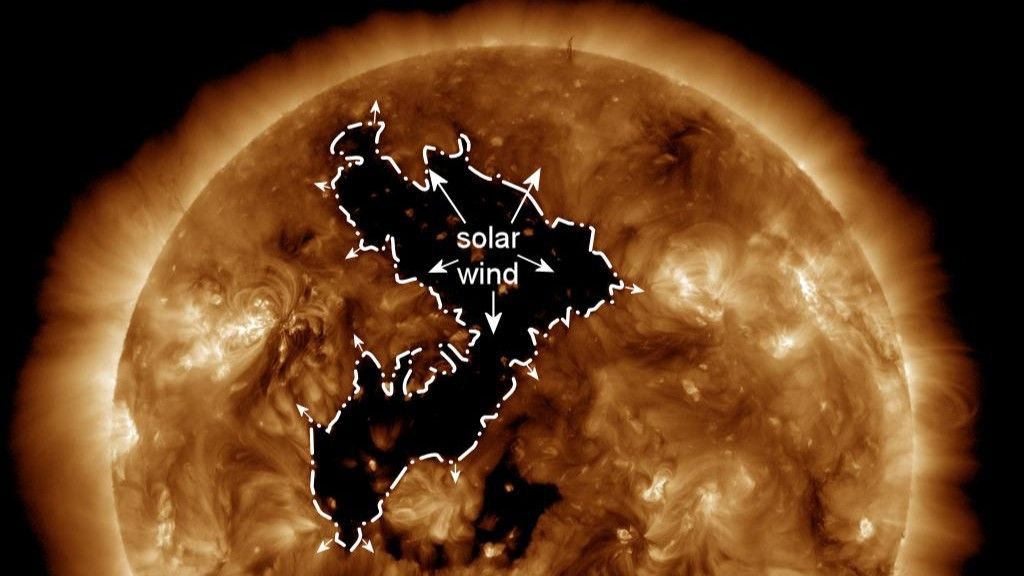
A giant hole has opened up in the sun’s atmosphere — and if you live in the northern United States, this weekend could be your best chance in months to catch the northern lights dancing across the sky.
According to the National Oceanic and Atmospheric Administration’s (NOAA) Space Weather Prediction Center, auroras may be visible as far south as Idaho and New York on Friday night, April 17, and into early Saturday morning, April 18. That’s a remarkably wide viewing window for the continental U.S., and skywatchers in northern states are already watching the forecast closely.
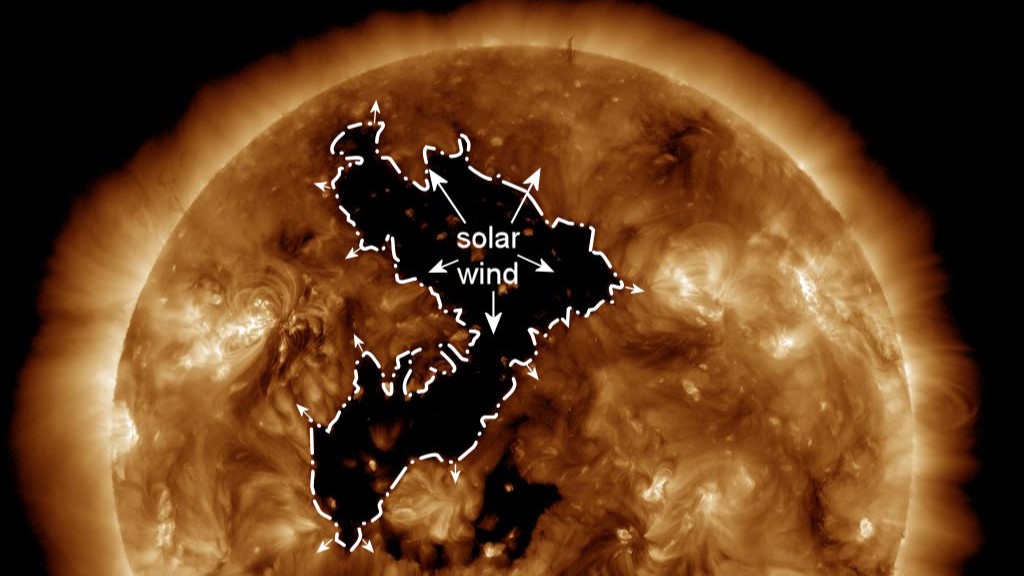
The cause? A large coronal hole that has opened up in the sun’s atmosphere this week, sending a stream of solar wind hurtling toward Earth. It’s one of those rare natural events that turns an ordinary Friday night into something worth staying up for.
What Is a Coronal Hole — and Why Does It Matter?
The sun’s outer atmosphere, known as the corona, is constantly in motion. Most of the time, its magnetic field keeps solar material relatively contained. But sometimes, regions of the corona open up where the magnetic field lines stretch outward into space rather than looping back to the surface. These regions are called coronal holes.
When a coronal hole forms, it acts like an open valve. High-speed streams of charged particles — collectively called solar wind — pour out into the solar system. When that stream is directed toward Earth, it interacts with our planet’s magnetic field in a dramatic way.
The result is a geomagnetic storm. And geomagnetic storms are what produce auroras — the shimmering curtains of green, red, and purple light that paint the night sky near the poles. The stronger the storm, the farther south those lights can be seen.
NASA’s Solar Dynamics Observatory captured imagery of this week’s coronal hole, and the scale of the opening is significant. Events like this are a reminder that even from 93 million miles away, the sun has a direct and visible effect on life here on Earth.
Where the Northern Lights Could Be Visible This Weekend
The NOAA Space Weather Prediction Center’s forecast puts the viewing zone well into the contiguous United States. That’s not something that happens every week — or even every month.
Here’s what S. states
| Region | Southernmost Predicted Visibility | Peak Viewing Window |
|---|---|---|
| Western U.S. | Idaho | Friday night, April 17 – Early Saturday, April 18 |
| Eastern U.S. | New York | Friday night, April 17 – Early Saturday, April 18 |
| Northern U.S. (general) | Multiple states | Friday night, April 17 – Early Saturday, April 18 |
States north of these reference points — think Montana, Minnesota, Michigan, Vermont, and the Pacific Northwest — will likely have the strongest and most reliable views. But even those on the southern edge of the forecast zone have a real shot if skies stay clear.
How to Actually See the Aurora This Weekend
Knowing the lights might appear is one thing. Giving yourself the best chance to see them is another. Aurora viewing comes down to a few practical factors that anyone can control.
Darkness matters most. Light pollution from cities washes out auroral displays, especially when the storm intensity is moderate. If you’re in or near a major metro area, even a 20- or 30-minute drive away from city lights can make a significant difference in what you’re able to see.
Timing is everything. Auroras tend to be most active around local midnight, though displays can begin earlier in the evening during stronger events. The window described by NOAA spans Friday night into early Saturday, so plan to be outside and watching between roughly 10 p.m. and 2 a.m. local time.
Check the sky, not just the forecast. Cloud cover is the enemy of aurora watching. A geomagnetic storm can be raging above the clouds and you’ll see nothing from the ground. Check your local weather forecast alongside the space weather forecast before heading out.
Your phone camera is your friend. Modern smartphone cameras often pick up auroral colors — especially green — more vividly than the naked eye does. If you think you might be seeing something faint, take a photo. You might be surprised what shows up on screen.
The Bigger Picture: Why Solar Activity Is Elevated Right Now
This weekend’s event doesn’t exist in isolation. The sun follows an approximately 11-year cycle of activity, moving between periods of solar minimum and solar maximum. Right now, the sun is near — or at — a period of heightened activity, which means coronal holes, solar flares, and geomagnetic storms are occurring more frequently than they were just a few years ago.
That’s actually good news for aurora enthusiasts. The increased solar activity means more opportunities like this one, where the northern lights push far enough south to be seen by tens of millions of people who wouldn’t normally have a chance to witness them.
Events like this also serve as a reminder of how connected Earth is to its star. The same solar wind that produces spectacular light shows can, at higher intensities, affect satellite communications, GPS accuracy, and even power grids. NOAA’s Space Weather Prediction Center monitors these conditions around the clock precisely because the stakes go beyond beautiful skies.
Frequently Asked Questions
When exactly can I see the northern lights this weekend?
NOAA’s Space Weather Prediction Center forecasts aurora visibility on Friday night, April 17, continuing into early Saturday morning, April 18.
How far south will the northern lights be visible?
According to the forecast, auroras may be visible as far south as Idaho in the west and New York in the east.
What is causing the northern lights this weekend?
A large coronal hole that opened in the sun’s atmosphere this week is sending a stream of solar wind toward Earth, triggering a geomagnetic storm and the resulting auroral activity.
Do I need special equipment to see the aurora?
No special equipment is required — the aurora can be visible to the naked eye under dark skies. Smartphone cameras can also help capture colors that may be faint to the human eye.
Which U.S. states have the best chance of seeing the aurora?
Northern states will have the strongest views, but the forecast extends as far south as Idaho and New York. States further north than those reference points — such as Montana, Minnesota, and Michigan — are well within the viewing zone.
Will there be more aurora events like this in the coming months?



Leave a Reply