
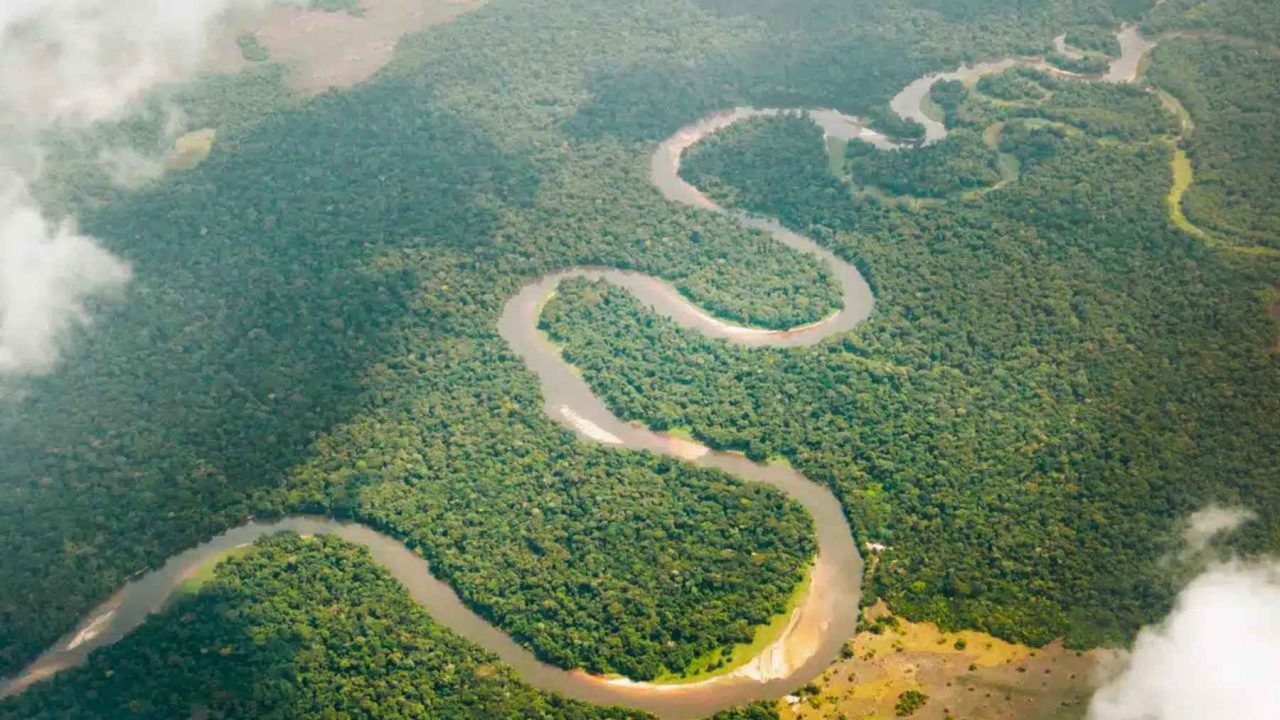
Deep in the heart of central Africa, two dark lakes are quietly doing something that has alarmed climate scientists: they are releasing carbon dioxide that was locked inside ancient peat thousands of years ago. The scale of what those lakes sit above makes this finding genuinely unsettling.
The Congo Basin’s peatlands cover only about 0.3% of Earth’s land surface, yet they hold roughly one-third of all the carbon stored in tropical peatlands worldwide, according to ETH Zurich. That is an extraordinary concentration of climate-critical material packed into a relatively small area — and new research suggests part of it is already on the move.
A study published in Nature Geoscience found that Lake Mai Ndombe and Lake Tumba, two lakes in the Congo Basin, are releasing CO₂ that contains carbon from ancient peat — material that had been safely locked underground for millennia. Scientists say this is forcing a fundamental rethink of how stable these carbon stores actually are.
Why the Congo Basin’s Peatlands Matter So Much
To understand why this discovery matters, you have to understand what tropical peatlands actually are. Peat forms when dead plant material builds up in waterlogged conditions faster than it can decompose. Over thousands of years, that process creates thick layers of organic carbon — essentially a slow-motion burial of ancient atmosphere.
The Congo Basin’s central peatland complex is one of the largest and most carbon-dense of these systems on Earth. According to Nature Geoscience, it stores an estimated 29 billion metric tons of carbon — roughly 32 billion U.S. tons. To put that in perspective, that is an enormous reservoir sitting in one of the most ecologically sensitive regions on the planet.
For a long time, scientists treated tropical peatlands largely as stable, slow-moving carbon vaults. The assumption was that while they could be disrupted by human activity like drainage and burning, the carbon stored deep within them was, for practical purposes, locked away. The new findings complicate that picture significantly.
What the Dark Lakes Are Actually Revealing
Lake Mai Ndombe and Lake Tumba are described as “dark lakes” — a reference to the color of their water, which is stained by the organic material draining into them from the surrounding landscape. That darkness is itself a clue. It signals that dissolved organic carbon, including material originating from peat, is moving through the water system.
Researchers found that the CO₂ being released from the surface of these lakes contains what is known as “ancient carbon” — carbon that has been radiocarbon-dated as thousands of years old. This is not freshly decomposed plant matter. It is material that had been buried in peat for a very long time, and it is now entering the modern carbon cycle.
That pathway — from buried peat, through water, and into the atmosphere — is the part that scientists say demands urgent attention. It suggests the peatlands are not simply sitting still. Some of their stored carbon is actively leaking through the hydrological system, even without the dramatic fires or large-scale drainage events that typically trigger concern.
The Numbers Behind the Concern
| Fact | Figure |
|---|---|
| Share of Earth’s land surface covered by Congo Basin peatlands | ~0.3% |
| Share of tropical peatland carbon held in the Congo Basin | ~one-third |
| Estimated carbon stored in central Congo peatland complex | 29 billion metric tons (~32 billion U.S. tons) |
| Lakes identified as releasing ancient carbon | Lake Mai Ndombe and Lake Tumba |
| Source of study findings | Nature Geoscience |
The numbers above help frame why even a small percentage of release carries serious implications. When you are dealing with tens of billions of tons of stored carbon, fractions of a percent still represent amounts that can meaningfully affect atmospheric CO₂ concentrations.
Why This Is More Disturbing Than a Simple Leak
The reason researchers describe this situation as especially troubling is not just the quantity of carbon involved — it is the mechanism. A leak caused purely by human activity like land drainage could, in theory, be addressed by changing land-use practices. But ancient carbon moving through a natural water system is a different kind of problem.
It raises the possibility that the hydrological cycle itself — the way water moves through the landscape, collecting and transporting dissolved material — is already acting as a conduit for peat carbon. If that process is being accelerated by climate change, warmer temperatures, or shifts in rainfall patterns, then the feedback loop becomes genuinely difficult to interrupt.
Researchers note that this discovery challenges the long-standing treatment of these peatlands as passive, stable stores. The lakes are, in effect, windows into what is happening beneath the surface — and what they are showing is that the boundary between “locked away” and “in circulation” is more porous than previously understood.
What Scientists Are Watching For Next
The immediate scientific priority is understanding the scale and rate of this carbon transfer. Knowing that ancient carbon is present in the lake emissions is one thing; quantifying exactly how much peat-derived carbon is entering the atmosphere annually, and whether that rate is changing, is the more complex question researchers are now working to answer.
The Congo Basin remains one of the least studied major ecosystems on Earth relative to its climate importance. Scientists argue that findings like this one make the case for sustained, long-term monitoring of both the lakes and the peatlands that feed into them. Without that baseline data, it will be very difficult to detect whether conditions are worsening over time.
For now, the two dark lakes have delivered a clear message: one of Earth’s most important carbon stores is not as sealed as the climate models assumed. That alone is enough to change the conversation.
Frequently Asked Questions
What are Lake Mai Ndombe and Lake Tumba?
They are two lakes in the Congo Basin that a new study has identified as releasing carbon dioxide containing ancient carbon sourced from the region’s peatlands.
How much carbon do the Congo Basin peatlands store?
According to Nature Geoscience, the central Congo peatland complex stores an estimated 29 billion metric tons of carbon, roughly equivalent to 32 billion U.S. tons.
What is “ancient carbon” and why does it matter?
Ancient carbon refers to carbon that has been locked in peat for thousands of years. When it re-enters the atmosphere, it adds to modern CO₂ levels in a way that natural systems have not accounted for in recent climate models.
Is human activity causing this carbon release?
Researchers identified the release through the lakes’ water systems, but whether human activity, climate change, or natural processes are the primary driver has not been fully established in the available findings.
How significant are the Congo Basin peatlands globally?
Despite covering only about 0.3% of Earth’s land surface, they hold roughly one-third of all carbon stored in tropical peatlands worldwide, making them one of the most carbon-dense ecosystems on the planet.
Where were these findings published?
The study was published in Nature Geoscience, with additional context provided by ETH Zurich.



Leave a Reply