
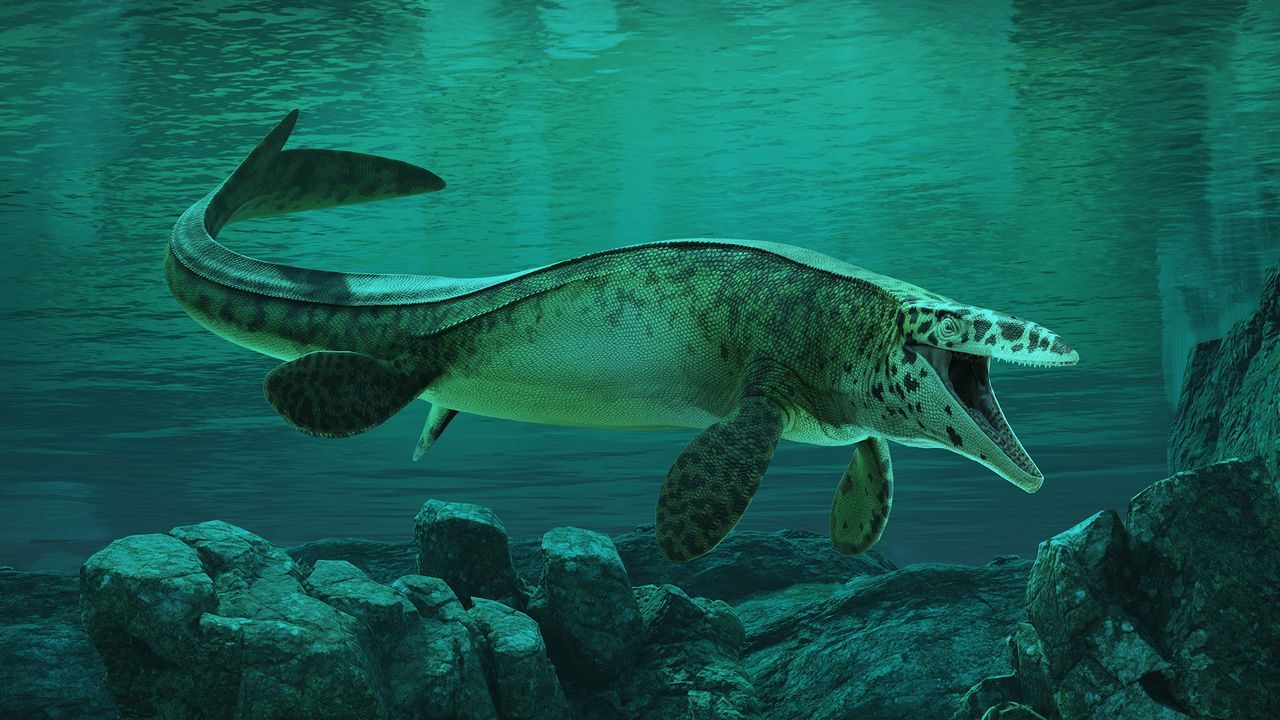
It shared a name with the most famous predator in dinosaur history — and it may have been just as terrifying. Scientists have officially named a new species of ancient marine reptile Tylosaurus rex, giving the ocean its own T. rex, and the creature more than lives up to the title.
The newly described species, detailed in a study published May 21 in the Bulletin of the American Museum of Natural History, belongs to the mosasaur family — a group of massive marine reptiles that ruled the seas during the same era that dinosaurs walked the land. Its fossils, roughly 80 million years old, were found mostly in northern Texas and had been sitting in collections for decades before researchers formally identified them as something new.
https://www.instagram.com/p/CoxzBTyvBba/
The species name means “king of the tylosaurs,” and based on what scientists have found, that title appears well-earned.
Meet the Ocean’s Own T. Rex
Mosasaurs were not dinosaurs, but they shared the Cretaceous period with them — living between approximately 145 million and 66 million years ago. They were air-breathing, predatory reptiles that dominated the ancient seas, and Tylosaurus rex was among the largest and most formidable of them all.
This particular species stretched up to 43 feet (13 meters) long — roughly the length of a full-sized tour bus. It had finely serrated teeth, unusually powerful jaws capable of a skull-crushing bite, and fossil evidence pointing to violent combat with members of its own species. Whatever was swimming in those ancient Texas waters had good reason to be cautious.
Study first author Amelia Zietlow, a research associate of paleontology at the American Museum of Natural History, captured the spirit of the find perfectly: “Everything is bigger in Texas and that includes the mosasaurs, apparently.”
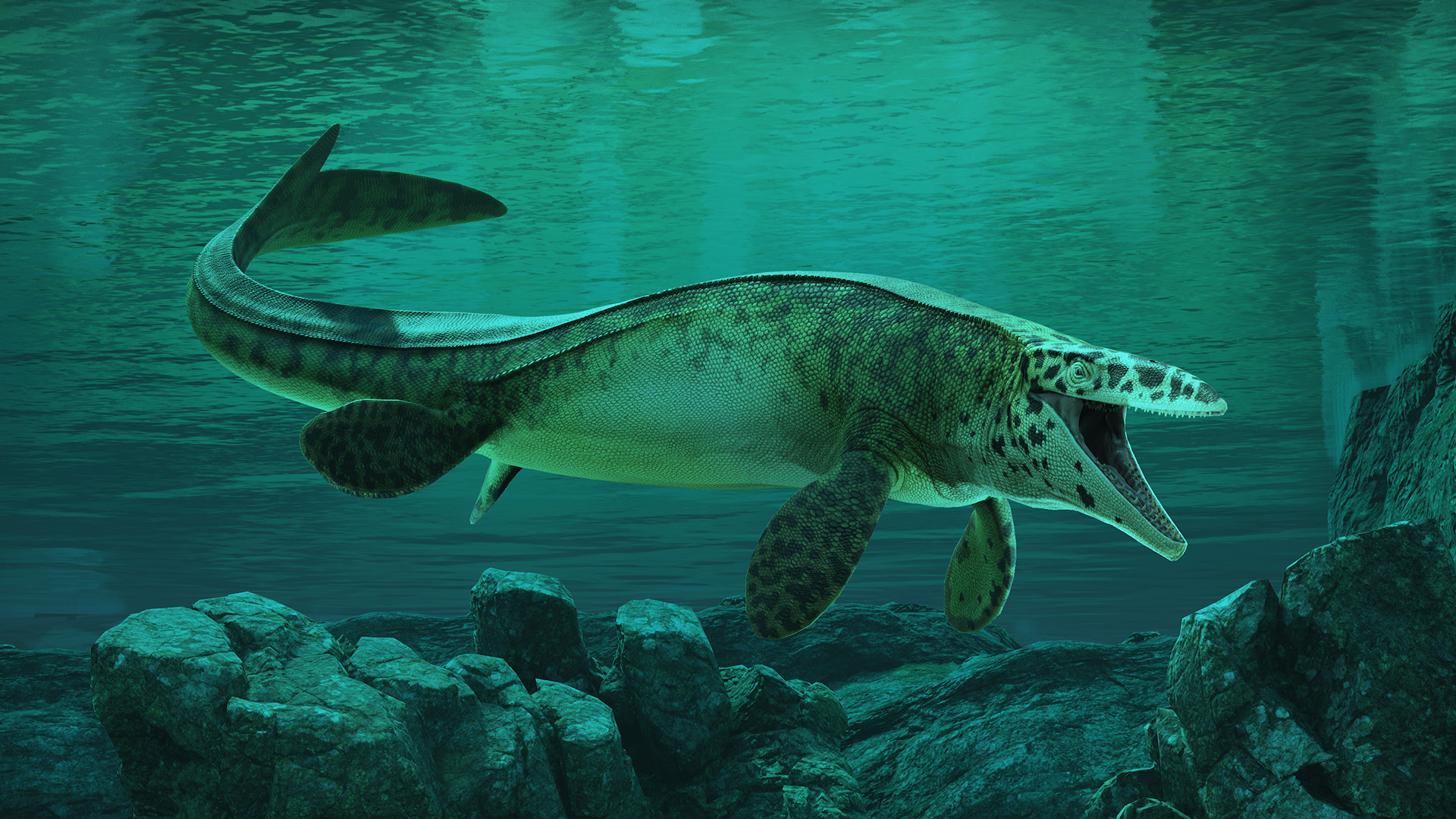
The discovery adds a significant new branch to the already well-studied Tylosaurus genus, separating this Texas giant from the other known mosasaur species in the group based on its distinct physical characteristics.
What Made Tylosaurus rex Stand Apart
Not every large marine reptile earns its own species designation. The researchers identified enough distinctive features in the Texas fossils to confirm this was something separate from previously known Tylosaurus species. The combination of extreme size, jaw structure, and tooth morphology set it apart.
- Length: Up to 43 feet (13 meters) — comparable to a tour bus
- Teeth: Finely serrated, built for gripping and tearing prey
- Jaws: Unusually powerful, suggesting a skull-crushing bite force
- Combat evidence: Fossil markings indicate violent fights with its own kind
- Age of fossils: Approximately 80 million years old
- Discovery location: Primarily northern Texas
The intraspecies combat evidence is particularly striking. Injuries preserved in the fossils suggest these animals were not only apex predators of the sea — they were also fierce competitors among themselves, which tells researchers something important about their social behavior and ecological dominance.
| Feature | Detail |
|---|---|
| Species name | Tylosaurus rex |
| Name meaning | King of the tylosaurs |
| Time period | Cretaceous (145–66 million years ago) |
| Fossil age | ~80 million years old |
| Size | Up to 43 feet (13 meters) |
| Fossil location | Northern Texas, USA |
| Published in | Bulletin of the American Museum of Natural History |
| Publication date | May 21 (study) |
Why This Discovery Matters Beyond the Name
The name Tylosaurus rex is an obvious nod to Tyrannosaurus rex, and it’s easy to dismiss that as a clever marketing move by paleontologists. But the parallel runs deeper than branding.
Just as T. rex was the apex land predator of its era, this mosasaur appears to have occupied a similarly dominant role in its marine environment. The skull-crushing jaw power, the serrated teeth, the sheer size — these are not the traits of an opportunistic scavenger. This was an animal built to rule.
The fact that the fossils had been collected in Texas for decades before being formally described as a new species is also a reminder of how much paleontological discovery still happens in museum drawers and storage collections, not just in the field. Researchers continue to find new species by re-examining material that had been catalogued but never fully studied.
For the broader scientific community, adding a species of this size and distinctiveness to the Tylosaurus genus also helps clarify the diversity and geographic range of mosasaurs during the late Cretaceous period — a time when a shallow inland sea covered much of what is now the central United States.
What Researchers Are Looking At Next
The formal species description published in May 2025 opens the door to further comparative study. With a clear taxonomic identity now established, researchers can more precisely examine how Tylosaurus rex relates to other mosasaur species, what its presence in Texas tells us about the ecology of the ancient Western Interior Seaway, and whether additional specimens sitting in other collections might belong to the same species.
The combat evidence preserved in the fossils is also likely to attract further attention. Understanding how and why these animals fought — territory, mating, dominance — could add a new dimension to what scientists know about mosasaur behavior specifically and large marine predator behavior more broadly.
For now, the ocean has its own T. rex — and it was every bit as formidable as the name suggests.
Frequently Asked Questions
What is Tylosaurus rex?
Tylosaurus rex is a newly described species of mosasaur, a large marine reptile that lived during the Cretaceous period. Its name means “king of the tylosaurs.”
How big was Tylosaurus rex?
The species reached up to 43 feet (13 meters) in length, roughly the size of a tour bus.
Where were the fossils found?
The fossils were discovered mostly in northern Texas and are approximately 80 million years old.
Is Tylosaurus rex related to Tyrannosaurus rex?
No — despite the shared nickname, Tylosaurus rex was a marine reptile, not a dinosaur. The species name is a nod to its dominant status among tylosaurs, not a biological connection to T. rex.
What makes this species different from other Tylosaurus species?
Researchers identified it as a distinct species based on its extreme size, unusually powerful jaws, finely serrated teeth, and fossil evidence of violent combat with its own kind.
Where was the study published?
The study was published on May 21 in the Bulletin of the American Museum of Natural History, with Amelia Zietlow of the American Museum of Natural History as the first author.



Leave a Reply