
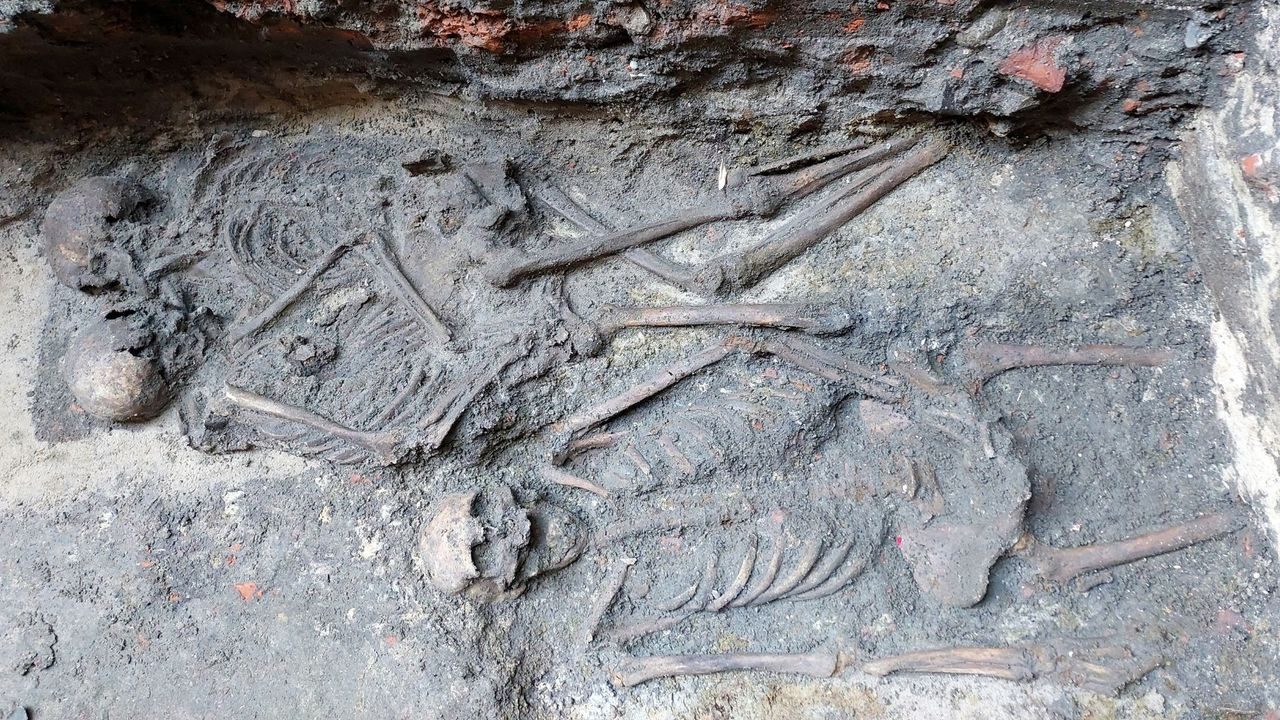
Eight hundred years ago, two women were buried together in an embrace inside one of Poland’s most prominent medieval churches — and a new DNA analysis has just confirmed what their bones have silently suggested for centuries.
The so-called “hugging skeletons,” unearthed during archaeological excavations at the 13th-century Cathedral of the Exaltation of the Holy Cross in Opole, Poland, have now been genetically identified as two unrelated women. Researchers say this makes the burial the first known same-sex double burial in medieval Poland — a discovery that has sparked serious questions about who these women were and what their relationship meant in a deeply religious medieval society.
The excavations took place between 2022 and 2025, and the DNA findings have only added to the mystery surrounding this remarkable find.
What Was Found Inside the Cathedral
The skeletons were discovered during archaeological investigations at the cathedral in Opole, a city in southwestern Poland. The church dates to the 13th century, making it a significant religious and social landmark of medieval Poland — which adds even more weight to the unusual nature of what was found inside.
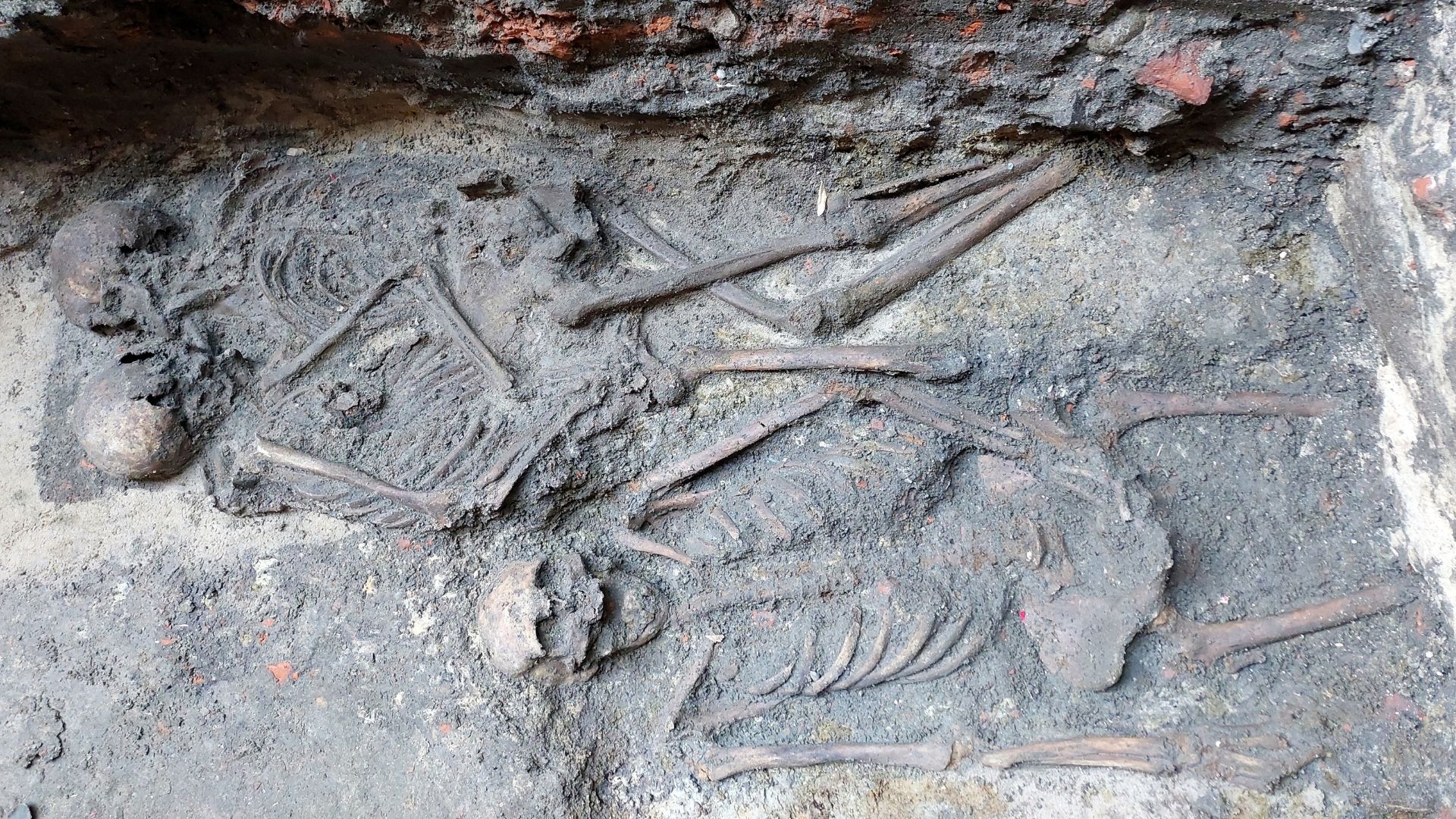
One of the two individuals had been buried in a manner entirely consistent with Christian burial rites of the time: lying on their back, arms placed along the sides of the body. The second individual, however, had been positioned quite differently — placed on their side, with one arm beneath the other person, as though the two were locked in an embrace.
That deliberate, intimate positioning is what originally drew attention to the burial. A single grave, a prominent church, two people intertwined — it was, by any medieval standard, deeply unusual.
What the DNA Analysis Actually Revealed
For years, the identities of the two individuals remained unknown. The new genetic analysis changed that. According to the research, both individuals were confirmed to be women, and crucially, the DNA showed they were not genetically related to one another.
That second finding matters enormously. A shared grave between two relatives — sisters, a mother and daughter — would carry one kind of meaning. Two unrelated women buried together in an embrace, inside a cathedral, is something else entirely.
“The discovery of an atypical burial in such a unique setting naturally raised questions about the nature of the relationship between the individuals buried together in a single grave,” said Agata Cieślik, a biological anthropologist at the Ludwik Hirszfeld Institute of Immunology and Experimental Therapy in Poland.
Cieślik’s comment, shared with Live Science, reflects the careful, measured tone researchers have taken — acknowledging the significance of the find without overclaiming what the evidence can definitively prove.
Key Facts About the Hugging Skeletons Discovery
| Detail | Confirmed Information |
|---|---|
| Location | Cathedral of the Exaltation of the Holy Cross, Opole, Poland |
| Estimated age of burial | Approximately 800 years old |
| Excavation period | 2022 to 2025 |
| Sex of individuals | Both confirmed female via DNA analysis |
| Genetic relationship | Not genetically related to each other |
| Historical significance | First known same-sex double burial in medieval Poland |
| Lead researcher | Agata Cieślik, Ludwik Hirszfeld Institute of Immunology and Experimental Therapy |
- One individual was buried following standard Christian burial rites — on their back, arms at their sides.
- The second individual was placed on their side, with one arm beneath the other person, suggesting an intentional embrace.
- The burial took place inside a prominent 13th-century cathedral, indicating the individuals likely held some social or religious standing.
- DNA confirmed both biological sex and the absence of any close family relationship between the two women.
Why This Discovery Challenges What We Know About Medieval Life
Medieval burial practices were not random. Where you were buried, how your body was positioned, and who you were buried with all carried meaning — social, spiritual, and familial. Being interred inside a cathedral, rather than in a churchyard or common ground, typically indicated status or significance within the community.
The fact that one woman was buried according to orthodox Christian rites while the other was placed in an atypical position — turned toward the first, arm extended — suggests the arrangement was intentional. Someone made a deliberate choice to place these two women together in this way.
What that choice signified is the question researchers are now grappling with. The relationship between the two women remains unconfirmed. They could have been close companions, devoted friends, or something more. Medieval historical records rarely documented the lives of women in detail, making it difficult to cross-reference archaeological findings with written sources.
What is clear is that whoever arranged this burial considered the bond between these two women significant enough to memorialize it in stone — inside one of the most sacred spaces available to medieval Polish society.
What Researchers Are Asking Next
The DNA confirmation is a major step, but it opens as many questions as it closes. Researchers are now focused on understanding the broader context of the burial — including what additional analysis of the skeletal remains and the surrounding archaeological site might reveal about the women’s lives, health, and social position.
The excavation at the Cathedral of the Exaltation of the Holy Cross ran from 2022 to 2025, and findings from that work are still being analyzed and published. Further isotopic or osteological studies could potentially shed light on where the women came from, what they ate, and what physical hardships they endured — details that could help build a fuller picture of who they were.
For now, the hugging skeletons of Opole remain one of medieval archaeology’s most quietly powerful finds: two women, buried together, eight centuries ago, still raising questions that no one has fully answered.
Frequently Asked Questions
Where were the hugging skeletons found?
They were discovered during archaeological excavations at the 13th-century Cathedral of the Exaltation of the Holy Cross in Opole, Poland, between 2022 and 2025.
How do researchers know both individuals were women?
A new DNA analysis confirmed that both individuals were biologically female.
Were the two women related to each other?
No. The DNA analysis confirmed that the two women were not genetically related to one another.
Why is this burial considered historically significant?
Researchers describe it as the first known same-sex double burial in medieval Poland, making it a unique archaeological find with no known precedent in the region.
What was unusual about the way they were buried?
One woman was buried according to standard Christian rites of the time, while the other was placed on her side with one arm beneath the first individual — a position that appears to depict an intentional embrace.
Do researchers know what the relationship between the two women was?
Not yet. The nature of their relationship has not been confirmed, and researchers have acknowledged that the unusual burial naturally raises questions they are still working to answer.



Leave a Reply