
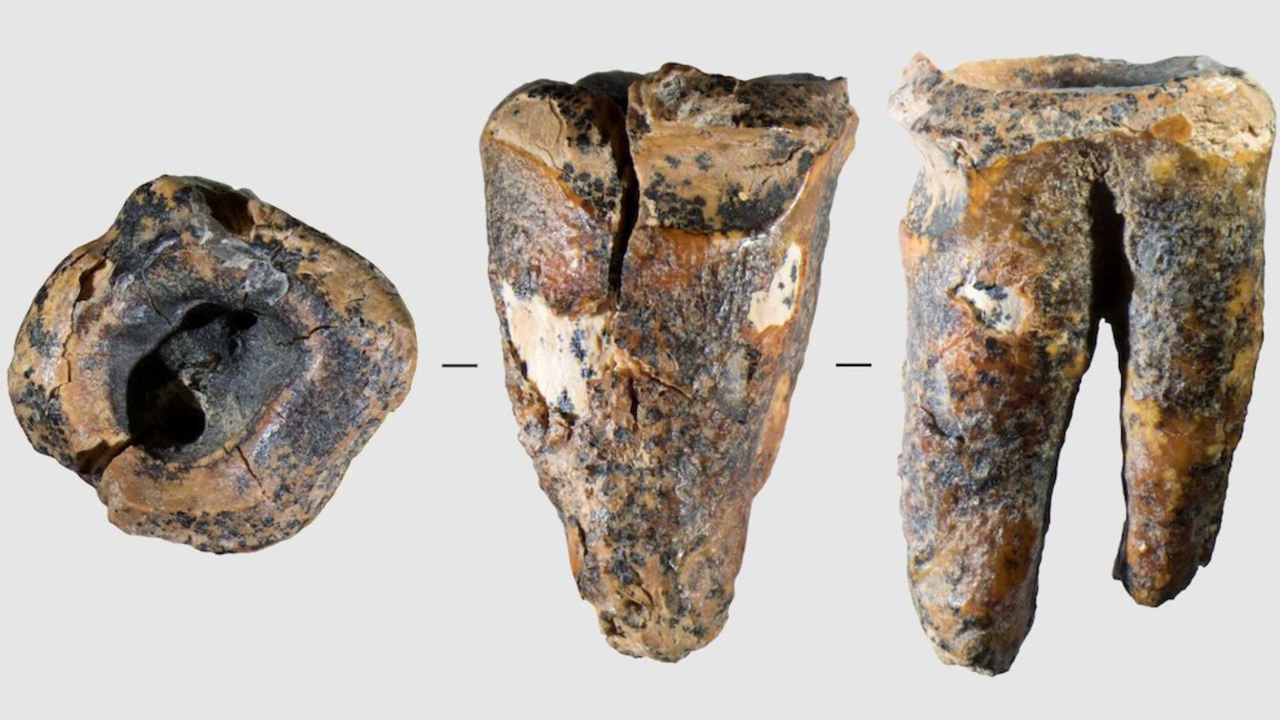
Sixty thousand years ago, deep inside a cave in what is now Siberia, a Neanderthal sat still while someone used a small stone tool to drill into a rotting tooth. That moment — painful, precise, and purposeful — has now been identified as the oldest known evidence of intentional dental treatment in human history.
A new study published Wednesday, May 13, in the journal PLOS One confirms that a lower molar tooth unearthed in 2016 from Chagyrskaya Cave in Russia bears the marks of deliberate dental intervention. The roughly 59,000-year-old tooth belonged to a Neanderthal adult, and researchers say the deep hole found in its surface was made with a small stone drill — used to scrape out severely decayed tooth tissue.
It is the kind of discovery that forces a rethink of everything we assume about early human intelligence, capability, and care.
What the Tooth Actually Reveals About Neanderthal Dentistry
When the molar was first excavated from Chagyrskaya Cave — a site Neanderthals used as a campsite in what is now Russia — researchers could see there was a hole in it, but the cause was not immediately clear. Natural decay, animal damage, or accidental breakage could all theoretically produce similar marks.
What changed the picture was experimental work. Researchers recreated the drilling process using small stone tools and compared the results to the ancient tooth under close analysis. The evidence pointed firmly in one direction: the hole had been deliberately made to clean out rotten tissue from a severely decayed cavity.
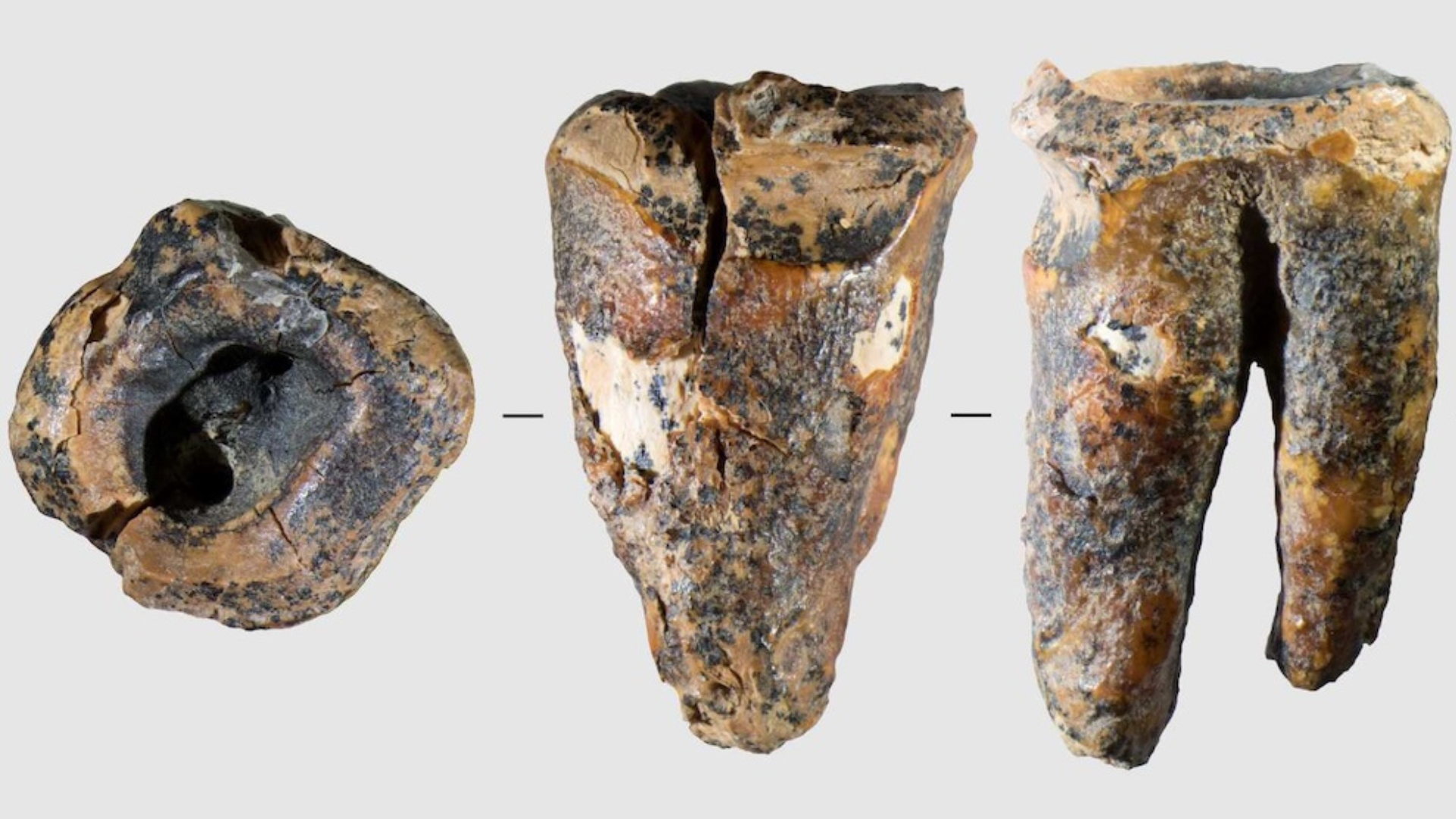
This was not a casual scratch or accidental mark. The procedure required recognizing that a cavity existed, deciding it needed treatment, selecting an appropriate tool, and then executing a physically delicate operation inside someone’s mouth. That is a sequence of steps that demands planning, knowledge, and considerable fine motor skill.
Study co-author John W. Olsen put it plainly in the source reporting:
“The fact that this invasive treatment took place and the person survived lends me to believe that this is another example of the really very sophisticated Neanderthal understanding of human biology and when you need to intervene.”
Key Facts About the Discovery
| Detail | Information |
|---|---|
| Age of the tooth | Approximately 59,000 years old |
| Location found | Chagyrskaya Cave, Russia (Siberia) |
| Year of excavation | 2016 |
| Type of tooth | Lower molar belonging to a Neanderthal adult |
| Tool used | Small stone drill |
| Purpose of procedure | Cleaning out severely decayed tooth tissue |
| Study published in | PLOS One, May 13 |
| Significance | Oldest known evidence of intentional dental treatment |
- Neanderthals lived from approximately 400,000 to 40,000 years ago
- They are considered our closest human relatives
- Chagyrskaya Cave was used by Neanderthals as a campsite
- The study describes the tooth as “exceptional” in its preservation and the clarity of the drilling marks
Why This Changes How We See Neanderthals
For a long time, Neanderthals occupied a dim corner of the popular imagination — brutish, limited, shuffling through Ice Age Europe without much going on upstairs. That picture has been falling apart for years, and this discovery adds another significant crack to it.
Performing a dental procedure is not instinct. It requires a mental model of the body — an understanding that an internal problem can be addressed through external action. It requires communication, because someone had to hold still while another person worked. And it requires enough trust between individuals that one Neanderthal would allow another to put a sharp stone tool inside their mouth.
The fact that the individual survived the procedure matters too. This was not a botched experiment. Something worked well enough that the patient lived — which suggests the Neanderthals performing these treatments had some accumulated knowledge about how to do it safely.
Researchers describe this as evidence of a “sophisticated Neanderthal understanding of human biology.” That phrase carries real weight. Understanding biology means observing cause and effect, remembering outcomes, and passing knowledge between individuals or generations. These are not simple behaviors.
What This Means for the Broader Story of Human Intelligence
The Chagyrskaya Cave tooth does not stand alone. It joins a growing body of evidence suggesting Neanderthals were far more cognitively complex than early anthropologists credited. Previous research has pointed to Neanderthal use of pigments, feathers for decoration, and the construction of structures. Dental care fits naturally into that emerging picture.
What makes this find particularly striking is the specificity of the skill involved. Drilling into a tooth — even with a stone implement — demands control over small, precise movements. The hands doing this work had to be steady. The person guiding the drill had to know when to stop. These are not gross motor actions; they are fine-tuned, deliberate, and practiced.
The study’s authors use the word “invasive” to describe the treatment, and that word choice is deliberate. This was not rubbing a plant on sore gums. Someone physically entered another person’s tooth with a tool and removed material. By any reasonable definition, that is dentistry.
What Researchers Are Looking at Next
The study, now published and peer-reviewed in PLOS One, opens several avenues for further investigation. Researchers will likely examine other Neanderthal teeth from Chagyrskaya Cave and similar sites for comparable marks. If this procedure was performed once, the reasoning goes, it may have been performed more than once — and possibly by individuals who learned the technique from others.
There is also the question of what, if anything, Neanderthals used alongside the drilling. Modern dentistry does not stop at removing decay — it fills the cavity afterward. Whether Neanderthals took any similar step remains an open question that the current source material does not confirm.
What is confirmed is this: 59,000 years ago, in a cave in Siberia, someone recognized a problem, found a solution, and carried it out successfully. That is a story about intelligence — and it belongs to Neanderthals.
Frequently Asked Questions
Where was the Neanderthal tooth found?
The tooth was unearthed from Chagyrskaya Cave in Russia, a site in Siberia that Neanderthals used as a campsite.
How old is the drilled tooth?
The molar is approximately 59,000 years old, making the dental treatment it shows the oldest known intentional dental procedure in human history.
How do researchers know the hole was drilled deliberately?
Experimental evidence using small stone tools recreated marks consistent with those found on the tooth, pointing to deliberate drilling rather than natural decay or accidental damage.
What tool was used to drill the tooth?
Researchers believe a small stone drill was used to clean out severely decayed tissue from the cavity.
When was the tooth originally discovered?
The tooth was first excavated in 2016, though the significance of the hole in its surface was not confirmed until the new study published in May in PLOS One.
Did the Neanderthal survive the dental procedure?
Yes — study co-author John W. Olsen noted that the individual survived the treatment, which researchers say supports the idea that Neanderthals had a sophisticated understanding of biology and how to intervene effectively.



Leave a Reply