
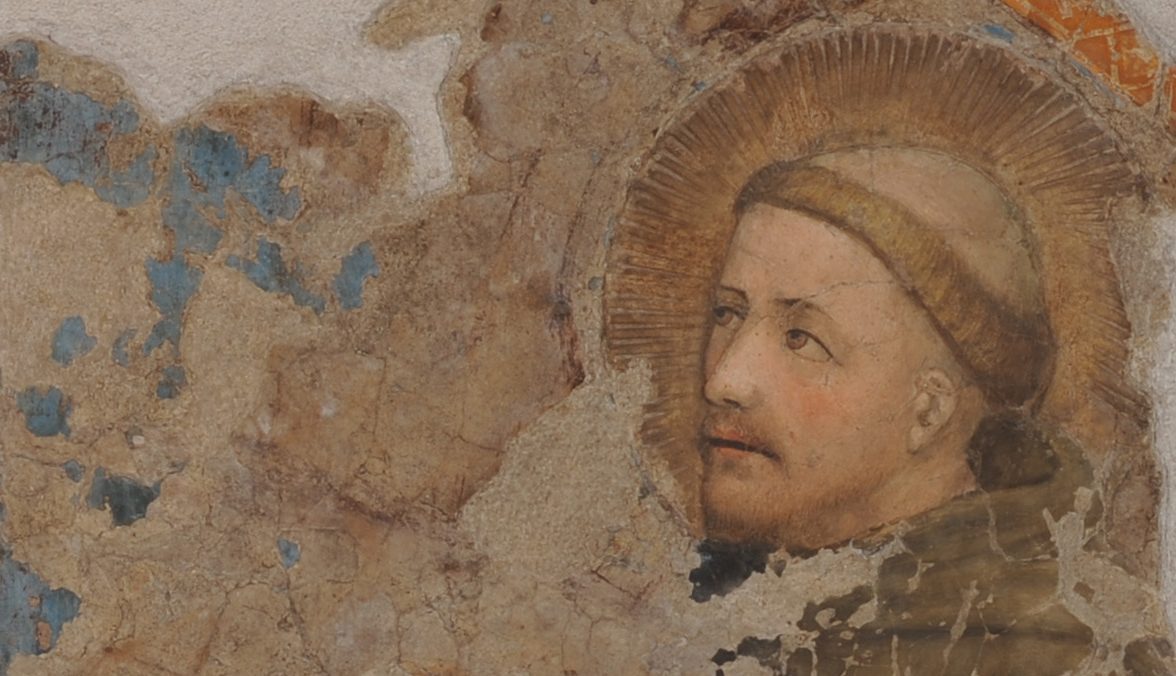
Eight hundred years after his death, Saint Francis of Assisi is being honoured not just with prayers and pilgrimages, but with one of Italy’s most ambitious medieval art exhibitions in years — and at its heart is a pairing that changed the course of Western art forever.
Italy is marking the 800th anniversary of the death of Saint Francis with a major spring exhibition that places his enduring legacy alongside the revolutionary work of Giotto, the painter widely credited with transforming how sacred figures could be depicted on walls and panels. The result is a show that promises to be as much about artistic upheaval as it is about religious history.
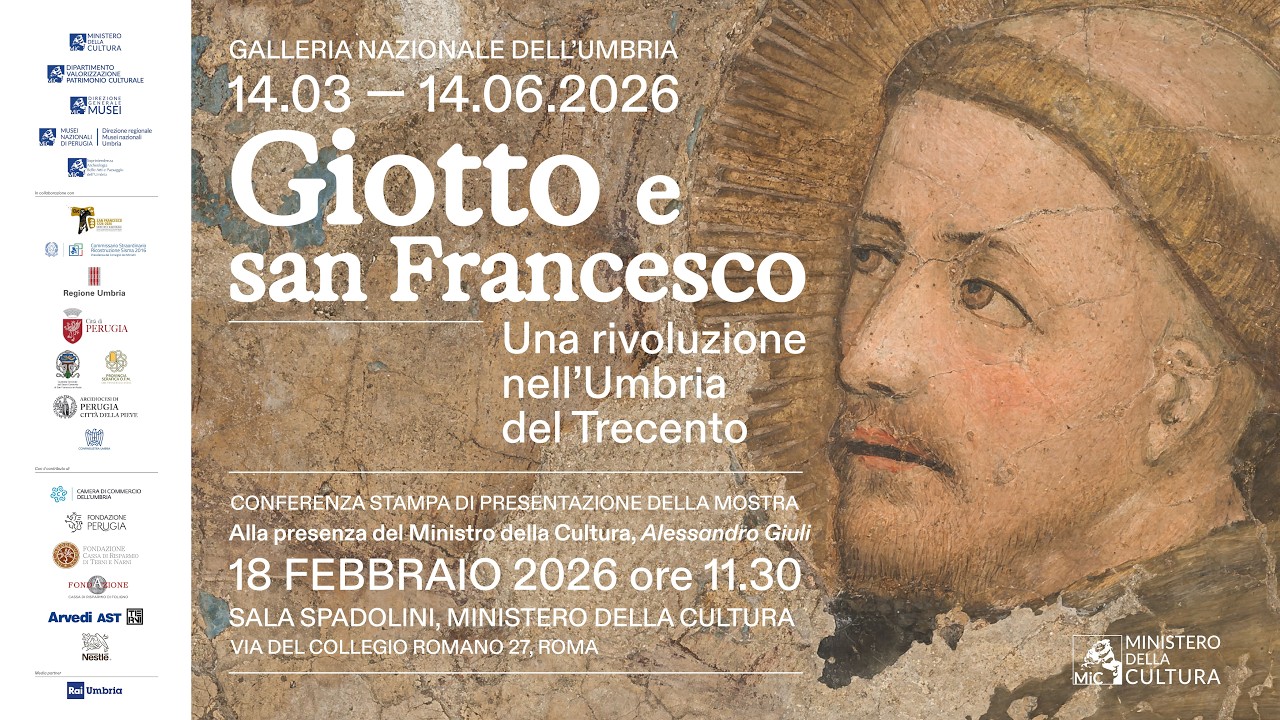
The exhibition, titled Giotto and Saint Francis. A Revolution in Fourteenth-Century Umbria, opens on 14 March 2026 and runs through 14 June 2026 at the Galleria Nazionale dell’Umbria in Perugia, in the heart of the region where this cultural revolution first took root.
Why Giotto and Saint Francis Belong in the Same Room
The pairing of Francis and Giotto is not simply a curatorial convenience. These two figures — one a saint who reshaped devotion and pilgrimage across the Christian world, the other a painter who broke from the flat, symbolic traditions of Byzantine art toward something more human and emotionally immediate — were connected by the same place and the same moment in history.
That place was the Basilica of San Francesco in Assisi. In the late 1200s, the basilica became something close to an artistic workshop, drawing craftsmen, painters, and thinkers who together helped produce a new visual language for sacred storytelling. The exhibition traces exactly that creative ferment.
Italy’s Minister of Culture, Alessandro Giuli, captured the ambition of the show in direct terms. As he put it,
“placing the figure of Francis alongside that of Giotto makes vivid, visible, almost tactile the meaning of the cultural revolution that took shape in the heart of Umbria in the fourteenth century and spread throughout Europe.”
That phrase — “spread throughout Europe” — is worth sitting with. What began in a single hilltop town in Umbria eventually influenced how artists across the continent thought about perspective, emotion, and the human body in sacred art. This exhibition is, in a sense, an attempt to show visitors where that all started.
What the Exhibition Actually Contains
The show brings together more than 60 works connected to the artistic community that grew around the Basilica of San Francesco. It is curated by Veruska Picchiarelli and Emanuele Zappasodi, and organised by the National Museums of Perugia in collaboration with a wide network of church and civic partners connected to Assisi, Perugia, and the surrounding region.
Its chronological story begins in the late 1200s, when the basilica first began attracting the kind of artistic talent that would define the period. The works on display reflect that broader creative ecosystem — not just Giotto himself, but the entire “workshop” culture that flourished around him and around the cult of Francis.
| Detail | Information |
|---|---|
| Exhibition title | Giotto and Saint Francis. A Revolution in Fourteenth-Century Umbria |
| Venue | Galleria Nazionale dell’Umbria, Perugia |
| Dates | 14 March – 14 June 2026 |
| Number of works | More than 60 |
| Curators | Veruska Picchiarelli and Emanuele Zappasodi |
| Organised by | National Museums of Perugia |
| Anniversary marked | 800th anniversary of the death of Saint Francis of Assisi |
The Broader Significance of the Assisi “Factory”
One of the most compelling ideas underpinning this exhibition is that artistic revolutions rarely happen in isolation. The Basilica of San Francesco was not just a place of worship — it functioned, in the words used to describe the show, as a kind of factory or workshop, a gathering point for creative energy that produced something genuinely new.
Francis himself had, during his lifetime and in the decades after his death, fundamentally changed how ordinary people related to religious devotion. His emphasis on humility, poverty, and direct emotional connection to the divine created a new audience for sacred art — one that wanted to feel something when looking at a painting, not merely contemplate a symbol.
Giotto, working in that same environment, delivered exactly that. His figures have weight. They cast shadows. They grieve and rejoice in ways that Byzantine tradition had largely avoided. The connection between the saint’s theology of feeling and the painter’s new visual language is precisely what this exhibition sets out to make tangible.
Who Should Make the Trip to Perugia
For anyone with an interest in medieval art, Italian history, or the roots of the Western artistic tradition, this exhibition is a rare opportunity. Perugia’s Galleria Nazionale dell’Umbria is already one of Italy’s finest repositories of medieval and Renaissance art, and hosting a show of this scale — with more than 60 works drawn from across the region’s churches, civic collections, and partner institutions — represents a genuinely significant cultural moment.
The three-month window also makes this accessible to spring travellers. Umbria in March through June is well before the peak summer crowds, and the region around Assisi and Perugia remains one of the most historically rich and visually beautiful parts of central Italy.
The exhibition is also timed deliberately. The 800th anniversary of Francis’s death is a milestone that Italy is taking seriously at a national level, with the Minister of Culture personally championing the show’s importance. This is not a routine gallery rotation — it is a statement about where a pivotal chapter of European cultural history began.
What Happens After the Exhibition Closes
The show runs until 14 June 2026, after which the works will return to their respective collections across Umbria and beyond. No permanent installation or touring schedule has been confirmed in the available information. Visitors hoping to see the full assembly of more than 60 works connected to the Assisi artistic tradition will need to make their way to Perugia before the summer.
Given the significance of the anniversary and the scale of the collaboration involved, it is reasonable to expect that scholarly publications and related programming will accompany the exhibition — though specific details on catalogues or events have not been confirmed in the available source material.
Frequently Asked Questions
Where is the Giotto and Saint Francis exhibition being held?
The exhibition is being held at the Galleria Nazionale dell’Umbria in Perugia, Italy.
When does the exhibition open and close?
It runs from 14 March to 14 June 2026.
How many works are included in the exhibition?
More than 60 works connected to the artistic workshop that grew around the Basilica of San Francesco in Assisi are featured.
Who curated the exhibition?
The exhibition was curated by Veruska Picchiarelli and Emanuele Zappasodi, and organised by the National Museums of Perugia.
Why is this exhibition happening now?
It marks the 800th anniversary of the death of Saint Francis of Assisi, which Italy is commemorating with a range of cultural events in 2026.
Will the exhibition tour to other cities after Perugia?
This has not been confirmed in the available information — the exhibition is currently announced only for the Galleria Nazionale dell’Umbria in Perugia.


Leave a Reply