
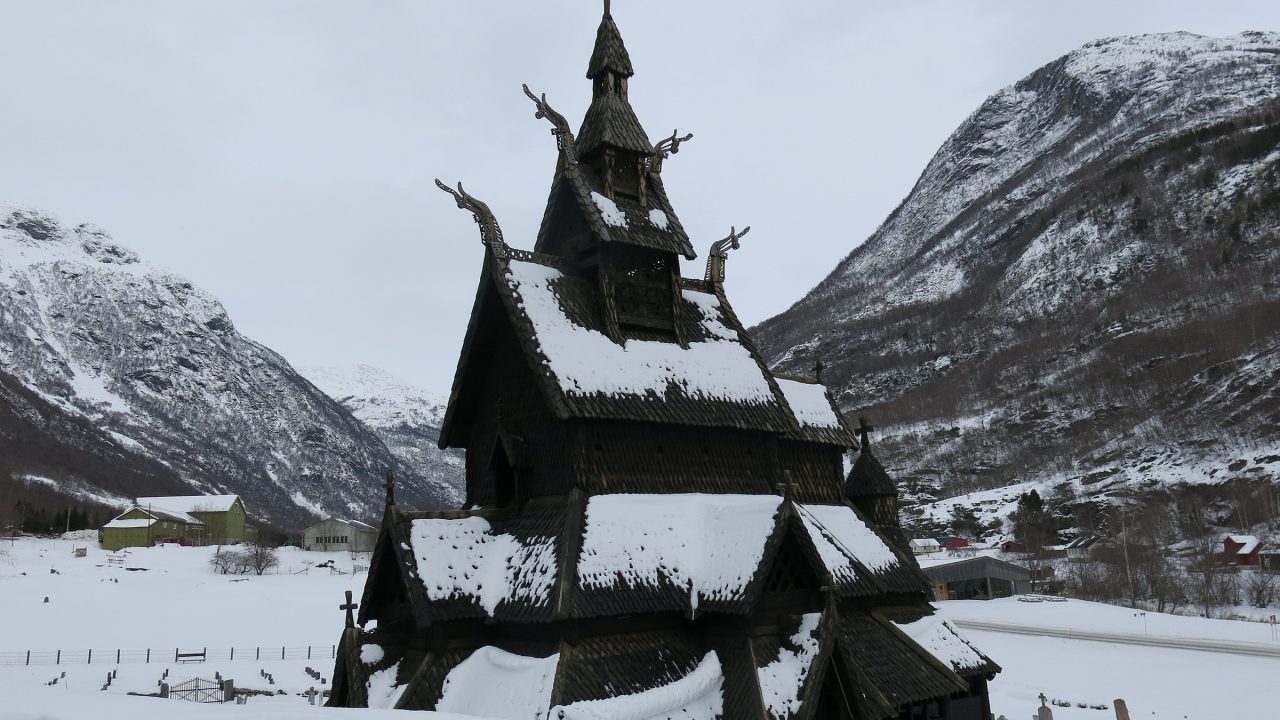
Only 28 of them survive. Across all of northern Europe — a region that once held thousands of these remarkable wooden structures — Norway is home to virtually every medieval stave church still standing. And this year, the Norwegian government is putting serious money into making sure they stay that way.
Norway’s Ministry of Climate and Environment has announced that five million kroner — roughly $516,000 US — will be distributed in 2026 to fund preservation work and a new digital documentation initiative across the country’s surviving stave churches. It’s a significant commitment to buildings that have already outlasted nearly everything built alongside them.
For anyone who cares about medieval history, architectural heritage, or simply the question of what humanity chooses to protect, this story is worth paying attention to.
What Norway’s Stave Churches Actually Are
Stave churches are wooden buildings constructed using a distinctive technique that dates to the Middle Ages. The name comes from the vertical wooden posts — staves — that form the structural core of the walls. The craftsmanship is extraordinary, and the fact that wooden structures of this age have survived at all is something historians consider remarkable.
While similar churches once existed across northern Europe, almost none have survived outside Norway. The 28 that remain are not museum reconstructions or replicas — they are original medieval buildings, many of which are still actively used today.
That continued use is part of what makes them so culturally significant. As Andreas Bjelland Eriksen, Norway’s Minister of Climate and Environment, put it:
“The stave churches are among the oldest buildings we have in Norway, and it is fantastic that they are still in use. It is important that we preserve these for the future, and that people can learn about the history they represent through continued use.”
It’s a simple statement, but it captures something important: these aren’t frozen artifacts behind glass. They are living pieces of medieval architecture that communities still gather inside.
Where the Money Is Going in 2026
The five million kroner total is split between new and previously committed funding. Three million kroner comes from fresh grants awarded this year, while two million kroner represents funding commitments that were already made in 2025.
One of the most significant projects receiving support is a 3D scanning initiative at Borgund Stave Church, widely regarded as one of the best-preserved medieval churches in Norway. Digital documentation of this kind creates a permanent, highly detailed record of the structure — useful for future restoration work, academic research, and public education.
Rollag Stave Church in the Numedal region has also been identified as receiving a promise of funding.
| Funding Category | Amount (NOK) | Amount (USD approx.) |
|---|---|---|
| New grants awarded in 2026 | 3,000,000 kr | ~$310,000 |
| Previously committed (from 2025) | 2,000,000 kr | ~$206,000 |
| Total 2026 distribution | 5,000,000 kr | ~$516,000 |
The digital documentation component is particularly notable. 3D scanning produces precise geometric data that captures every carved surface, structural joint, and architectural detail. For buildings this old and this irreplaceable, that kind of record can be the difference between a successful restoration and a permanent loss if damage ever occurs.
Why Preserving These Buildings Is So Difficult
Wood is not kind to centuries. Unlike stone cathedrals, which can endure neglect for generations before showing serious deterioration, wooden structures require ongoing, active maintenance. Moisture, insects, fungal decay, and the slow movement of timber all work against survival.
The fact that Norway’s stave churches have made it to the 21st century is partly a matter of geography — Norway’s climate, combined with the quality of the original construction — and partly a matter of sustained human effort over many generations. Without continued investment, that chain of care breaks.
Major maintenance projects funded through this year’s grants address exactly that challenge. The work isn’t glamorous, but it’s what keeps 900-year-old wood from becoming 900-year-old dust.
What This Means for Anyone Who Cares About Medieval Heritage
For historians and heritage advocates, Norway’s commitment here represents a model worth watching. These are not high-profile UNESCO sites commanding global tourism revenue. Many of Norway’s stave churches sit in rural valleys, serving small communities. The funding isn’t driven by tourist economics alone — it reflects a genuine national decision that these buildings matter.
The digital documentation angle also has broader implications. As 3D scanning technology becomes more accessible, the argument for creating permanent digital records of vulnerable heritage sites grows stronger. A detailed scan of Borgund Stave Church doesn’t replace the physical building, but it does mean that its architectural knowledge survives even in a worst-case scenario.
For international visitors, Norway’s stave churches remain some of the most extraordinary medieval sites accessible to the public anywhere in Europe. Borgund, in particular, draws visitors precisely because of how intact it remains — walking inside feels genuinely different from visiting a restored or reconstructed site.
What Comes Next for Norway’s Stave Church Program
The 2026 funding distribution is part of an ongoing national effort rather than a one-time allocation. Rollag Stave Church in Numedal has been identified as receiving a funding promise for the coming year, suggesting the program will continue to cycle support across multiple sites.
The 3D scanning project at Borgund is expected to produce documentation that will serve both conservation professionals and the wider public. Whether that material will be made freely accessible for research and education has not yet been confirmed in available reporting.
What is clear is that Norway is treating its stave churches as active priorities — not heritage footnotes. With only 28 of these buildings left in the world, that distinction matters enormously.
Frequently Asked Questions
How many medieval stave churches survive today?
Norway preserves 28 surviving stave churches, representing nearly all that remain anywhere in the world.
How much is Norway spending on stave church preservation in 2026?
A total of five million Norwegian kroner — approximately $516,000 US — will be distributed in 2026, combining three million in new grants with two million in previously committed funding.
Which stave church is receiving the 3D scanning project?
Borgund Stave Church, widely regarded as one of Norway’s best-preserved medieval churches, is the focus of the new digital documentation initiative.
Are Norway’s stave churches still in use?
Yes. Norway’s Minister of Climate and Environment specifically highlighted that the churches are still actively used, describing this as one of the reasons their preservation is so important.
Which other church has been identified for upcoming funding?
Rollag Stave Church in the Numedal region has been identified as receiving a promise of funding in the coming year.
Why did so few stave churches survive outside Norway?
Similar wooden churches once existed across northern Europe, but almost none have survived elsewhere.



Leave a Reply