
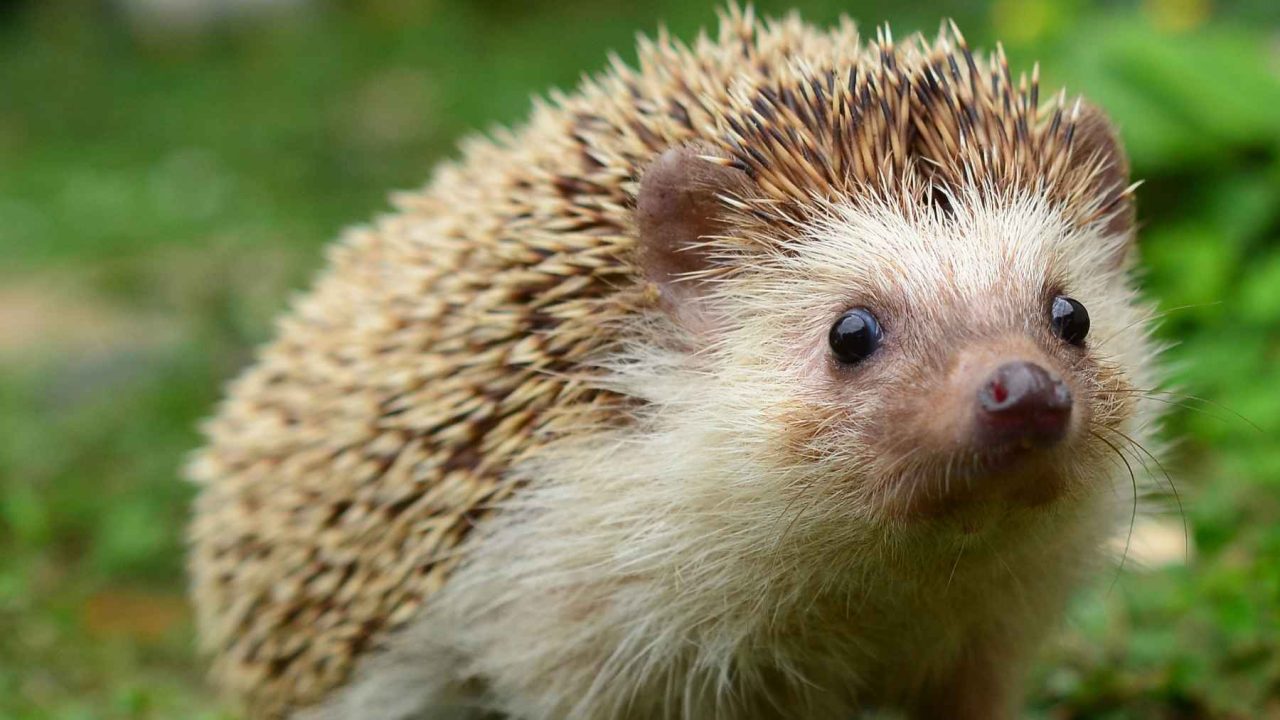
Type “group of hedgehogs” into a search bar and you’ll get back a word that sounds like it was invented specifically for the animal: a prickle. It’s one of those rare collective nouns that does exactly what it says, capturing in a single syllable the defining physical trait of the creature it describes.
But behind the charming vocabulary lesson sits a more serious story. The Western European hedgehog — the small, spiny mammal most people picture when they hear the word — has been quietly disappearing across much of its range. In October 2024, the species was officially reclassified on the IUCN Red List, moving from “Least Concern” to “Near Threatened.” That shift reflects real, documented population declines across Europe.
So yes, a group of hedgehogs is called a prickle. The harder question is whether you’d ever be lucky enough to see one.
Why English Calls a Group of Hedgehogs a “Prickle”
Collective nouns in English have always had a poetic streak. A murder of crows. A parliament of owls. A conspiracy of lemurs. These terms tend to survive because they feel right — they capture something true about the animal they describe.
“Prickle” earns its place immediately. In everyday English, a prickle is a sharp point or a stinging sensation, which makes it an almost uncomfortably accurate name for an animal whose entire back is covered in keratin spines. Those spines typically run between 0.8 and 1.2 inches long — short enough to look harmless, long enough to make you regret picking one up without gloves.
Some references also list “array” as an alternative collective noun for hedgehogs, though “prickle” is the term most commonly cited and the one that has caught on in popular usage. Language, like wildlife, tends to favor what works best in its environment.
The Animal Behind the Word: What Makes Hedgehogs Distinctive
Hedgehogs are instantly recognizable, but a few details about them tend to surprise people. Their spines are not barbed like a porcupine’s — they don’t detach and lodge in predators. Instead, they serve as passive armor, and when threatened, a hedgehog curls into a tight ball, turning itself into something that looks deeply unpleasant to bite.
Those spines are made of keratin, the same protein that makes up human fingernails and hair. They’re hollow, which keeps them lightweight, and a single hedgehog can carry several thousand of them across its back.
The species most familiar to Europeans and the one at the center of recent conservation concern is the Western European hedgehog, known scientifically as Erinaceus europaeus. It’s the hedgehog of garden folklore, of children’s books, of the creature people occasionally find curled beneath a hedge in autumn.
| Feature | Detail |
|---|---|
| Collective noun | Prickle (also: array) |
| Species name | Erinaceus europaeus (Western European hedgehog) |
| Spine material | Keratin |
| Spine length | 0.8 to 1.2 inches |
| Previous IUCN status | Least Concern |
| Current IUCN status (as of October 2024) | Near Threatened |
A Status Change That Signals a Larger Problem
The October 2024 IUCN reclassification is worth pausing on. The International Union for Conservation of Nature’s Red List is the global standard for tracking species health, and a move from “Least Concern” to “Near Threatened” is not a minor administrative update. It reflects documented evidence that populations have been declining across a significant portion of the species’ range.
“Near Threatened” doesn’t mean a species is on the brink of extinction — but it does mean it’s heading in the wrong direction, and that without attention, a more serious classification could follow.
For the Western European hedgehog, the declines span much of Europe. The causes behind population drops in species like this typically involve habitat loss, changes in land use, road mortality, and the fragmentation of green spaces — though
What the reclassification does confirm is that the hedgehog, once common enough to be considered a garden staple, can no longer be taken for granted.
Why You Almost Never See One Anymore
Even people who grew up seeing hedgehogs regularly in their gardens report encountering them far less often now. Part of this is behavioral — hedgehogs are nocturnal, secretive, and well-camouflaged against leaf litter. But part of it reflects genuine population pressure.
Hedgehogs don’t cluster in large groups the way some mammals do. The term “prickle” might suggest a sociable creature, but in practice, hedgehogs are largely solitary. The collective noun applies to the rare occasions when multiple individuals share the same space — and those occasions are becoming rarer as overall numbers fall.
The irony is that most people encounter the word “prickle” precisely because hedgehogs are the kind of animal people search for online — charming, spiny, slightly mysterious — without necessarily seeing them in the wild anymore.
What the Reclassification Means Going Forward
A shift on the IUCN Red List typically increases pressure on conservation organizations, governments, and landowners to take the species more seriously. “Near Threatened” status raises the profile of a species in policy discussions and can influence how habitat management decisions are made.
For hedgehogs specifically, conservation advocates have long pointed to practical measures — wildlife-friendly garden fencing, reduced pesticide use, and preserved hedgerow corridors — as meaningful steps. Whether the 2024 reclassification accelerates those efforts in practice remains to be seen.
What’s clear is that the Western European hedgehog is no longer in the category of animals we can assume will simply take care of themselves. The word “prickle” might be delightful. The conservation picture it currently represents is considerably less so.
Frequently Asked Questions
What is a group of hedgehogs called?
A group of hedgehogs is most commonly called a “prickle.” The term “array” is also sometimes referenced, depending on the source.
Why is the collective noun “prickle” used for hedgehogs?
In everyday English, a prickle refers to a sharp point or stinging sensation — a direct reference to the hedgehog’s keratin spines, which typically measure between 0.8 and 1.2 inches long.
What are hedgehog spines made of?
Hedgehog spines are made of keratin, the same protein found in human fingernails and hair.
What is the current conservation status of the Western European hedgehog?
As of October 2024, the Western European hedgehog (Erinaceus europaeus) was reclassified from “Least Concern” to “Near Threatened” on the IUCN Red List.
Are hedgehogs social animals that live in groups?
No — hedgehogs are largely solitary creatures. The collective noun “prickle” applies to rare occasions when multiple individuals share the same space, rather than describing typical behavior.
What is causing hedgehog population declines in Europe?



Leave a Reply